
The safest way to choose furniture polish is to start with the finish, not the wood color or the brand promise. A sealed dining table, a waxed antique chest, and a laminate desk do not need the same product, and using a heavy polish where a simple cleaner would do can leave streaks or buildup.
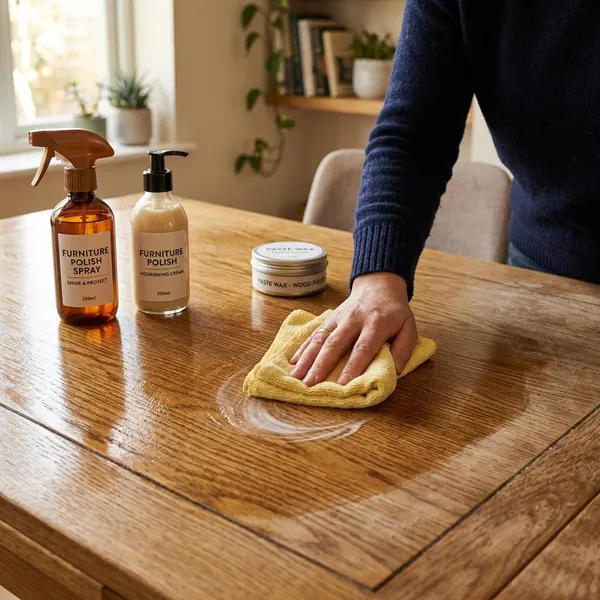
What is furniture polish?
Furniture polish is a surface-care product used to refresh the look and feel of furniture, especially finished wood. Depending on the formula, it may add a soft shine, reduce fingerprints, make dusting easier, or leave behind a thin waxy or oily layer.
It also helps to separate polishing from repair. Polish can make a dull surface look fresher, but it will not fix peeling finish, deep scratches, water rings, loose veneer, or structural damage. If the problem is damage rather than dullness, polishing usually just makes the flaw shinier.
How to choose a furniture polish
Choose the mildest product that solves the actual problem. A coffee table that gets fingerprints from daily use may only need a light polish or cleaner for sealed surfaces. A waxed antique or a piece you may refinish later needs a more cautious choice, because residue can create real trouble.
Check compatibility with your finish
The finish matters more than the type of wood. A polyurethane-coated dining table can often handle a light furniture polish, while a waxed chest may need wax-compatible care and an antique with an unknown finish should be treated cautiously.
If you cannot identify the finish, avoid strong all-purpose sprays, very glossy products, and anything that promises deep conditioning without saying which surfaces it suits. For a valuable or fragile piece, especially one with age, veneer, cracking, or a soft old finish, testing is not optional.
Compare the shine each formula leaves
Shine is not always an upgrade. A glossy polish can look attractive on a formal sideboard, but on a desk, kitchen table, or coffee table it may show fingerprints, dust, and wipe marks faster than a softer satin finish.
For everyday furniture, a natural or low-luster finish is usually easier to live with. If you want more glow, build up slowly rather than choosing the shiniest product first.
Check for wax, oil, or silicone
Wax, oil, and silicone change how the surface behaves after polishing:
- Wax can add warmth, but repeated layers may collect in corners and carved details.
- Oil can deepen the look of some finishes, but it may feel greasy if overused.
- Silicone gives quick slip and shine, but it can complicate later refinishing.
If the piece is a long-term keeper, an heirloom, or something you might restore one day, be especially careful with silicone-heavy sprays. Convenience now can create extra prep work later.
Choose a spray, cream, or wipe
Sprays are fast for large sealed surfaces, but they are easiest to control when sprayed onto a cloth instead of directly onto the furniture. That also keeps overspray off floors, glass, and nearby fabric.
Creams suit smaller pieces, carved areas, and slower work because you can place the product more precisely. Wipes are handy for a quick touch-up before guests arrive, but they are not ideal if they leave too much product behind or if you use them often enough that residue becomes noticeable.
Review application and residue warnings
Before buying, read the instructions as if they are part of the product. A polish that needs careful buffing may be fine for an occasional display cabinet, but annoying on a table you clean every few days.
Watch for practical warning signs: slippery overspray, haze after drying, greasy feel, or repeated review comments about buildup. Those are not small details if the furniture sits in a bright room or gets touched every day.
How to apply furniture polish
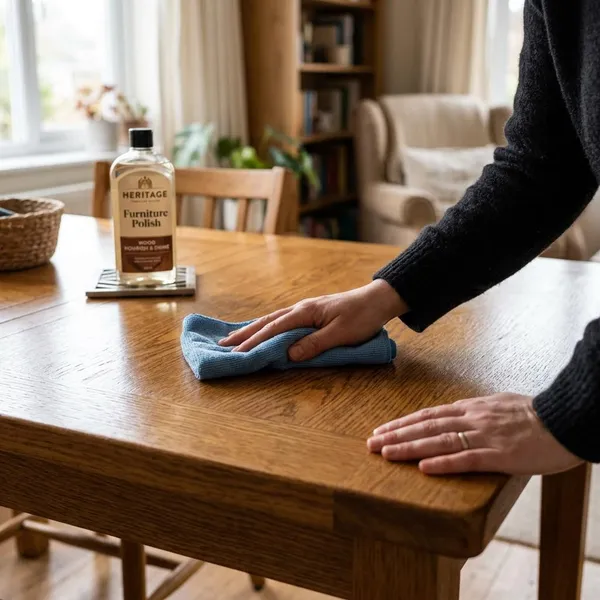
Good application is mostly restraint. Start clean, use less product than you think, and work in small areas so you can correct streaks before they dry. Heavy polishing rarely gives better results; it usually just leaves more film to remove later.
Remove dust and dirt first
Dust the piece before polishing so grit is not dragged across the finish. A dry microfiber cloth is usually enough for routine dust, while sticky food marks or kitchen film should be cleaned with a finish-safe method before any polish is added.
This step matters most on dining tables, sideboards near cooking areas, and desks that collect skin oils from daily use. Polish spread over grime tends to smear instead of shine.
Test a hidden spot
Put a small amount on an out-of-sight area, then let it dry before judging the result. Look for darkening, cloudiness, tackiness, uneven shine, or a greasy feel.
Use a stricter test on dark finishes, antiques, unknown finishes, and pieces that already feel waxy. If the hidden spot looks worse, do not try to "fix" it by applying more product to the visible surface.
Apply sparingly as the label directs
A thin application is the safest default. Apply polish to a soft cloth unless the label clearly tells you to spray directly on the surface.
- Small amount first: you can add more, but removing excess takes work.
- Small sections: easier to keep the sheen even.
- Follow the timing: some products need immediate wiping, others need brief contact.
Spread evenly with a soft cloth
Use a clean, lint-free cloth and spread the polish in light passes, following the grain where it is visible. Avoid paper towels, rough rags, or anything that leaves lint on a dark finish.
Check edges, trim, carvings, and corners before moving on. These spots collect extra product, and that is where buildup often starts.
Buff if the instructions call for it
If the label says to buff, use a second dry cloth and turn it often. Buffing removes excess polish, evens the sheen, and leaves the surface feeling smooth rather than coated.
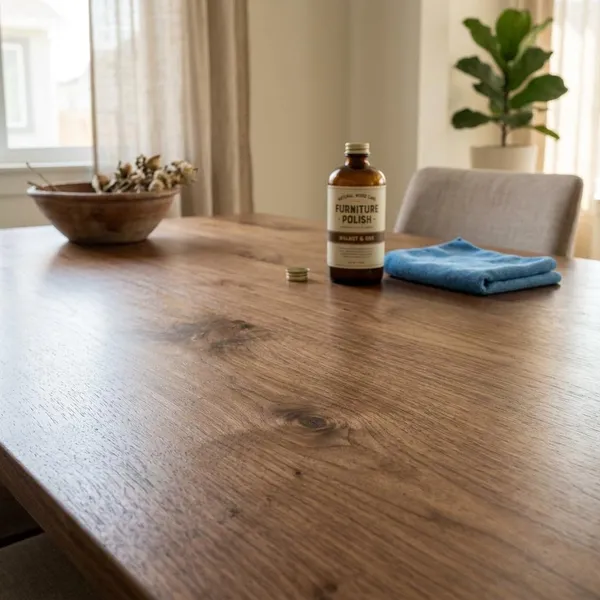
For a high-use table, buffing also helps reduce the fingerprints that show up immediately after polishing. For a display piece, it is what makes the finish look quietly cared for instead of freshly smeared.
Conclusion
The best choice is usually the simplest polish that suits the finish and does not leave more residue than the furniture can handle. Use polish when the surface genuinely looks dull or marked, not as a weekly habit for every wood-looking piece in the house. When in doubt, clean first, test quietly, apply lightly, and skip heavy shine on furniture that needs easy everyday care.