
Modular furniture is furniture built from separate, compatible pieces instead of one fixed unit. The real advantage is not just that it looks flexible, but that you can rearrange, add, remove, or reuse parts when your room or routine changes. It makes the most sense when you expect your space to change, but it is less useful if you want one permanent, seamless piece that never moves.
What is modular furniture?
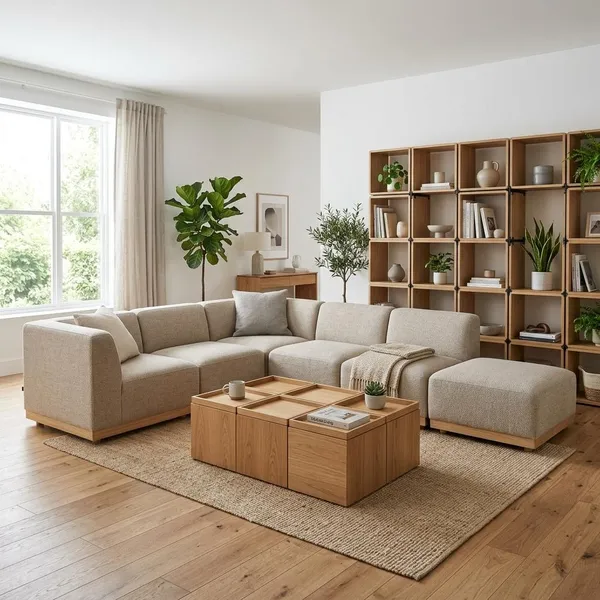
Modular furniture is a furniture system made from separate units that are designed to work together. Instead of buying one sofa, cabinet, desk, or shelving unit in a fixed shape, you choose compatible parts and arrange them in a way that fits your space.
Furniture made from separate units
Think of each module as one usable building block. In a modular sofa, that might be a corner seat, armless chair, chaise, or ottoman. In a storage system, it might be a cube, drawer unit, shelf, or cabinet.
This separate-unit design is useful before the furniture even reaches the room. Smaller sections are usually easier to carry through stairs, elevators, and narrow doorways than one oversized piece.
Pieces that can be rearranged
The useful part is that the pieces are not locked into one layout. A straight sofa can become an L-shape, an ottoman can move to the other side, and shelving can be split across two walls instead of staying in one block.
Designs that can expand over time
Many modular systems let you buy a smaller setup first and add matching pieces later. This can be helpful if you are furnishing a first apartment, working with a limited budget, or not yet sure how much storage or seating you will actually need.
The important catch is availability. Expansion only works if the brand keeps the same modules, fabrics, finishes, and connectors available long enough for you to buy more later.
Systems that adapt to different layouts
Modular furniture is especially helpful when a room has awkward corners, short walls, radiators, large windows, or changing traffic paths. You can often shift the layout instead of replacing the whole piece.
It is not the same as custom furniture, though. Modular pieces come in set sizes, so they adapt within the limits of that system rather than being made exactly to your wall or floor plan.
How does modular furniture work?
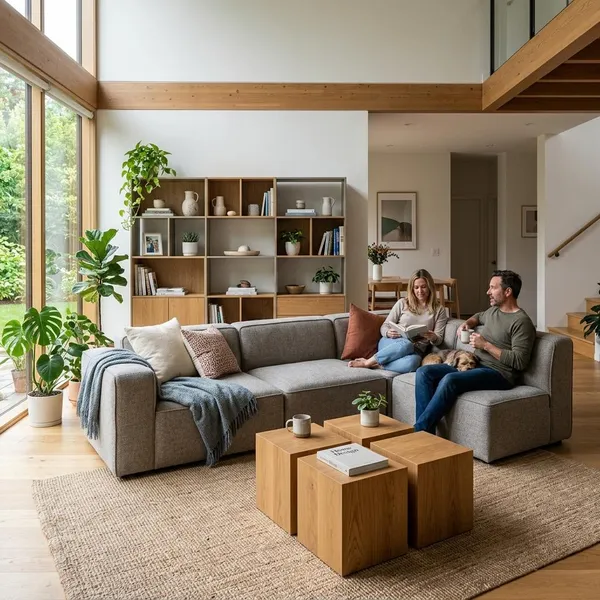
Modular furniture works by combining independent parts into one larger arrangement. The modules usually share the same measurements, style, and connection method, so the finished setup looks coordinated even though it is made from separate pieces.
Individual modules work independently
Each module should still be useful on its own. A sofa section may work as a single chair, an ottoman may become extra seating, and a storage cube may move from the living room to a home office. This is where modular furniture becomes more than a rearrangeable set; it gives you pieces that can be reused when your needs change.
Modules connect in different configurations
Most modular systems connect through clips, brackets, hooks, rails, pins, or simply tight alignment and weight. Sofas need enough connection strength to stop sections drifting apart, while shelving and storage systems need proper alignment so they do not feel unstable or uneven.
- For seating: check whether joints stay together when you sit near the join.
- For storage: check whether stacked or wall-mounted pieces need extra anchoring.
- For desks or workstations: check whether the surface feels steady during daily use.
Pieces can be added or removed
Adding modules is useful when you need more seats, storage, or surface area. Removing modules is just as important if you downsize, move into a smaller room, or realize the setup is making the space feel crowded.
Layouts can change with your space
Rooms rarely keep the same job forever. A spare room may become an office, a living room may need a play area, or a studio apartment may need clearer zones for sleeping, working, and relaxing.
Modular furniture works best in those changing situations. If your layout is already stable and you do not expect to move or rearrange, the flexibility may not add much value.
Benefits of modular furniture
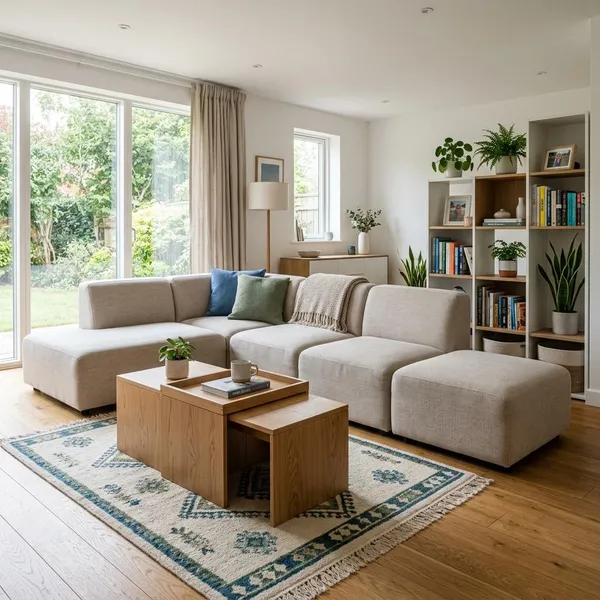
The main benefit of modular furniture is practical flexibility. It lets you make decisions in stages instead of trying to predict every future need on the day you buy the furniture.
More flexible room layouts
Modular furniture makes it easier to shape a room around real use rather than around one fixed piece. You can create a conversation area, clear space for children to play, or shift seating when you host guests.
For a room that does double duty, such as a living room and work area, this flexibility can make the space feel less cramped and more intentional.
Easier moving and rearranging
Because the furniture breaks into smaller sections, it is usually easier to carry, deliver, and reposition. This is a strong advantage for renters, apartment dwellers, or anyone with stairs, tight hallways, or small elevators.
Better use of small spaces
Small rooms benefit from furniture that can be scaled down to what is actually needed. A compact modular sofa, a vertical storage system, or a few wall-friendly units can often use space more efficiently than one bulky fixed item.
The key is restraint. Modular furniture helps a small room only when you choose fewer, better-fitting modules instead of filling every available corner.
Simple expansion when needs change
Expansion is useful when you expect life to change: a larger home, a growing family, more books, more hobbies, or a new work-from-home setup. You can start with the core pieces and add more later if the system is still available.
Less need to replace entire furniture sets
If one section wears out or stops fitting your space, you may be able to replace, remove, or reuse only that part. This can reduce waste and make the furniture feel useful for longer.
This benefit depends heavily on quality. A cheap modular system that sags, shifts, or becomes discontinued quickly may not save money in the long run.
Drawbacks of modular furniture
Modular furniture has real advantages, but it also asks more from the buyer. You need to look beyond the nice layout photos and check cost, stability, long-term availability, and how polished the finished setup will look in your own room.
If you want one solid, permanent, built-in-looking piece, traditional or custom furniture may still be the better choice.
Higher upfront cost for some systems
Some modular systems cost more because you are paying for multiple components, connectors, and future flexibility. That higher price can be worthwhile if you will move, expand, or reconfigure the furniture.
If the furniture will stay in one place for years and you do not need add-ons, the extra flexibility may be money you never really use.
Modules can shift or separate
This is one of the most noticeable problems with lower-quality modular sofas. Sections can drift apart on smooth floors, especially with children, pets, or daily lounging.
Extra pieces may become unavailable
A modular system is only expandable while compatible pieces are still sold. Trend-based collections can disappear, and even popular lines may change dimensions or hardware over time.
If future expansion is the main reason you are buying modular furniture, choose a brand with a stable core collection rather than a seasonal design that may vanish next year.
Matching colors and finishes can be difficult
Even when extra modules are available, they may not match perfectly. Fabric dye lots can vary, sunlight can fade older pieces, and wood or veneer finishes can change slightly between production runs.
Some designs feel less seamless than fixed furniture
Because modular furniture is made from parts, joins, gaps, cushion breaks, or slight height differences can be visible. Some people do not mind this, especially in casual family rooms. Others may find it less refined than a fixed sofa or built-in cabinet.
How to choose modular furniture
Choosing modular furniture is easier when you start with function instead of style. First decide what problem the furniture must solve: more seating, better storage, easier moving, a flexible guest setup, or a room that needs to change roles.
Measure your available space
Measure the room, but also measure the route into the room: doorways, staircases, elevators, hall turns, and any tight corners. Then mark the planned layout on the floor with tape so you can see the real footprint before ordering.
Leave enough walking space around the furniture. If you have to squeeze past it every day, the layout is too big even if it technically fits.
Decide which modules you need
Start with the pieces that solve your main problem. For a small apartment, that may be a two-seat sofa and storage ottoman. For a family room, it may be washable seating sections and hidden storage. For a home office, it may be shelves and cabinets that can move as the workspace changes.
Check connection quality
Connection quality should be one of your first checks, especially for seating and tall storage. Weak connectors can make a sofa annoying to use and can make storage feel unsafe or poorly aligned.
- Sofa test: sit near the join and check for movement.
- Floor test: ask whether non-slip feet or clips are included.
- Storage test: confirm whether wall anchoring is needed for taller setups.
- Online test: read reviews that mention shifting, gaps, or hardware after months of use.
Compare materials and durability
Materials decide whether modular furniture stays useful after years of moving and rearranging. Strong frames, durable upholstery, reliable hardware, and scratch-resistant finishes matter more than the number of possible layouts.
For daily family use, choose tougher fabrics and solid construction over delicate finishes. For occasional guest-room use, you may not need the most heavy-duty option, but it should still feel stable and easy to maintain.
Confirm that extra modules are available
If you plan to expand later, do not assume the same pieces will always be there. Check whether the collection is a long-running system, whether replacement covers or parts are sold, and whether the brand has changed dimensions or finishes before.
Match the system to your lifestyle
The best modular furniture is the one that fits your habits, not the one with the most possible combinations. A household with pets or children needs sturdy connectors and easy-clean materials. Someone who moves often may care more about lightweight modules and simple assembly. A person furnishing a formal living room may prefer fewer modules and a cleaner, more seamless shape.
Conclusion
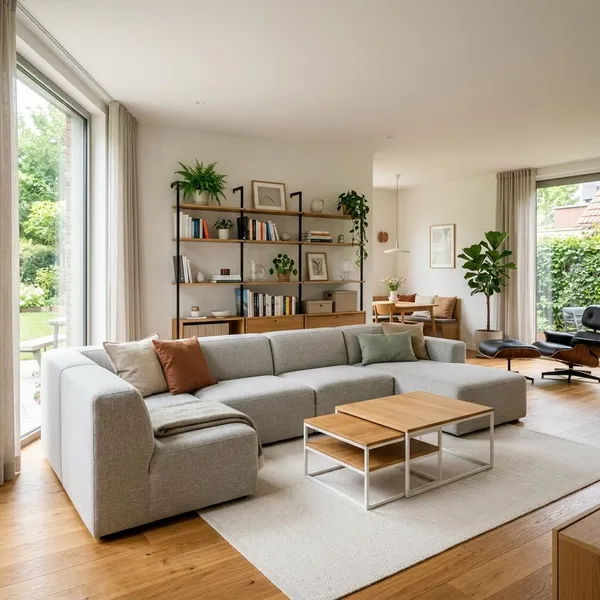
Modular furniture is worth considering when flexibility will genuinely make your home easier to live in: small spaces, future moves, changing family needs, or rooms with more than one job. The best choice is not the largest or most customizable system, but the one that fits your room now, stays stable in daily use, and gives you realistic room to adjust later.