
The best coffee brewing method depends less on rankings and more on how you like your coffee to taste and how much effort you want in the morning. Pour-over gives the cleanest flavor, French press gives the heaviest body, AeroPress is the most flexible for one cup, and Moka pot is the easiest way to get a bold, concentrated brew without an espresso machine.
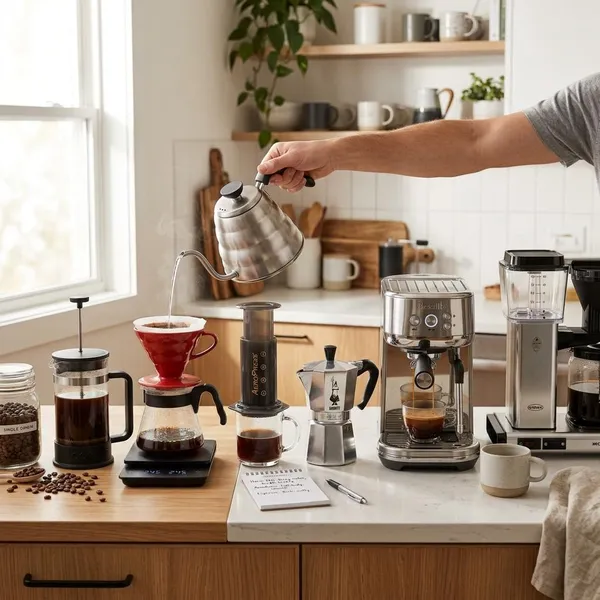
Best coffee brewing methods compared
Most brewing differences come from three things: how water touches the coffee, what kind of filter is used, and how concentrated the final drink is. If you want a simple first check, start with flavor preference, then look at batch size and cleanup.
| Method | Best for | Cup style | Main tradeoff |
|---|---|---|---|
| Pour-over | Tasting lighter roasts and subtle notes | Clean, bright, clear | Needs attention and consistency |
| French press | Rich texture and easy manual brewing | Full, heavy, rounded | More sediment and less clarity |
| AeroPress | Single cups, travel, quick cleanup | Smooth, flexible, medium-bodied | Not ideal for several servings |
| Moka pot | Bold coffee and milk drinks | Strong, concentrated, intense | Can turn bitter with too much heat |
Which coffee brewing method is best for you?
Pick the method that solves your daily problem first. Flavor clarity matters if you drink black coffee and buy fresh beans; convenience matters more if you need several cups before work; concentration matters if you mostly make milk drinks.
Choose pour-over for flavor clarity
Choose pour-over if you drink coffee black and want the beans to show their character. It is strongest with fresh light or medium roasts where brightness, sweetness, and aroma matter more than weight.
It is not the best choice for a household that needs four mugs quickly. For one or two cups, though, it gives you control without the cost or complexity of espresso.
Choose French press for a heavier body
French press makes sense if you like coffee that feels rich and substantial. It is also useful when you want to brew enough for two or more people without standing over a dripper.
Choose AeroPress for flexibility and travel
AeroPress is the easy recommendation for solo drinkers who want good coffee in different situations. It works at home, in an office kitchen, or on a trip, and it is much harder to ruin than a careful pour-over.
- Choose it for daily single cups when cleanup matters.
- Choose it for travel when durability and compact size matter.
- Skip it for groups unless you enjoy brewing one cup at a time.
Choose Moka pot for bold coffee
A Moka pot is best when you want a stronger-tasting cup but do not want to buy an espresso machine and grinder. It suits people who add milk, prefer darker roasts, or like a compact stovetop brewer that lasts for years.
If you mostly enjoy delicate, fruity coffees, it may not be your first choice. The Moka pot tends to push coffee toward intensity rather than subtlety.
Choose drip coffee for easy larger batches
Drip coffee is the practical winner for busy mornings and shared kitchens. A decent machine can make several cups with almost no attention, which is more valuable than perfect control for many households.
Choose espresso for concentrated drinks
Espresso is the right path if you want true café-style drinks: lattes, cappuccinos, flat whites, or short intense shots. It is also the most demanding option because the machine, grinder, and technique all affect the result.
If you enjoy tweaking details, espresso can become a satisfying hobby. If you simply want strong coffee with milk before work, a Moka pot or AeroPress may be the saner choice.
Choose cold brew for cold coffee
Cold brew is best when you want smooth coffee over ice with low bitterness and very little morning effort. You make it ahead, keep it chilled, and dilute it when needed.
It is less useful if your goal is tasting delicate origin notes. Cold brew is more about convenience and mellow refreshment, especially in warm weather or for someone who wants coffee ready in the fridge.
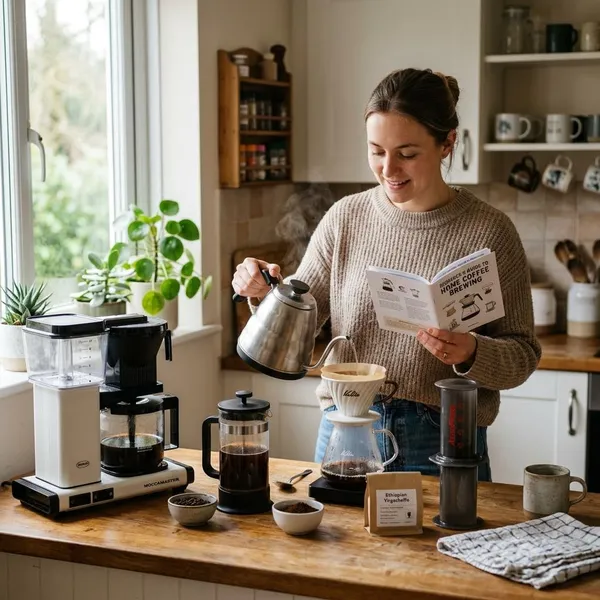
Best coffee brewing methods for beginners
Beginners should start with a brewer that matches real habits, not the one that looks best online. The first priority is repeatability: use the same coffee amount, water amount, and grind setting for several brews before changing anything.
- Start with batch size: one cup points toward AeroPress or pour-over; several cups point toward drip coffee or French press.
- Match your taste: clean and bright means paper filter; rich and heavy means metal filter or immersion.
- Change one variable at a time: adjust grind, ratio, or brew time separately so you know what helped.
Drip coffee for the easiest daily routine
Drip coffee is the easiest beginner method if you want coffee to happen with minimal attention. It is the best fit for early work mornings, families, or anyone who values a full pot more than a hands-on ritual.
French press for simple manual brewing
French press is simple to understand: add coffee, add hot water, wait, press, and pour. It teaches the basics of ratio, grind size, and steep time without requiring pouring technique or special filters.
Choose a coarse grind and pour the coffee out after brewing instead of letting it sit on the grounds. That small step keeps the cup from becoming muddy or overly bitter.
AeroPress for forgiving single-cup brewing
AeroPress is a strong beginner pick for one-cup drinkers because it gives good results even when your technique is not perfect. It is quick, compact, and easy to clean, so you are more likely to keep using it.
Pour-over for learning more control
Pour-over is best for beginners who want to learn why coffee tastes different from one brew to the next. It gives clear feedback when you change grind size, pour speed, or brew time, which makes it useful if coffee is becoming a hobby rather than just a caffeine routine.
Conclusion
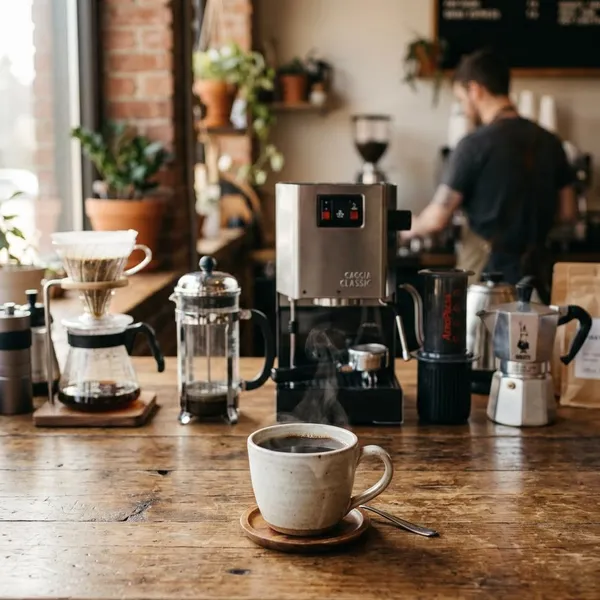
The easiest choice is to match the brewer to your normal day: drip for effortless batches, AeroPress for a quick single cup, French press for body, pour-over for clarity, Moka pot for bold coffee, espresso for café-style drinks, and cold brew for ready-to-pour iced coffee. If you are unsure, start with the method that fits your routine best, then improve the beans, grind, and recipe before buying more gear.