
If you are trying to understand whether The Boondocks television show is worth watching, start with this: it is adult animation built around race, politics, family conflict, media satire, and uncomfortable comedy. The show works best if you want sharp commentary as much as jokes, and it is not a casual cartoon for kids or background viewing.
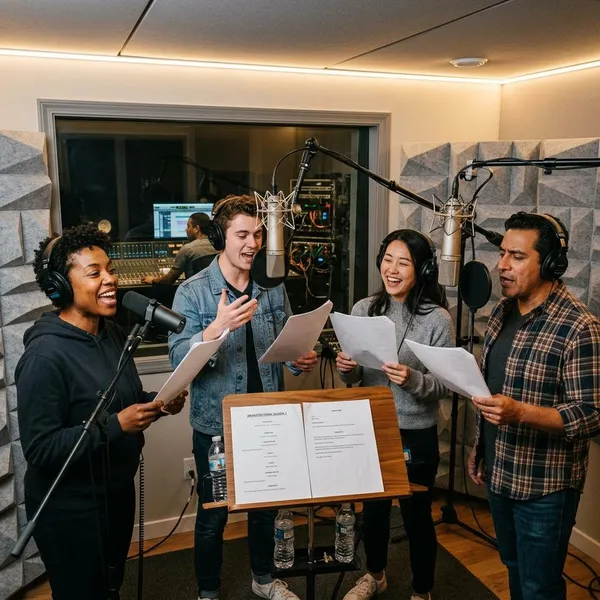
Who Voices The Boondocks Characters?
The voice cast is a big reason the characters still feel so easy to recognize. The performances do not just deliver jokes; they make each character's worldview clear within a few lines.
Regina King as Huey and Riley Freeman
Regina King voices both Huey and Riley Freeman, which is still one of the show's most impressive casting choices. Huey's voice is calm, skeptical, and politically alert; Riley's is louder, flashier, and shaped by what he thinks toughness should sound like.
That split gives the series its central brother-versus-brother tension. If you are new to the show, watching how King separates the two characters is one of the quickest ways to understand why the Freeman brothers carry so much of the series.
John Witherspoon as Robert Freeman
John Witherspoon gives Robert "Granddad" Freeman the kind of comic timing that makes even small reactions memorable. Granddad wants comfort, status, and peace, but his own choices usually drag him into exactly the kind of chaos he claims to avoid.
He is not written as a simple wise elder. He is vain, scared, stubborn, and funny in a way that also shows generational tension inside the Freeman household.
Gary Anthony Williams as Uncle Ruckus
Gary Anthony Williams voices Uncle Ruckus, the show's most deliberately uncomfortable character. Ruckus is built as a satire of internalized racism and self-hatred, so the performance is extreme by design rather than accidental.
Viewers tend to react strongly to him. Some see the character as one of the show's sharpest satirical tools; others find that the exaggeration can be hard to sit with, even when the target is clear.
Cedric Yarbrough as Tom DuBois
Cedric Yarbrough's Tom DuBois works because he sounds like someone trying very hard to stay reasonable in a world that will not cooperate. Tom is educated, cautious, and deeply worried about consequences.
His role is especially useful when the show shifts from wild comedy into questions about respectability, fear, class, and suburban identity. He often shows what happens when someone wants safety more than confrontation.
Gabby Soleil as Jazmine DuBois
Gabby Soleil voices Jazmine DuBois with a softer, more open quality than most of the adults around her. Jazmine often asks the simple question that everyone else is avoiding, which lets the show handle race, belonging, and fear from a more vulnerable angle.
She has less screen time than the Freeman family, but she gives the series breathing room. In a show that can be harsh on purpose, Jazmine keeps some scenes from becoming only cynical.
The Boondocks Seasons in Order
The simplest way to watch The Boondocks is in release order from Season 1 through Season 4. Many episodes stand alone, but the character dynamics and tonal changes make more sense when you see the seasons in sequence.
If you only want a quick sample, Season 1 gives you the setup and Season 2 shows the satire becoming sharper. If you want the full context around the show's reputation, watch all four seasons and expect Season 4 to feel different from the first three.
Season 1 introduces Woodcrest and the Freemans
Season 1 is the proper starting point because it sets up Woodcrest, the Freeman household, and the social contrast that drives the series. Huey arrives as the serious observer, Riley as the kid chasing status and fantasy, and Granddad as the elder trying to enjoy suburban life without dealing with its complications.
Season 2 expands the show's cultural satire
Season 2 pushes beyond neighborhood setup and takes broader aim at celebrity behavior, media spectacle, public scandals, and cultural performance.
- Best for satire: viewers who want the show at its sharpest and most confident.
- Best for rewatching: fans who enjoy dense jokes, references, and social commentary.
- Less ideal as a first random sample: some episodes hit harder when you already know the characters.
Season 3 focuses more on politics and media
Season 3 leans further into public figures, political messaging, news culture, and the way media turns serious issues into performance. Huey's role as the observer matters more here, but the season still uses Riley, Granddad, and Woodcrest to keep the commentary from becoming a lecture.
Season 4 closes the original television run
Season 4 is the final season of the original series and the one fans debate most. The familiar characters and setting remain, but many viewers noticed a different tone because Aaron McGruder was not involved in the same creative leadership role.
It is still part of the official run, so completionists should watch it last. If you are only trying to understand why the show became influential, the first three seasons are usually the stronger foundation.
Why Was The Boondocks So Controversial?
The Boondocks was controversial because it used adult comedy to attack subjects many shows softened or avoided: racism, politics, religion, celebrity culture, class anxiety, and respectability. It did not always separate the joke from the discomfort, which is exactly why people still argue about it.
The most important thing to understand is intent versus reception. The show often uses offensive material to criticize ugly ideas, but that does not mean every viewer will experience the joke the same way.
Racial stereotypes are used for satire
Racial stereotypes appear throughout the show, but they are usually exaggerated to expose prejudice, performance, self-hatred, or social pressure. That method can be effective when the audience recognizes the target of the satire.
It also creates risk. A casual viewer watching clips without context may miss what is being criticized and only see the surface-level exaggeration. That is one reason short online clips can make the show look more reckless than a full episode does.
Politics and public figures are frequent targets
The series is political in a broad sense, not just in an election-season sense. It takes aim at power, image management, media narratives, public fear, and the way famous people or institutions shape everyday attitudes.
That is why the show can still feel relevant even when a specific reference is dated. The names change, but the patterns of outrage, performance, and public messaging are familiar.
Religion and popular culture are openly mocked
Religion and pop culture both get treated with suspicion. The show often questions how belief, fame, ritual, and fandom can turn into performance or control.
This is one of the places where viewer tolerance matters. If you are comfortable with irreverent satire, these episodes may feel bold and funny; if you prefer comedy that avoids sacred subjects, they may feel more abrasive than entertaining.
Strong language pushes the satire further
The strong language is part of the show's adult tone. It makes the world feel confrontational and raw, but it also means the series is not a good fit for family viewing.
Some episodes faced broadcast or streaming restrictions
Some episodes have had a more complicated history with broadcast, edits, or streaming availability, depending on platform and region. That has fed the show's reputation for being "banned" or hard to find in complete form.
For viewers, the useful takeaway is to check the official catalog you are using before assuming every episode is available. Streaming lineups can change, and not every region carries the same version of a series.
Why Is The Boondocks Still Popular?
The Boondocks still lasts because it was not built only around one news cycle. Its best episodes are about repeating patterns: public image, cultural imitation, media outrage, political theater, and the gap between what people say and what they do.
It also helps that the show is easy to quote and hard to mistake for anything else. The voices, fight scenes, character designs, and sharp shifts between comedy and critique gave it a distinct identity inside adult animation.
Its social satire still sparks discussion
The social satire continues to travel because many of the issues it mocked are still visible. Clips resurface whenever current events resemble something the show already exaggerated years earlier.
That does not mean every reference has aged perfectly. A new viewer may need context for some moments, but the larger targets often remain clear enough to understand.
Huey and Riley offer opposing viewpoints
Huey and Riley make the show more interesting because they do not simply represent "smart" and "wrong." Huey sees systems, history, and hypocrisy; Riley shows how powerfully media fantasy and status can shape a kid's identity.
That contrast gives many episodes a built-in argument. Depending on your own age or background, you may read a scene differently as a teenager, a parent, or an adult revisiting the show later.
Its humor mixes politics with pop culture
The series can move from a political point to a music, celebrity, or television joke without feeling like it changed lanes. That mix is why it reaches viewers who might not normally choose a purely political cartoon.
- Watch for comedy first: the exaggerated characters and quotable scenes carry the pace.
- Rewatch for commentary: the sharper jokes often sit underneath the obvious ones.
Its animation blends comedy with action
The anime-influenced action scenes make The Boondocks stand apart from many adult animated comedies. Fights and dramatic movement are not just visual decoration; they give the series a sense of intensity that matches Huey's discipline and the show's bigger emotional swings.
Its characters remain widely recognizable
The main characters remain recognizable because each one represents a clear pressure point: Huey's political awareness, Riley's performance of toughness, Granddad's comfort-seeking, Tom's anxiety, Jazmine's innocence, and Uncle Ruckus's extreme self-hatred.
That makes them useful as cultural shorthand. Fans do not just remember individual scenes; they use the characters to describe real attitudes and contradictions they still see around them.
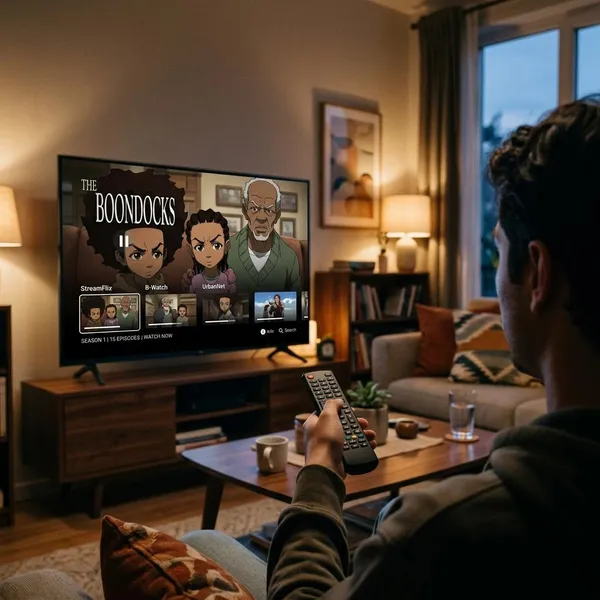
Where to Watch The Boondocks
In the United States, Max, formerly HBO Max, has been the main streaming home for the original series. Availability can change, so the safest move is to check your local platform before planning a full watch.
How you watch depends on what you want from the show. If you are seriously trying to understand the characters and controversy, full episodes in order are the better choice. If you only want to test the humor, official clips can give you a quick sense of the tone.
HBO Max carries the original series in the U.S.
Max has carried the original four-season run in the U.S., making it one of the easiest legal options for watching the show in order. That matters because the series builds its character contrast and tonal shifts over time.
If it is not available in your region, look for legitimate digital purchase or rental options rather than relying on scattered clips. Full episodes give the satire more context than short scenes can.
Adult Swim offers selected clips online
Adult Swim's online clips are useful for sampling the pacing, animation style, and type of humor. They are not the best way to judge the whole series, especially when a scene depends on buildup or a larger satirical target.
For a low-commitment test, clips are fine. For a fair first watch, start with Season 1 and give the show enough room to show how the Freeman family dynamic works.
Conclusion
The Boondocks is easiest to appreciate when you treat it as adult satire first and animation second. Start with the early seasons if you want the clearest version of its voice, expect the humor to be uncomfortable at times, and avoid treating isolated clips as the whole picture.