
If you are trying to identify the parts of a door lock, start with the pieces that affect the symptom you notice: the key and cylinder for key trouble, the handle and spindle for turning problems, and the latch, deadbolt, and strike plate for closing or locking issues. Most home locks use the same basic chain of parts, even though entry locks, interior latches, deadbolts, and smart locks may arrange them differently.
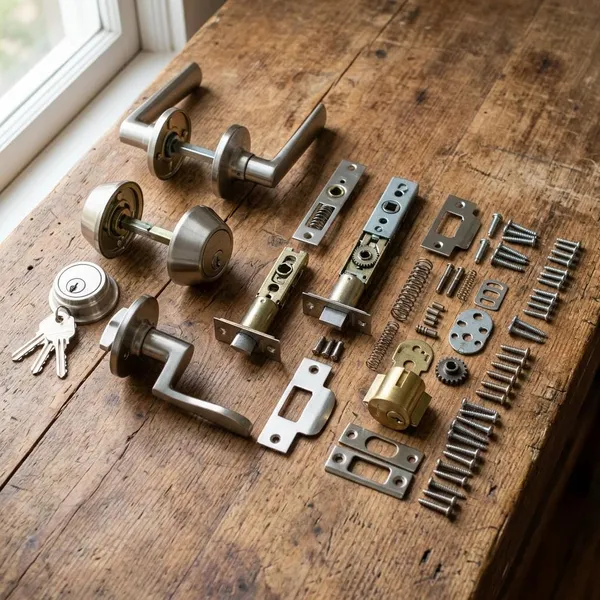
What are the main parts of a door lock?
The main parts of a door lock are the lock cylinder, keyway and pins, lock body, knob or lever, trim, spindle, latch bolt, deadbolt, faceplate, strike plate, and thumbturn. A front door may have nearly all of these, while a closet or hallway door may only have a handle, spindle, latch, faceplate, and strike plate.
Lock cylinder
The lock cylinder is the part the key turns. On many entry knobs and deadbolts, it sits inside the outside hardware and controls whether the lock can be operated from the keyed side.
If your key sticks, turns only when you jiggle it, or suddenly feels rough, the cylinder is one of the first places to suspect. That does not always mean the whole lockset is bad; a worn or dirty cylinder may be rekeyed, cleaned, or replaced separately depending on the lock.
Keyway and pins
The keyway is the slot the key slides into, and the pins are the small internal pieces that line up with the cuts on the key. When the right key is inserted, the pins move into position and allow the cylinder plug to turn.
Lock body
The lock body is the main housing that holds the working mechanism inside the door. In a standard bored lock, it sits around the drilled hole; in a mortise lock, it fits into a larger pocket cut into the door edge.
This is the part to think about when the whole lock feels loose, sloppy, or inconsistent even after screws are tightened. If the body itself is worn, replacing only the trim or handle may not solve the problem for long.
Knob, lever, or handle
The knob, lever, or handle is the part you use every day to open the door. It usually operates the latch, not the deadbolt.
For a low-risk interior door, a slightly loose handle may be more of an annoyance than an urgent repair. On an exterior door used every day, the same looseness is worth checking sooner because it can point to wear in the spindle, spring, or lock body.
Trim, rose, or escutcheon
Trim is the visible plate around the handle, lever, or cylinder. A round plate is often called a rose, while a longer decorative or protective plate is commonly called an escutcheon.
Trim mostly covers holes and gives the lock a finished look, but it also matters when replacing hardware. A new lock with smaller trim may expose old marks or cutouts, even if the mechanical parts fit.
Spindle
The spindle is the metal bar that links the inside and outside handles through the door. When you turn a knob or press a lever, the spindle carries that motion into the latch mechanism.
If one handle works but the other feels loose, or the handle turns without opening the door, the spindle connection is a likely suspect. This is a common place where an old door lock can feel broken even though the latch itself still works.
Latch bolt
The latch bolt is the spring-loaded piece that pops into the door frame when the door closes. Its angled face lets the door shut without turning the handle, then springs outward into the strike plate.
- Door will not stay closed: check whether the latch fully extends.
- Door needs a hard push: check latch and strike alignment.
- Latch feels sticky: look for dirt, paint buildup, or a worn latch spring.
Deadbolt
The deadbolt is the stronger locking bolt used mainly on exterior doors. Unlike a spring latch, it should not retract just because someone pushes against the door.
For a bedroom or closet, a deadbolt is usually unnecessary. For a front, back, or garage-entry door, the deadbolt is the part that matters most for security, provided it extends fully into a properly fitted strike area.
Faceplate
The faceplate is the metal plate on the edge of the door around the latch or deadbolt. It holds the latch or bolt assembly in place and protects the door edge from wear.
When replacing a latch, match the faceplate style as closely as possible. Square-corner, round-corner, and drive-in styles do not always swap neatly without modifying the door edge.
Strike plate
The strike plate is mounted on the door frame and receives the latch bolt or deadbolt. If the lock works smoothly while the door is open but binds when the door is closed, the strike plate or door alignment should be checked before replacing the lock.
On an exterior door, the strike plate also affects security. A strong lock can still perform poorly if the bolt enters a weak or misaligned strike area.
Thumbturn
The thumbturn is the small inside turn piece used to lock or unlock a deadbolt without a key. It is common on single-cylinder deadbolts because it makes daily use and quick exit easier.
What each door lock part does
Each part has a different job, so the best repair depends on the symptom. A sticky key points toward the cylinder or keyway, a loose handle points toward the handle or spindle, and a door that will not catch usually points toward the latch, strike plate, or door alignment.
Cylinder controls keyed access
The cylinder decides whether a key can operate the lock. If the correct key aligns the internal parts, the cylinder turns and starts the locking or unlocking action.
Keyway guides the key into the lock
The keyway guides the key into the cylinder and limits which key profiles can enter. A key that only goes in halfway, scrapes badly, or needs forcing should not be ignored, because forcing it can leave you with a broken key inside the lock.
Lock body holds the main mechanism
The lock body keeps the internal mechanism aligned. It holds the parts that transfer motion from the key, handle, or thumbturn to the latch or bolt.
Handle operates the latch
The handle operates the latch so the door can open during normal use. It is the convenience control, not usually the main security part.
For a lightly used guest room, a basic knob may be fine. For a door used many times a day, a lever can be easier to use and may be the better choice for children, older adults, or anyone who struggles with grip strength.
Spindle connects the handles
The spindle connects the two sides of the handle and transfers turning force through the door. When it slips or wears, the handle may move but the latch may not retract fully.
Latch keeps the door closed
The latch keeps the door closed without needing to lock it each time. It is the part responsible for that clean click when the door shuts.
If a door keeps drifting open, do not immediately buy a new lock. First check whether the latch reaches the strike opening, whether the hinges are sagging, and whether paint or swelling is stopping the door from closing fully.
Deadbolt locks the door securely
The deadbolt provides the stronger lock on an exterior door. It extends into the frame and stays there until turned back by a key, thumbturn, or motor on some smart locks.
- Good sign: the bolt extends fully without pushing or lifting the door.
- Warning sign: the bolt stops halfway or needs force to turn.
- Common mistake: assuming the door is secure when the bolt is only partly thrown.
Faceplate holds the latch or bolt in place
The faceplate holds the latch or bolt assembly steady at the door edge. If it sits proud, loose, or crooked, the latch may scrape and the door may stop closing smoothly.
Strike plate receives the latch or deadbolt
The strike plate receives the latch or deadbolt and gives it a fixed place to land. This small frame-mounted part is often the difference between a door that closes easily and one that needs lifting, slamming, or pulling.
For exterior doors, the strike area should feel solid, not loose or chewed up. If screws no longer bite or the plate shifts under pressure, the frame side deserves attention before blaming the lock.
Thumbturn locks the door from inside
The thumbturn locks or unlocks the deadbolt from the inside. It is meant for fast, key-free operation when you are leaving, coming in, or securing the house at night.
Convenience is the benefit; exposure is the trade-off. On a door with nearby glass, the thumbturn choice may need more thought than on a solid door with no reachable window.
How door lock parts work together
A door lock works as a sequence: access starts at the key or thumbturn, motion passes through the cylinder or spindle, and the latch or deadbolt moves into or out of the strike area. When troubleshooting, follow that sequence instead of guessing from the most visible part.
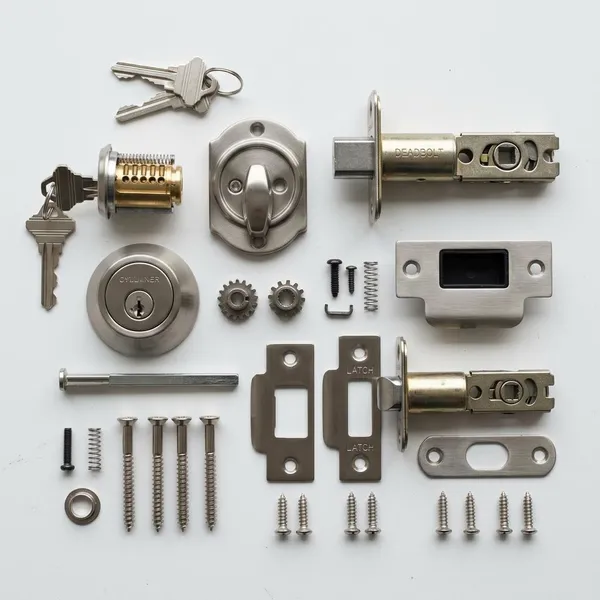
The key turns the cylinder
The key turns the cylinder only when its cuts line up with the lock's internal pins or mechanism. If the key will not turn, try the lock with the door open before assuming the cylinder has failed.
If it turns freely when open but binds when closed, the deadbolt or latch may be under pressure from poor alignment. If it still refuses to turn while open, the key, keyway, or cylinder is more likely involved.
The handle rotates the spindle
The handle rotates the spindle through the center of the lockset. That rotation is what allows the handle on either side of the door to control the latch.
The spindle retracts the latch
The spindle retracts the latch by turning the internal latch mechanism. If the handle moves but the latch barely pulls back, check for a loose spindle connection, worn latch, or hardware that is not seated squarely in the door.
The latch enters the strike plate
The latch enters the strike plate when the door closes and the beveled latch lines up with the frame opening. A clean fit usually sounds like a single click, not scraping followed by a shove.
Seasonal swelling, loose hinges, and small shifts in the frame can move the latch out of line. If the problem appears only in humid weather or after the door has sagged, alignment may matter more than the lock brand.
The deadbolt extends into the door frame
The deadbolt extends into the door frame to create the secure hold that a latch alone cannot provide. It should move smoothly and reach its full extended position without needing you to pull the door into place.
If the deadbolt drags, treat it as more than an inconvenience on an exterior door. A partly extended bolt may look locked from the inside while offering less protection than expected.
Conclusion
The simplest way to understand a lock problem is to follow the job each part is supposed to do: the key and cylinder control access, the handle and spindle create movement, and the latch, deadbolt, faceplate, and strike plate decide whether the door closes and secures properly. If the lock works when the door is open but not when it is closed, check alignment first; if it fails in both positions, the working hardware is more likely the issue.