
If you are choosing a Master Lock, start with the job rather than the biggest-looking lock on the shelf. A locker, gate, bike, spare-key box, and shed all need different things: fit, weather resistance, access method, and realistic theft resistance. The safest first move is to decide where the lock will live and who needs to open it, then compare size and security level.
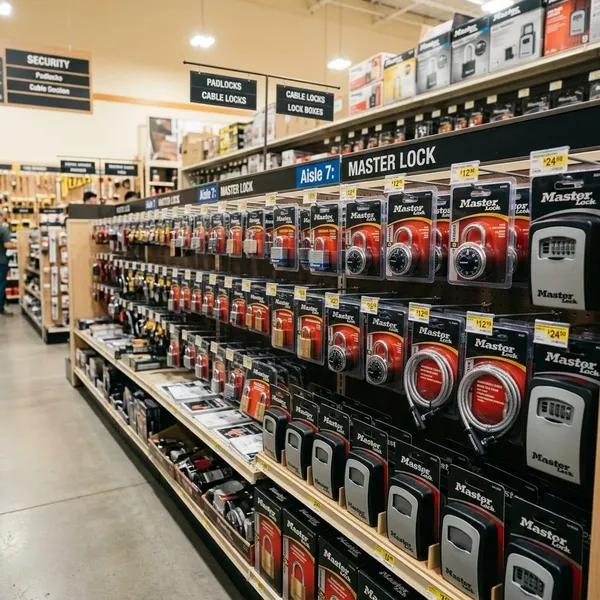
Which Master Lock type fits your needs?
The right type is usually obvious once you match it to the setting. A school locker needs convenience. A shed lock needs weather protection. A bike lock needs resistance against cutting and leverage. Do not choose by price or size alone until you know the category that fits the job.
Combination locks suit lockers
Combination locks make the most sense for lockers, gym bags, cabinets, and other low-risk indoor storage where carrying a key is more trouble than the item is worth. A student using the same locker every day may prefer a simple dial lock, while a shared workplace cabinet may need a resettable version so the code can change when users change.
Keyed padlocks suit everyday storage
Keyed padlocks are the everyday choice for sheds, gates, toolboxes, storage bins, basement doors, and utility areas. They are quick to open, easy to understand, and available in many body and shackle strengths.
If several locks will be used around the same home or small property, keyed-alike models can reduce key clutter. For a single low-value storage bin, a basic model may be enough; for a gate facing the street, choose a stronger body and shackle instead of simply buying the cheapest keyed option.
Weather-resistant locks suit outdoor areas
Outdoor use changes the decision. Rain, dirt, freezing weather, and salt air can make an ordinary indoor lock stiff or rusty long before the body actually fails. For gates, sheds, fences, trailers, and storage units, look for weather-resistant construction, corrosion protection, and a covered or protected keyway.
Lock boxes suit shared key access
Lock boxes are for situations where someone needs a key without owning a permanent copy: cleaners, contractors, caregivers, guests, or family members arriving at different times. They are a better option than hiding a spare key under a mat, but placement still matters. A wall-mounted box is better for regular use, while a portable shackle box is useful when the location changes.
Cable and U-locks suit portable items
Cable locks and U-locks are made for items that need to be secured to something else, such as bicycles, scooters, grills, ladders, sports gear, or job-site equipment. Cable locks are flexible and easy to route through awkward shapes. U-locks are more rigid and often better for public bike parking because they leave less room for tools.
Electronic locks suit managed access
Electronic locks suit shared or changing access. Keypads and Bluetooth models can help when codes need to be updated, access needs to be temporary, or several people use the same lock. They are practical for rental storage, equipment access, and households that do not want to pass physical keys around.
The trade-off is maintenance. Batteries, setup, phone access, and backup entry methods should be considered before choosing electronic access over a simple mechanical lock.
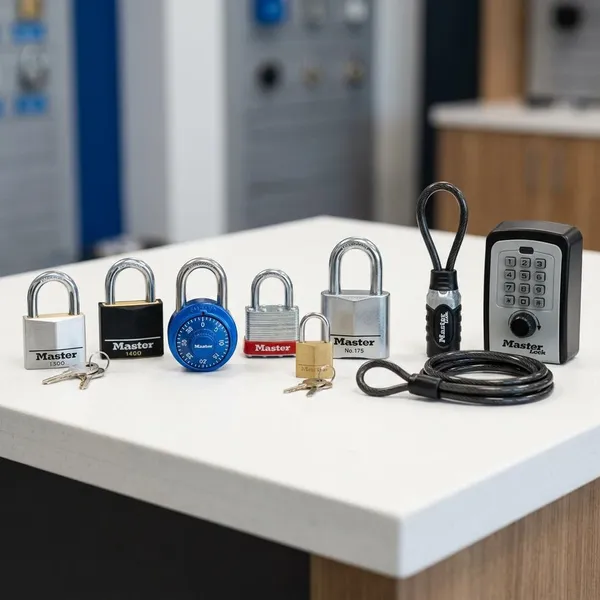
What types of Master Lock products are available?
Master Lock covers more than the classic locker padlock. The product range includes mechanical padlocks, key storage, portable security, electronic access, and indoor security products. The categories below help you narrow the search without comparing dozens of unrelated models.
Keyed padlocks
Keyed padlocks range from simple household locks to heavier outdoor and commercial-style options. Body materials can include brass, laminated steel, aluminum, or reinforced designs, and the shackle may be standard or hardened depending on the model.
Combination padlocks
Combination padlocks come in fixed-code and resettable versions. Fixed combinations are common for school-style locker locks. Resettable versions are better when a code may need to change, such as for temporary users, shared cabinets, or family storage.
Lock boxes
Lock boxes hold keys, access cards, or small entry items behind a code or electronic access method. Before buying one, check capacity, mounting style, and whether the box can be installed somewhere visible enough for users but not so exposed that it invites tampering.
Chain and cable locks
Chain and cable locks solve a fit problem that ordinary padlocks often cannot. They can wrap around frames, wheels, railings, ladders, grills, or bulky outdoor gear. Thicker and better-protected options are generally more useful for longer unattended periods, while lighter cables are better for convenience and short stops.
U-locks
U-locks are commonly used for bikes and scooters because the rigid shape can reduce leverage space and improve resistance compared with many thin cable locks. Size matters here: too small and it will not reach the rack, too large and it may leave extra working room for a thief.
Bluetooth and electronic locks
Bluetooth and electronic locks are useful when access needs to be granted, removed, or changed without handing out new keys. A property owner might use one for shared equipment storage, while a household may use one when several people need access at different times.
Door hardware and safes
Door hardware and safes cover indoor security needs rather than portable locking. Safes can help protect documents, cash, small electronics, or personal records, depending on the model. Door hardware is more about controlled entry than securing loose items.
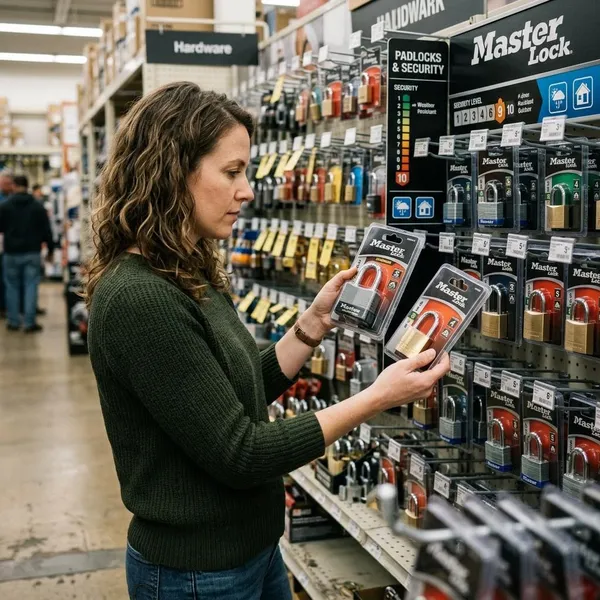
How do you choose the right Master Lock?
The fastest way to choose is to work in this order: use case, risk, fit, environment, access method, then security rating. That order prevents the most common mistake: buying a lock that looks strong but does not fit the latch, survive the weather, or suit the people using it.
Identify what you need to secure
Be specific about the object and the hardware. "Outdoor storage" could mean a small deck box, a shed with a hasp, a trailer coupler, or a chain through a gate. Each one may need a different shackle shape, clearance, or lock style.
Value also matters. A low-cost garden bin does not need the same lock as an expensive e-bike or tool shed. Spend more where the item is valuable, visible, or hard to replace.
Estimate the theft risk
Risk is about time, privacy, and tools. A lock on a supervised school locker mainly needs to stop casual access. A bike left overnight outside an apartment building faces a much harsher test. A backyard gate in a quiet area may be more threatened by weather than by direct attack.
- Low risk: indoor lockers, cabinets, light storage.
- Moderate risk: sheds, gates, toolboxes, storage areas around the home.
- Higher risk: public bike racks, remote gates, visible equipment, long unattended periods.
Measure the required shackle clearance
Measure before you order, especially online. Check the shackle diameter, inside width, and inside height against the latch, hasp, chain, or rack. The lock should close without forcing, but extra open space is not a benefit because it can give tools more room.
Check the indoor or outdoor rating
An indoor lock used outside can become annoying fast: rough key turns, rust, frozen parts, or a stuck shackle. For rain, snow, mud, dust, or salt air, choose an outdoor-rated or weather-resistant model with materials and protection intended for exposure.
Choose a suitable access method
Access method should match real behavior. If one person opens a shed twice a day, a keyed padlock is simple. If a teenager uses a gym locker, a combination lock avoids lost keys. If a cleaner needs occasional entry, a lock box or changeable code is easier than making spare keys.
Compare the stated security level
Security levels are useful for comparing similar Master Lock products, but they do not override fit or environment. A higher-rated indoor lock is still a poor choice for a wet gate, and a strong padlock is not helpful if the shackle is too large for the hasp.
Use the stated level as a tie-breaker after you have confirmed the lock type, size, weather suitability, and access method.
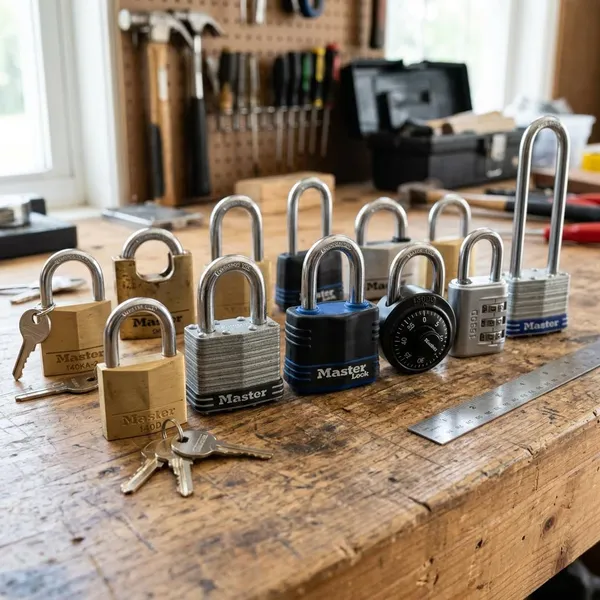
Which Master Lock features matter most?
The most important features are the ones that affect real use: body strength, shackle resistance, clearance, weather protection, access control, and security rating. Price and appearance can help narrow options, but they should not be the main reason you choose a lock.
Body material affects impact resistance
Body material affects how the lock handles force, wear, and corrosion. Laminated steel is common for general use, brass can be useful where corrosion resistance matters, aluminum is lighter for lower-risk tasks, and reinforced bodies are more suitable where impact or prying is a concern.
Shackle material affects cut resistance
The shackle is often the part thieves attack first. Hardened steel or alloy shackles generally provide better cut resistance than softer materials, though exact performance depends on the model. For public gates, bikes, and outdoor storage, shackle quality matters more than a chunky-looking body alone.
Also look at how much shackle is exposed. A shorter, tighter fit can be harder to attack than a tall shackle that leaves plenty of room for cutters or leverage tools.
Shackle clearance affects fit
Clearance decides whether the lock works with your hardware. Too little clearance means the lock will not close; too much can make the setup looser and easier to attack. Product photos are not enough, so compare the listed dimensions with the actual latch, chain, rack, or hasp.
Weather protection affects outdoor use
Weather protection matters whenever the lock stays outside for more than occasional use. Covered keyways, corrosion-resistant materials, protective coatings, and sealed components can help the lock keep working through damp or dirty conditions.
For seasonal use, such as locking a grill during summer, basic weather resistance may be enough. For a shed or gate that stays locked all year, choose more carefully because a jammed lock becomes its own problem.
Key control affects shared access
Key control becomes important once more than one person needs entry. Keyed-alike locks can simplify several gates or sheds, but they also mean one lost key may affect more than one lock. For changing users, a resettable combination, lock box, or electronic option may be easier to manage.
Security ratings affect suitable use
Security ratings help you compare products within the same brand, especially when two locks look similar. Treat the rating as guidance, not a guarantee. The right model still has to fit tightly, survive the location, and match the likely risk.
Conclusion
A good lock choice starts with the situation, not the brand name alone: choose the type for the job, measure the fit, and only then compare materials, weather protection, and security level. For low-risk indoor use, convenience may matter most; for outdoor or public use, durability and attack resistance deserve more attention. The best Master Lock is the one that fits the hardware cleanly, suits the people using it, and does not create a weak point through poor size or wrong placement.