
If you are wondering whether the mad men television show is still worth starting, the answer is yes if you enjoy slow-burn character drama, sharp dialogue, and stories where small choices matter more than big twists. It is not a fast, plot-heavy series; its appeal is in watching people sell perfect lives while struggling to live honestly themselves.
What Is Mad Men About?
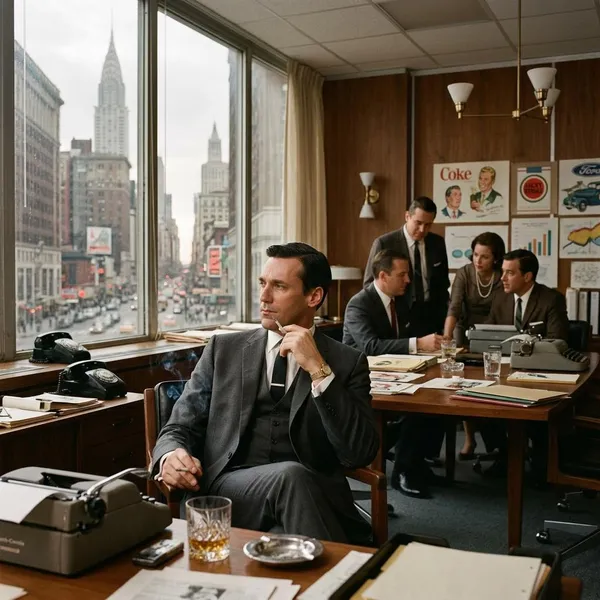
Mad Men is an AMC drama created by Matthew Weiner, set mainly in New York advertising agencies during the 1960s. The office gives the show its shape, but the real story is about identity, ambition, marriage, status, and how people react when the world around them starts changing faster than they can control.
Don Draper hides a complicated past
Don Draper is the show's central figure: a brilliant creative director who understands desire because he has spent his life building an image people will believe. His confidence in a pitch meeting is real, but so is the secrecy underneath it.
Peggy Olson builds a career in advertising
Peggy Olson starts with little authority in a workplace that does not expect much from women, then gradually becomes one of the show's strongest creative minds. Her arc is especially rewarding if you like long-term character growth rather than instant transformation.
- Early Peggy: observant, underestimated, and unsure how much space she is allowed to take.
- Later Peggy: more confident, more demanding, but not magically free from doubt or compromise.
- Why it matters: her progress shows both the possibility and the cost of professional independence.
Sterling Cooper changes with the decade
The agency is almost a character of its own. Sterling Cooper, and the later versions of the firm, reflects the way business changes under pressure from money, competition, generational shifts, and cultural unrest.
Personal lives collide with professional ambition
Work and home are never neatly separated in Mad Men. Characters sell happiness, glamour, and security during the day, then return to marriages, affairs, loneliness, and family roles that rarely match the image they project.
This is where the show can feel uncomfortably modern. If you have ever seen someone use career success to avoid a personal problem, Don, Peggy, Joan, Pete, and Betty all show different versions of that trap.
Social change reshapes the characters
The 1960s setting is not just furniture, cigarettes, and suits. Civil rights, changing gender roles, youth culture, divorce, politics, and new attitudes toward authority gradually push against the characters' lives.
The show works best when you notice how uneven that change is. Some people adjust early, some resist until they are forced to move, and some understand the new world professionally before they accept it personally.
Who Is in the Mad Men Cast?
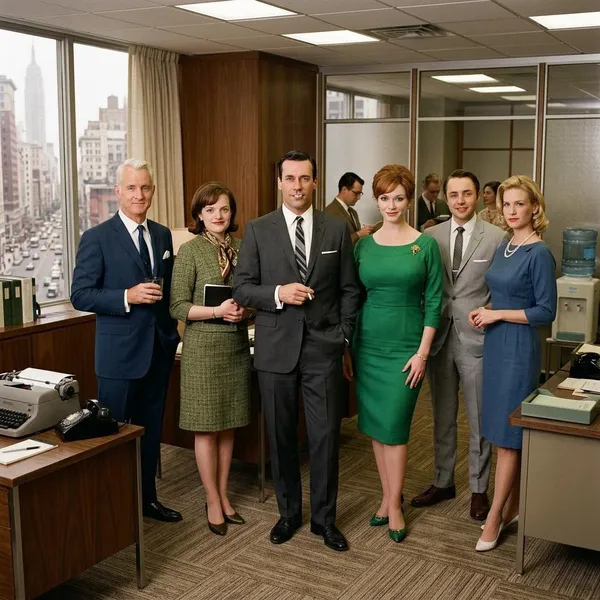
The main cast includes Jon Hamm, Elisabeth Moss, January Jones, Christina Hendricks, John Slattery, and Vincent Kartheiser. The show depends heavily on performance because many scenes are built around restraint: a pause, a glance, or a polite sentence that means something harsher underneath.
If you are deciding whether to watch for the cast alone, the strongest reason is the ensemble balance. Don may be the center, but Peggy, Betty, Joan, Roger, and Pete each carry a different kind of dissatisfaction, ambition, or social pressure.
Jon Hamm as Don Draper
Jon Hamm makes Don magnetic without making him easy to admire. He can look completely in control in the office, then emotionally stranded a scene later, which is exactly why the character became so memorable.
His performance also changes on repeat viewing. What first looks like cool confidence often reads later as fear, shame, or exhaustion hiding behind the perfect suit.
Elisabeth Moss as Peggy Olson
Elisabeth Moss gives Peggy a believable climb rather than a neat empowerment arc. Peggy is talented, but she is also awkward, stubborn, proud, funny, and sometimes insensitive.
January Jones as Betty Draper
January Jones plays Betty Draper with a stillness that can seem cold at first, then gradually reveals isolation and frustration. Betty's role is important because she shows what happens when a woman is expected to be beautiful, domestic, composed, and grateful for a life that leaves her emotionally trapped.
Christina Hendricks as Joan Holloway
Christina Hendricks makes Joan one of the show's sharpest observers of power. Joan understands the office better than many of the men running it, but she also knows that competence does not protect her from being judged by appearance.
- Her strength: practical intelligence and emotional control.
- Her conflict: knowing how the system works does not mean the system is fair.
- Her arc: a steady fight for respect, money, and independence on her own terms.
John Slattery as Roger Sterling
John Slattery gives Roger Sterling some of the show's best comic timing, but Roger is not only there for wit. He represents an older kind of charm and inherited power that becomes less stable as the decade moves on.
His funniest lines often land because there is regret behind them. Roger knows how to enjoy a room, but he is less sure what to do when the room no longer belongs to him.
Vincent Kartheiser as Pete Campbell
Vincent Kartheiser makes Pete Campbell irritating in exactly the right way. Pete wants status badly, and his insecurity often comes out as entitlement, resentment, or frantic ambition.
That can make him hard to like, especially early in the series, but it also makes him useful to the story. Pete shows that privilege does not always produce confidence; sometimes it produces a person terrified that he still has not received enough.
Why Is Mad Men So Acclaimed?
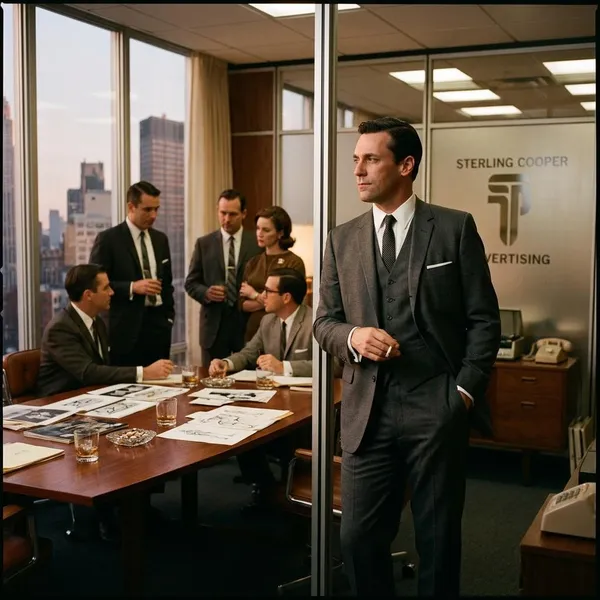
Mad Men is acclaimed because it combines character writing, visual control, period detail, and long-form storytelling without chasing constant shocks. It trusts the viewer to notice what people avoid saying, which is why the drama often builds through tension rather than spectacle.
The praise is deserved, but the pacing is worth knowing before you start. If your usual comfort show is quick, plot-driven, and easy to multitask through, Mad Men may feel slow. If you like watching behavior closely, it becomes much richer as the seasons build.
Complex character development
The characters do not improve in clean, inspirational lines. They grow, repeat mistakes, gain insight, lose it again, and sometimes understand themselves only after hurting someone else.
That is one reason the show rewards patience. A character who seems shallow in one season may become more revealing later, while someone impressive can slowly expose a pattern of damage.
Sharp writing and dialogue
The dialogue is polished but rarely too obvious. People use jokes, sales language, politeness, and silence to hide what they actually want.
Detailed 1960s setting
The 1960s world feels carefully built, from office design and clothing to social manners and advertising language. The detail is not there just to look attractive; it shows what behavior was rewarded, excused, or punished at the time.
Viewers should also expect parts of that world to feel uncomfortable. Sexism, prejudice, workplace drinking, and casual cruelty are part of the setting, not endorsements of it. The show often asks you to sit with that discomfort rather than soften it.
Strong visual storytelling
Mad Men often tells you what a character feels through framing, costume, room layout, or the distance between people. A lonely figure in a beautiful room can say as much as a direct confession.
That visual style fits the subject perfectly. Advertising is about surfaces, and the show keeps asking whether a polished surface can hide emptiness, fear, or desire forever.
Themes that extend beyond advertising
Advertising is the setting, not the limit of the show. The bigger questions are about identity, longing, reinvention, money, gender, family, and the stories people tell themselves to keep going.
This is why the show still works for viewers who have no interest in the advertising business. A campaign may drive an episode, but the emotional point is usually about what the campaign reveals in the people making it.
What Are the Main Themes in Mad Men?
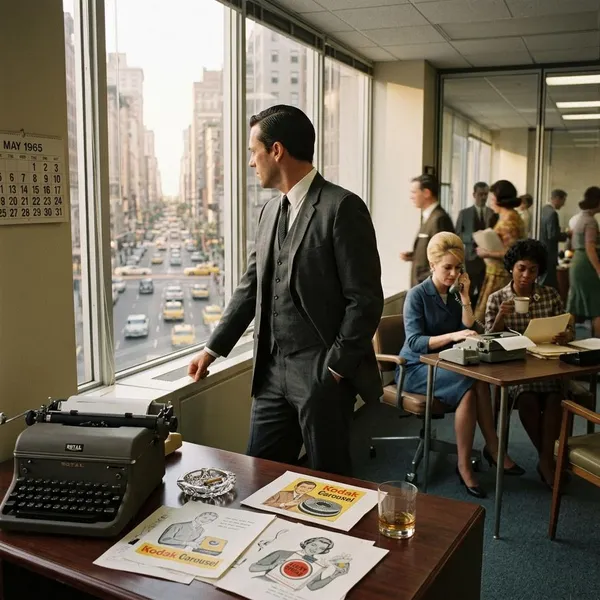
The main themes in Mad Men are identity, ambition, marriage, gender, workplace power, and cultural change. The show rarely turns these into speeches; it lets them surface through choices, compromises, and the gap between what people say they want and how they behave.
Identity and reinvention
Don's hidden identity is the clearest example, but nearly every major character tries to become someone else in some way. Peggy wants to be taken seriously, Joan wants a future beyond being useful to men, Betty wants a life that makes sense, and Pete wants the status he feels owed.
Ambition and status
Ambition in Mad Men is rarely just about money. It is about being seen, chosen, respected, desired, or envied.
- Don wants control: especially over how others see him.
- Peggy wants recognition: not just permission to be in the room.
- Pete wants proof: that his background and effort still place him above others.
- Joan wants leverage: because charm alone is not security.
Marriage and family
Marriage and family are not side plots; they are where the public image of success gets tested. Many homes in the series look stable from the outside but are full of silence, resentment, or emotional absence.
The show is strongest when it avoids easy answers. It does not simply say marriage is false or independence is simple. It shows how family life can be meaningful and damaging at the same time, especially when people are trapped inside roles they never fully chose.
Gender and workplace power
Gender shapes who gets heard, promoted, protected, mocked, or underestimated. Peggy and Joan face different versions of the same basic problem: talent matters, but the workplace is not built to judge them fairly.
This theme may be the most immediately readable for modern viewers. The exact office culture has changed, but the questions still feel familiar: who gets credit, who has to soften their ambition, and who is expected to manage everyone else's comfort?
Social and cultural change
The decade keeps moving whether the characters are ready or not. Politics, youth culture, race, sexuality, divorce, and shifting attitudes toward authority all press into the office and the home.
For someone watching mainly as a period drama, this is the part that prevents the show from becoming nostalgia. The 1960s are not presented as a glamorous escape; they are a pressure system that changes what people can want, say, sell, and survive.

Conclusion
Mad Men is worth watching if you want a layered drama that rewards attention, patience, and a taste for flawed people rather than easy heroes. Try the pilot when you are in the mood to actually watch, not half-watch; if the tone, silence, and character tension pull you in, the seven-season journey pays off with one of television's most carefully shaped endings.