
If a key has snapped in a lock, do not keep turning it or digging at it with whatever is nearby. First get the lock back to its normal position, add a small amount of suitable lubricant, then choose the tool based on whether the broken piece is sticking out or sitting inside the keyway. If the fragment will not move after a few careful tries, stopping early is usually cheaper than damaging the cylinder.
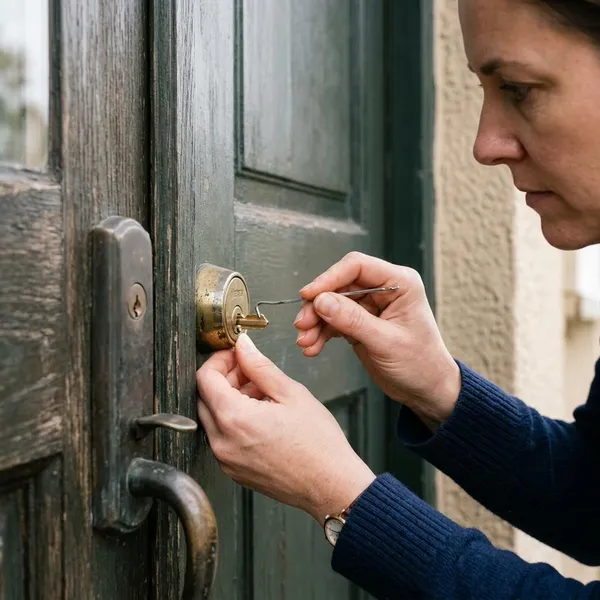
How to remove a snapped key from a lock
The safest method is to remove pressure first, reduce friction second, and only then pull the broken piece out. That order matters because a key often breaks while the lock is partly turned or already stiff, which can trap the remaining metal inside the cylinder.
Return the lock to its normal position
Check whether the keyway is sitting straight or still slightly turned from the locking movement. If the plug is off-center but moves back with light pressure, return it to neutral before trying to pull the key out. If it resists, do not force it; a stuck plug can clamp the fragment tighter or damage the internal parts.
Apply a small amount of lock lubricant
Use a short puff or light spray of lock lubricant into the keyway, then wait a moment before pulling. Graphite or PTFE-style lock lubricant is usually cleaner for regular lock use, while WD-40 may help in an emergency if used sparingly. The mistake to avoid is flooding the cylinder, because excess residue can collect dirt and make the lock stick again later.
Pull an exposed piece with needle-nose pliers
If a small piece of the key sticks out, grip it with fine needle-nose pliers as close to the lock face as you can. Pull straight outward with steady pressure. Avoid twisting or rocking the fragment, because that can snap off the last visible edge and turn an easy removal into a recessed-key problem.
Hook a recessed piece with a key extractor
When the broken key is flush with the lock or just inside it, a key extractor is the better tool. Slide the extractor gently along the side of the fragment, try to catch one of the key cuts, and draw it outward without prying sideways.
A thin hook, fine wire, or narrow saw blade can sometimes work for a shallow fragment, but it is a backup method. If the tool keeps slipping, repeated stabbing motions are more likely to push the key deeper than solve the problem.
Stop if the key will not move
Stop when the fragment does not shift after lubrication, alignment, and the correct tool. That is especially true for a car ignition, a high-security lock, or a lock that was already grinding before the key broke. In a low-risk situation, such as a basic interior door with a visible fragment, a careful DIY attempt makes sense; in a high-cost situation, such as a vehicle ignition with a recessed fragment, calling a locksmith is the safer decision.
What to check before removing the broken key
A quick check before touching the lock prevents most avoidable damage. The first things to look at are how much key is visible, whether the lock is still turned, whether the cylinder was already jammed, and whether this is a door lock or an ignition.
How much of the key is exposed
The visible length decides the tool. If you can grip the broken piece without pinching the lock face, try needle-nose pliers. If the fragment is flush or recessed, skip tweezers and use an extractor instead. Tweezers often press inward on narrow keyways, which is the opposite of what you want.
Whether the lock is still turned
A key that breaks mid-turn may look loose but still be held by the plug and pins. Use good light and check the keyway angle before pulling. If the lock returns to its normal position easily, extraction becomes much easier; if it feels locked in place, treat that as a warning sign rather than a challenge.
Whether the cylinder is jammed
Think back to how the lock felt before the break. A key that had to be jiggled, a deadbolt that dragged against the strike plate, or a cylinder that felt gritty all point to a bigger issue. In that situation, removing the broken key may only solve the immediate problem, not the reason it snapped.
- Rough turning before the break: the cylinder may need service.
- Door pressure while locking: the door or strike plate may be misaligned.
- Several worn keys in use: the key copies may be part of the problem.
Whether the key broke in a door or ignition
A standard house door lock is usually the most reasonable place to try careful DIY removal, especially when the fragment is visible. A car door lock or ignition is different: the parts are tighter, access is worse, and damage can become expensive quickly. If an ignition key is recessed or the cylinder will not return to its normal position, professional removal is usually the better call.
Best tools for broken key removal
The best tool is the one that pulls the fragment outward without taking up too much space in the keyway. Start with the least invasive option that matches what you can see, not the sharpest tool you can find.
Needle-nose pliers for an exposed key
Needle-nose pliers are useful only when there is enough metal outside the lock to grip firmly. Fine tips give better control than bulky pliers, but grip strength is not the main goal. A clean, straight pull is safer than squeezing harder and twisting.
A broken key extractor for a recessed key
A broken key extractor is the most practical specialty tool for a fragment that sits inside the lock. It is thin enough to slide beside the key and shaped to catch the cuts in the metal. If you handle small home repairs yourself, this is more useful than relying on tweezers, knives, or random hooks.
A thin hook tool for a shallow fragment
A thin hook can help when the broken piece is just inside the opening and you do not have an extractor. Use it gently along the side of the key, not down the center of the keyway. This is a temporary, careful-use option, not a good choice for a deep fragment or a lock that already feels jammed.
Lock lubricant to reduce friction
Lubricant supports the removal; it does not replace the right tool. Use just enough to reduce friction, then try the pull again. If the lock is badly misaligned, seized, or still turned, lubricant alone will not free the key and more spraying will not make the attempt safer.
What to do after the broken key is out
Once the fragment is out, take a minute to find out why it broke. A quick check can tell you whether the issue was only an old key or whether the lock is still rough enough to break another one.
Check the keyway for damage
Shine a light into the keyway and look for metal shavings, obvious scratches, bent-looking parts, or debris. Light marks may not matter, but loose fragments can catch on the next key. If you used a homemade hook or blade, be more cautious because improvised tools are more likely to scrape the inside of the cylinder.
Test the lock with a spare key
Use a good spare key, not the broken one or a badly worn copy. Insert it slowly and turn it without forcing. If it slides in and turns smoothly, the lock may be fine; if it drags, clicks roughly, or needs pressure, stop using it until the cause is fixed.
Replace worn or bent keys
Retire any key that is bent, cracked, thin at the shoulder, or noticeably smoother than a newer copy. For everyday doors, making a fresh copy from the best available key is a simple prevention step. For a lock you use daily, do not wait until the key starts flexing in your hand before replacing it.
Repair or replace a lock that still sticks
A lock that still sticks after the broken key is removed needs attention. Sometimes cleaning or lubrication is enough, but a dragging deadbolt may need door alignment, and a worn cylinder may need repair or replacement. If the same lock has been difficult for weeks, treating the snapped key as a one-off problem is asking for a repeat.
Conclusion
A snapped key is usually manageable when the fragment is visible, the lock is in its normal position, and the cylinder still feels smooth. Work in that order: align the lock, reduce friction, choose the right tool, and stop before force becomes the main strategy. If the lock is jammed, the piece is deep, or the break happened in an ignition, a locksmith is the sensible next step rather than a last resort.