
If you already have the code, the fastest way to open a combination lock is to match the method to the lock type: rotary dial locks need the correct right-left-right sequence, while wheel locks need every digit centered before you press the release. Start by slowing down and checking alignment, because most "stuck" combination locks fail from one missed turn or one wheel sitting between numbers.
How do you open a three-number combination lock?
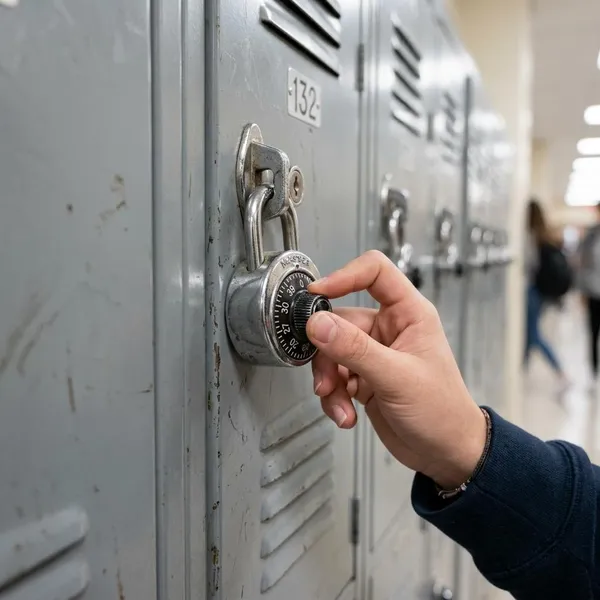
A standard three-number rotary combination lock usually opens with a right-left-right pattern. This is the style you often see on school lockers, gym lockers, storage cabinets, and some padlocks.
The order matters more than speed. If you overshoot a number, reverse at the wrong time, or stop slightly off the indicator mark, the lock may stay closed even when the code is correct.
Turn right three times to clear the dial
Begin by turning the dial clockwise at least three full rotations. This clears any half-entered attempt, which is especially useful if you have already tried the code once and lost track.
You do not need to count every number that passes. Just make full, smooth turns, then continue clockwise until you reach the first number.
Stop at the first number
Stop with the first number directly under the indicator mark, not just close to it. If the number is worn or the lock is hanging at an awkward angle, bring it to eye level before you stop.
Turn left one full turn
After the first number, reverse direction and turn left for one complete rotation. This full turn is what picks up the next part of the mechanism; simply moving left a short distance is not enough on most rotary locks.
Pass the first number once
While turning left, let the first number pass the indicator one time. Keep going after that pass until the second number reaches the indicator.
Stop at the second number
Stop cleanly on the second number after you have passed the first number once. Avoid tiny back-and-forth corrections; if you overshoot, clearing the dial and restarting is usually quicker than trying to rescue the attempt.
Turn right to the third number
Turn clockwise directly to the third number and stop there. Do not pass the third number and come back unless your specific lock instructions say to do so.
Slow down as you approach the last number. Many failed attempts happen because the first two steps were careful, then the final turn was rushed.
Pull the shackle open
Once the third number is aligned, pull the shackle up with steady pressure. If it does not open, do not yank; release tension, clear the dial, and repeat the sequence more slowly.
When the lock opens, close it fully before scrambling the dial. That prevents the code from being left visible on a locker, gate, or storage box.
How do you open a wheel combination lock?
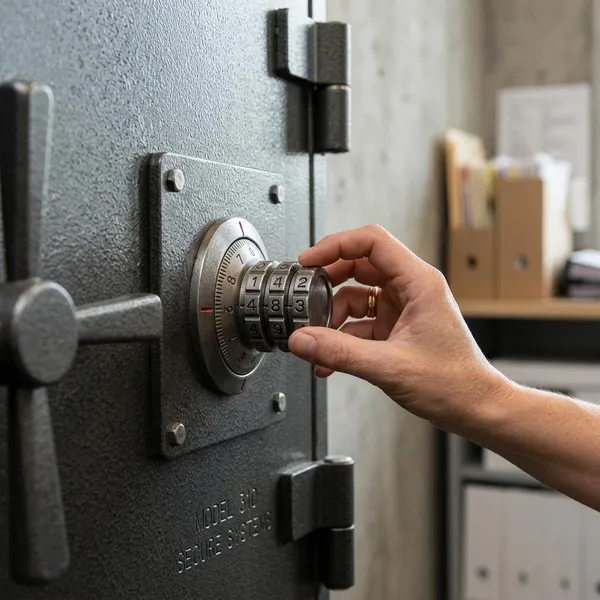
A wheel combination lock opens by setting each wheel to the known code, lining the numbers up with the indicator, and pressing or sliding the release. These locks are common on luggage, backpacks, small cases, cable locks, and travel bags.
Clear any previous numbers
Turn the wheels away from whatever numbers are currently showing before you enter the code. This gives you a clean starting point and helps avoid the common mistake of assuming one wheel was already set correctly.
Turn each wheel to the known code
Set the wheels one at a time from left to right, or in the order shown by the lock's indicator. If the lock is on a suitcase or bike cable and you are viewing it upside down, double-check the order before assuming the code has failed.
- Travel bag: make sure the zipper pulls are not twisting against the lock.
- Small cable lock: hold the body steady so the wheels do not shift as you turn them.
- Letter lock: center each letter the same way you would center a number.
Center every number on the indicator
Each digit should sit directly on the indicator line or window. If a wheel feels loose, nudge it until it clicks into place rather than pressing harder on the release.
Press or slide the release
Use moderate pressure on the button, slider, latch, or release tab. If it feels blocked, stop and recheck the wheels; forcing a small luggage lock can bend the release or make a sticky latch worse.
On an older travel lock, light pressure on the release while gently nudging the final wheel may help the mechanism settle, but only do this when you are using the known code.
Pull the shackle open
After the release moves, pull the shackle, cable, or latch open. If it catches, remove side pressure first: straighten zipper pulls, relax the cable, or move the bag strap away from the lock body.
How do you fix a combination lock that will not open?
When a combination lock will not open, check the simple things first: restart the sequence, slow down, line up every number exactly, and confirm that you are using the right code for that lock. Most failures come from input mistakes, not a broken mechanism.
Restart the sequence from the beginning
Reset your attempt completely. On a rotary lock, spin the dial clockwise several full turns; on a wheel lock, scramble the wheels and enter the code again from the start.
This is the first fix because it removes partial mistakes. If you lost count, reversed too soon, or bumped a wheel, starting over is more reliable than guessing where the error happened.
Turn the dial slowly
For rotary locks, slow down only where it matters most: the final approach to each number. You can turn normally between numbers, but the last few marks should be controlled.
Stop directly on each number
Line the number up with the indicator mark, not with the lock body or your viewing angle. A quick flashlight check can help on worn dials, dark lockers, or locks used outdoors.
- If you overshoot on a rotary dial: clear the lock and restart.
- If a wheel sits between clicks: nudge it until it settles into one position.
- If the lock is under tension: relax the shackle, zipper, latch, or cable before trying again.
Confirm the code and model instructions
Make sure the code belongs to this exact lock and that the opening method matches the model. A preset rotary padlock, a resettable luggage lock, and a cable lock may all use different release actions.
This matters when several locks look alike at home, in a gym bag, or on school lockers. If two similar padlocks were bought together, the numbers may be easy to mix up.
Clean and lubricate the lock as recommended
If the dial, wheels, or shackle feel gritty or stiff, clean the outside and use only a lock-safe product recommended by the manufacturer. Too much lubricant, or the wrong kind, can attract more dirt.
Outdoor locks deserve extra caution. A bike lock used all year in rain and road grit may need cleaning before the correct code works smoothly again.
Contact the owner or manufacturer for support
If careful attempts fail, contact the person or company responsible for the lock. Schools, workplaces, storage facilities, and manufacturers may have a verified way to confirm the code or help you regain access.
What should you do if you forgot the combination?
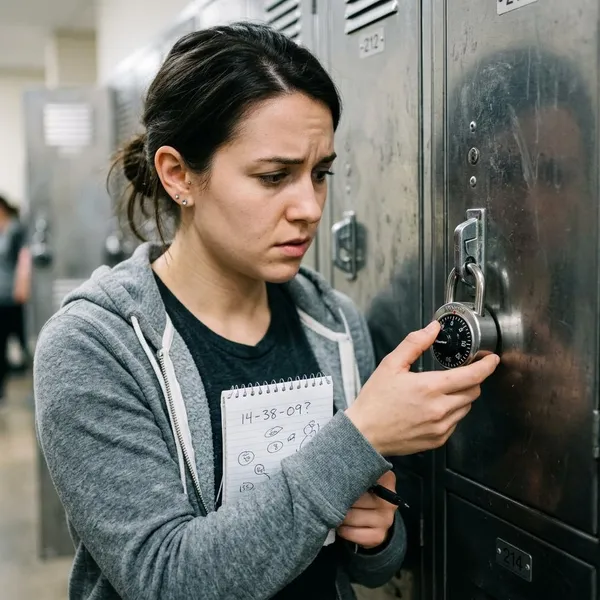
If you forgot the combination, stop repeated guessing and look for a legitimate record first. The best path is usually packaging, a secure note, the organization that issued the lock, the manufacturer's recovery process, or a locksmith with proof of ownership.
Check the original packaging
Look for the code on the box, plastic sleeve, instruction card, sticker, or small paper insert. Preset locks often include the combination in a place that is easy to throw away by accident.
If you find it, save the code somewhere secure and remove any visible code label from the lock.
Check your secure password record
Check a password manager, encrypted note, or locked household file if you use one. Search by the lock's location or purpose as well as by brand, because many people label codes as "gym padlock," "blue suitcase," or "bike cable" rather than the lock model.
Ask the school or workplace administrator
If the lock was issued by a school, gym, workplace, storage facility, or property manager, ask the administrator first. They may be able to verify your assignment and provide the combination or arrange an approved opening.
This is usually faster and safer than forcing the lock, especially when the locker, cabinet, or storage space does not belong entirely to you.
Use the manufacturer's verified recovery process
Some manufacturers can help recover a combination for certain models if you provide the required details, such as proof of ownership, model information, photos, or a serial number.
Not every lock supports recovery. Low-cost preset models may simply need replacement if the code is gone and no record exists.
Contact a locksmith with proof of ownership
A locksmith is a sensible last step when the lock protects something you own and the other recovery options have failed. Bring proof that connects you to the lock or the secured item.
For inexpensive padlocks or travel locks, replacement may cost less than service. For storage units, gates, cabinets, or higher-value items, professional help is often the better choice.
Can you reset a combination lock?
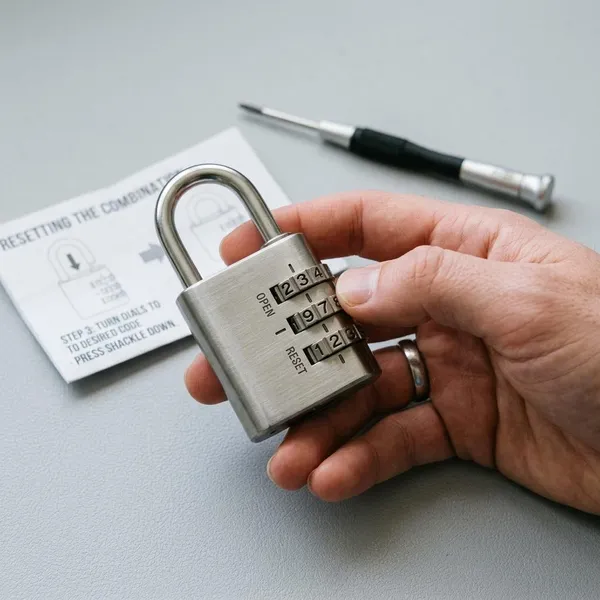
You can reset some combination locks, but only if the lock is designed to be reset. Most resettable models require the current code and must be open before you can choose a new one.
This is an important distinction. A luggage or cable lock may let you set your own code, while a traditional school-style rotary padlock may have a fixed factory combination that cannot be changed.
Resettable locks need the current code
Most resettable locks require the existing code before a new one can be set. That prevents someone from changing the combination just because they have the lock in their hand.
If the current code is unknown, use recovery options first rather than trying random reset steps.
The lock usually must be open
The lock usually has to be open so you can reach the reset lever, pin, button, or special shackle position. If the lock is closed, the reset feature is normally blocked.
The reset method varies by model
Different locks reset in different ways. Some use a small side button, some use a sliding switch, and others require turning the shackle before entering the new code.
Before changing the code, find the exact model instructions if possible. Guessing can leave you unsure whether the old or new code is active.
Preset locks may not support a new code
Many preset locks, especially traditional rotary dial padlocks, cannot be changed. If you need a custom code for shared household use, travel, or temporary access, choose a resettable model before you buy.
The new code should be stored securely
After setting a new code, save it with a clear label such as "black suitcase lock" or "garage cable lock." Then test the new code several times while the lock is still open before you close it for real.

Conclusion
The right way to open a combination lock depends on whether you are using a rotary dial or a wheel-style lock, so check the type first and then work slowly through the correct steps. If the code is known but the lock will not open, alignment and tension are the first things to fix; if the code is forgotten, stick with records, authorized support, or a locksmith rather than forcing the lock.