
To remove coffee stains, start by blotting the spill, then use cold water before any heat touches the fabric or surface. Fresh coffee usually comes out with detergent or diluted dish soap, while older marks may need a longer soak, white vinegar, oxygen bleach, or a fabric-safe stain remover. The first decision is simple: treat washable clothes differently from carpet, upholstery, delicate fabrics, and anything labeled dry clean only.
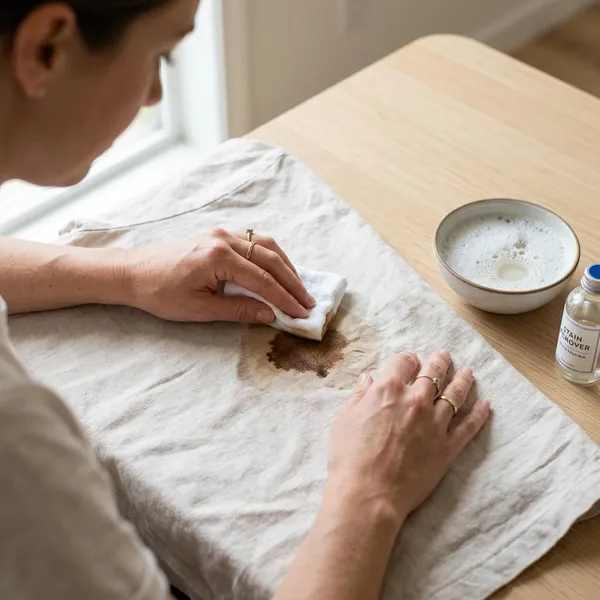
How do you remove a fresh coffee stain?
A fresh coffee stain is usually the easiest to deal with because the liquid has not fully settled into the fibers yet. Move quickly, but do not panic-scrub. Your safest order is: blot first, rinse with cold water, add a small amount of cleaner, wait briefly, then check before drying.
If the coffee had milk, cream, sugar, or syrup in it, treat it a little more carefully. Those extras can leave a sticky residue even after the brown color fades, especially on carpet, sofa fabric, or a shirt you cannot wash right away.
Blot up the excess coffee
Press a clean white cloth or paper towel onto the spill to lift as much coffee as possible. Work from the outside edge toward the center so the stain does not spread into a larger ring. Avoid rubbing, because friction can push coffee deeper and rough up fabric or carpet fibers.
Rinse with cold water
For washable fabric, run cold water through the back of the stain so the coffee is pushed out the way it came in. If the spill is on carpet or upholstery, use a cloth dampened with cold water instead of pouring water directly onto the area; soaking the padding underneath can create a bigger problem than the original stain.
Apply liquid detergent
Use liquid laundry detergent on washable clothes and a small amount of dish soap for carpet, upholstery, or coffee with cream. Gently work it into the stained area with your fingers or the back of a spoon. You want contact with the stain, not heavy scrubbing.
Wait five minutes
Give the detergent about five minutes to loosen the coffee before rinsing. Keep the area damp during this time; dried-on detergent can be harder to remove and may leave residue. For a work shirt treated in a restroom sink, even a short wait while you blot with a napkin is better than rinsing the soap away immediately.
Rinse and check the stain
Rinse with cold water again, then look at the stain in good light. Wet fabric can hide a pale brown mark, so do not assume it is gone just because it looks lighter. On carpet, keep blotting with a clean damp cloth until little or no coffee color transfers.
Repeat before drying
If any stain remains, repeat the cold-water and detergent treatment before using heat. This is the point where many stains become permanent: the item looks "good enough," goes into the dryer, and the last faint shadow sets into the fibers. Repeat treatment is safer than jumping straight to bleach or aggressive scrubbing.
How do you remove coffee stains from clothes?
For clothes, the main rule is to pre-treat before washing and air-dry until you are sure the stain is gone. A cotton T-shirt, office shirt, school uniform, or kitchen towel can usually handle cold water and liquid detergent well. Silk, wool, rayon, embellished fabric, and dry-clean-only items need a lighter touch.
Check the care label
Read the care label before adding cleaner. If the item says dry clean only, blot the stain and take it to a cleaner rather than soaking it at home. For washable clothes, the label tells you how warm the wash can be and whether products such as oxygen bleach are suitable.
Flush from the back with cold water
Turn the stained area inside out or hold the fabric so water runs through the back of the stain. This pushes coffee out instead of driving it farther into the weave. Try to keep the water focused on the stained patch so you do not spread the mark across clean fabric.
Rub in liquid laundry detergent
Apply a small amount of liquid laundry detergent directly to the stain and rub gently. Liquid detergent is useful because it spreads into the fibers more evenly than powder and can help lift both dark coffee color and residue from milk or sugar.
For a dried stain found at the end of the day, dampen the area first, then add detergent and let it sit longer than you would for a fresh spill. Do not scrape or scrub hard; old coffee needs contact time more than force.
Wash at the recommended temperature
Wash the garment according to the care label after pre-treatment. Warm water may be fine for many sturdy fabrics once the stain has been loosened, but the first flush should still be cold. If the stain was large or dark, check it before assuming one wash cycle was enough.
Air-dry until the stain is gone
Let the garment air-dry first, then inspect it in natural or bright light. If you see a tan or yellow shadow, treat it again before machine drying. This matters most for shirts, blouses, and light-colored clothes where even a faint mark will show once the fabric is fully dry.
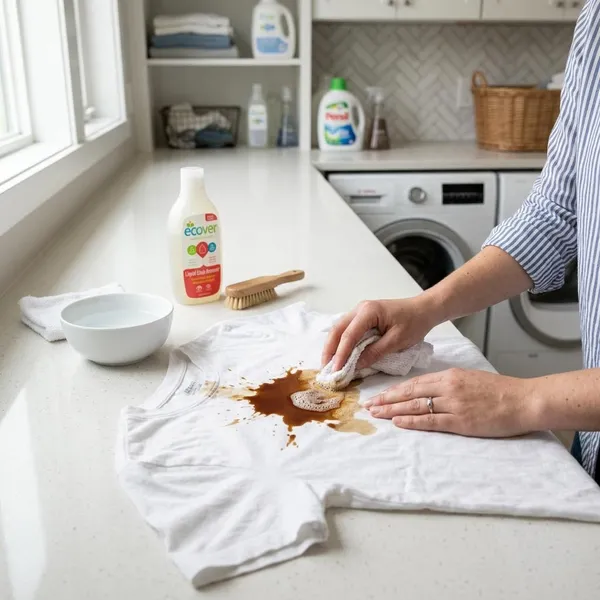
How do you remove coffee stains from white clothes?
White clothes make coffee stains more obvious, but they also give you a clear view of what still needs treatment. Start with detergent and cold water just as you would on colored fabric, then move to a safe brightening option only if a stain remains. The mistake to avoid is reaching for harsh bleach before checking the fabric label.
Start with detergent and cold water
Flush the stain from the back with cold water, add liquid laundry detergent, wait a few minutes, then rinse. This mild first step removes a lot of coffee without risking unnecessary fabric damage. It is especially useful for fresh stains on white cotton shirts, T-shirts, towels, or napkins.
Use oxygen bleach if the label allows
Oxygen bleach can help with the pale brown shadow that remains after normal washing, but use it only if the garment label and product directions allow it. It is often a better next step than chlorine bleach for washable white fabrics because it is less harsh while still helping with discoloration.
Soak stubborn stains before washing
For an older stain, soak the marked area in cold or lukewarm water with detergent. If the fabric allows, you can add an appropriate oxygen bleach product or a small amount of white vinegar as part of the soaking routine. A stained white tablecloth left overnight, for example, usually needs soak time rather than rough rubbing in one spot.
Avoid chlorine bleach on unsuitable fabrics
Skip chlorine bleach unless the care label clearly allows it. It can weaken fibers, yellow some fabrics, and damage trims, stitching, prints, or blends unevenly. Coffee stains often respond well to detergent, soaking, and oxygen bleach, so chlorine bleach is not the first tool to reach for.
Check the stain before machine drying
White fabric can look clean while wet and then show a beige outline after drying. Hold the garment under bright light before putting it in the dryer. If you still see a mark, repeat the treatment instead of using heat.
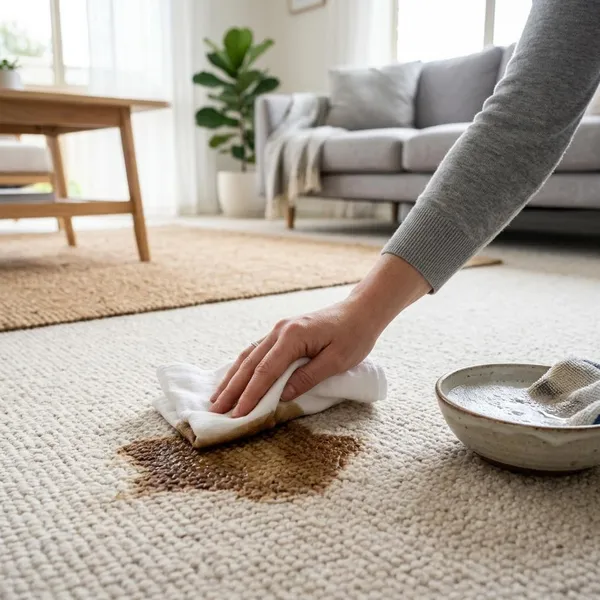
How do you remove coffee stains from carpet?
Carpet needs controlled moisture and patience. The coffee can move down into the pile or padding, so pouring on cleaner usually makes the stain wider and harder to dry. Use small amounts of solution, blot repeatedly, and give the area enough time to dry before deciding whether you need another round.
Blot from the outside inward
Use a clean white cloth and press from the outer edge of the spill toward the middle. Change to a clean section of cloth as it picks up coffee. This keeps the stain from spreading and lets you see whether color is still transferring.
Apply diluted dish soap
Mix a small amount of dish soap with water, then dab it onto the stain with a cloth. For many household carpets, a mild mix of dish soap, white vinegar, and water can help, but test it in a hidden spot first. Use less liquid than you think you need; over-wetting can lead to wicking, where the stain rises back to the surface as the carpet dries.
Blot with a clean white cloth
After applying the solution, blot again with a fresh white cloth. If the cloth keeps turning brown, the stain is still lifting. Keep working in light passes rather than scrubbing, especially on looped carpet or rugs that can fuzz or distort.
Rinse with a little clean water
Dab the area with a cloth dampened in clean water to remove soap residue. This step is easy to skip, but leftover soap can make carpet feel sticky and attract dirt later. The carpet should be damp, not soaked.
Absorb the remaining moisture
Press a dry towel over the spot to pull out as much moisture as possible. For a larger spill, place a folded towel on top and press with your hands or a flat weight for a short time. Replace the towel if it becomes wet.
Let the area dry fully
Allow the carpet to dry completely before judging the result. A fan or open window can help. If a faint stain comes back after drying, repeat the mild cleaning process; for wool rugs, antique rugs, or expensive carpet, it is safer to get professional advice before using stronger products.
Which cleaners remove coffee stains?
The best cleaner depends on where the coffee landed and what was in the drink. Plain black coffee on a washable shirt usually needs less than a latte spill on carpet. Start with the mildest cleaner that fits the surface, then move up only if a visible stain remains.
| Cleaner | Best use | Watch out for |
|---|---|---|
| Liquid laundry detergent | Washable clothes and linens | Do not dry until the stain is gone |
| Diluted dish soap | Carpet, upholstery, and creamy coffee spills | Use a small amount so residue does not stay behind |
| White vinegar | Faint discoloration or older stains | Test delicate fabrics and upholstery first |
| Oxygen bleach | White or colorfast washable fabric | Use only when the label allows it |
| Fabric-safe stain remover | Dried or previously washed marks | Match the product to the fabric |
Conclusion
Coffee stains are much easier to remove when you slow down for the right first steps: blot, use cold water, choose a cleaner that matches the surface, and keep heat away until the stain is truly gone. A fresh spill on a washable shirt can be simple; an old mark on white fabric or a soaked carpet needs more patience and careful checking. If the item is delicate, valuable, or dry clean only, stop after blotting and let a professional handle it.