
The easiest way to make good coffee at home is to control three things first: the amount of coffee, the amount of water, and the grind size. If you are learning how to make coffee, start with a simple 1-to-16 ratio, use hot water just off the boil, and keep the method repeatable before you start experimenting.
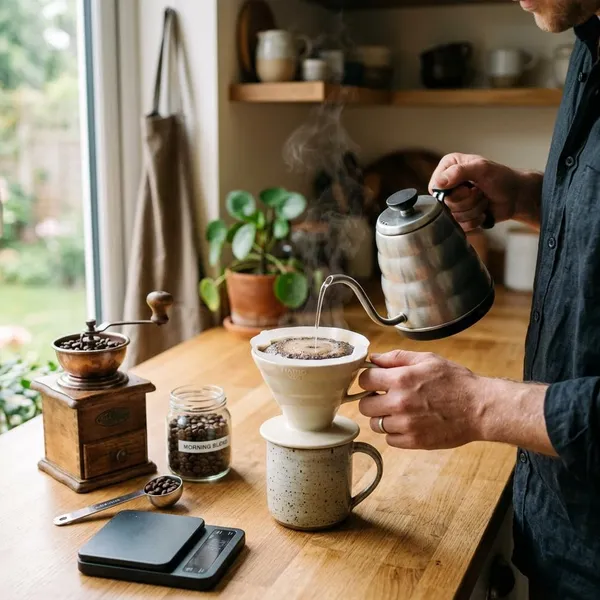
How do you make coffee step by step?
A dependable cup starts with a simple order: use fresh coffee, measure it, match the grind to your brewer, use properly hot water, brew for the right time, drink it while it is fresh, and clean the equipment afterward. If the cup tastes off, check those basics before blaming the beans.
Choose fresh coffee
Fresh coffee gives you a cleaner starting point. Whole beans usually hold their aroma longer than pre-ground coffee, so grind just before brewing if you can. For everyday use, buy an amount you can finish within a few weeks after opening and store it in an airtight container away from heat, light, and moisture.
Measure the coffee and water
Measuring is the fastest fix for weak, harsh, or inconsistent coffee. A scale is best, but you can still improve a lot by using the same scoop and the same mug every time.
- Best starting point: 1 gram of coffee for every 16 grams of water.
- No scale: use the same spoon each time and adjust slowly.
- First thing to change: the amount of coffee, not every variable at once.
Match the grind to your brewer
Grind size controls how quickly the water pulls flavor from the coffee. Use coarse grounds for French press, medium grounds for most drip machines, and medium-fine grounds for pour over. If the coffee tastes sour and thin, the grind may be too coarse; if it tastes bitter and heavy, it may be too fine.
Pre-ground coffee labeled for drip brewing is fine for a basic machine. For French press or pour over, a grinder gives you more control because those methods react more noticeably to the wrong grind.
Heat the water
For most hot coffee, aim for water between 195°F and 205°F. Without a thermometer, boil the water and let it rest for about 30 seconds before pouring. That small pause is usually enough for manual brewing.
Brew for the right amount of time
Brew time depends on the method. French press is usually around 4 minutes, pour over often lands between 2.5 and 4 minutes, and drip machines handle timing automatically. If your pour over finishes very quickly, the grind may be too coarse; if it stalls, the grind may be too fine or the filter may be clogged.
A timer is useful for manual brewing because it keeps you from changing the recipe by accident. Once the timing is steady, taste adjustments become much easier.
Serve the coffee immediately
Coffee tastes best soon after brewing, before the aroma fades and the flavor turns stale. If you make one mug, drink it fresh. If you make a larger pot for a slow morning or a small household, move it to a thermal carafe instead of leaving it on a hot plate for a long time.
Clean the equipment
Old coffee oils can make even fresh beans taste dull or bitter. Rinse the brew basket, carafe, French press screen, or dripper after use, and wash removable parts regularly. If a drip machine starts tasting stale even with good coffee, cleaning the basket and running a proper descaling cycle are practical first checks.
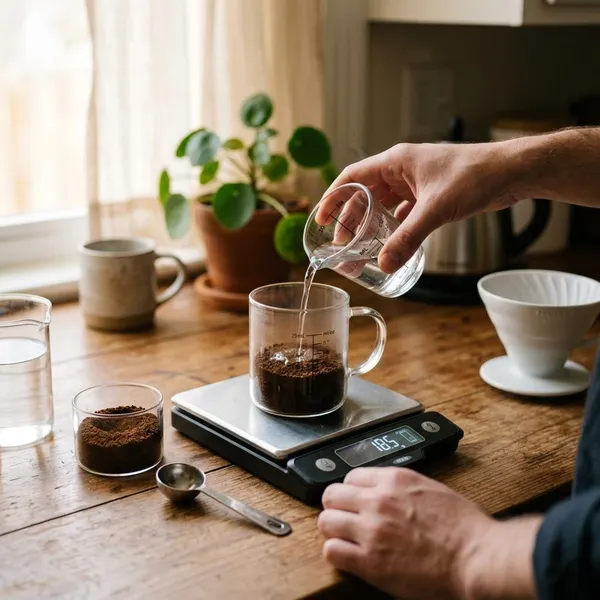
How much coffee and water should you use?
Start with a 1-to-16 coffee-to-water ratio by weight. It is strong enough for most people without becoming muddy, and it gives you a clear baseline. Once you know what that tastes like, adjust slightly instead of changing the whole recipe.
| Amount you want | Coffee to start with | Good for |
|---|---|---|
| 8 ounces of water | 15 grams | One standard mug |
| 16 ounces of water | 30 grams | Large mug or travel tumbler |
| Stronger cup | Slightly more coffee | Milk drinks or bold taste |
| Lighter cup | Slightly less coffee | Easy sipping without heaviness |
Start with a 1-to-16 coffee ratio
A 1-to-16 ratio means 1 part coffee to 16 parts water by weight. For example, 20 grams of coffee pairs with 320 grams of water. It is not the only good ratio, but it is the easiest one to troubleshoot because the cup should taste balanced before you make personal adjustments.
If you drink coffee black, stay close to this baseline at first. If you always add milk, you may prefer a slightly stronger brew so the coffee flavor does not disappear.
Use 15 grams for 8 ounces of water
Use 15 grams of coffee with 8 ounces of water for one practical mug. This is a good starting recipe for drip coffee, pour over, or a small French press serving.
Use 30 grams for 16 ounces of water
Use 30 grams of coffee with 16 ounces of water when you want a larger mug, a travel tumbler, or two smaller servings. This is also a useful amount when brewing before a commute because it stays close to the same strength as the smaller recipe.
If the 16-ounce version tastes weaker than expected, check whether your brewer's "cup" markings are smaller than your actual mug. Many coffee machines do not measure cups the way people do at the kitchen counter.
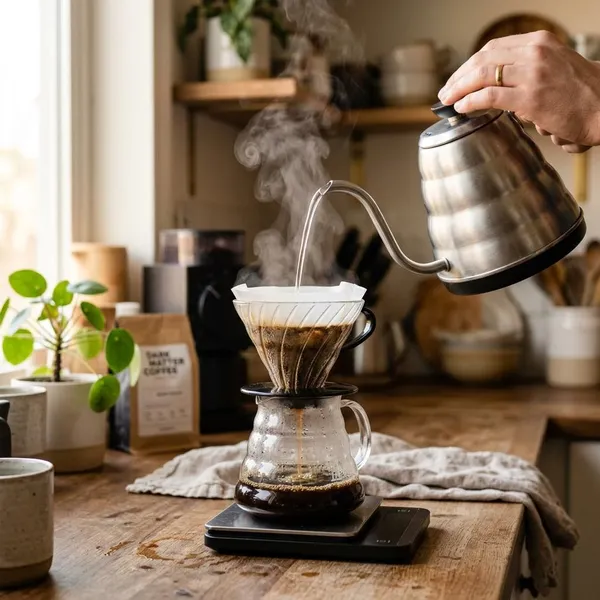
What water temperature makes the best coffee?
The best water temperature for most coffee is 195°F to 205°F. Too cool, and the cup can taste sour or thin. Too hot for too long, especially with fine grounds, and the flavor can turn harsh.
You do not need special gear to get close. A normal kettle, a short rest after boiling, and a consistent routine are enough for most home brewers.
Use water between 195°F and 205°F
This range extracts sweetness, acidity, and body without pushing the coffee too far. If you have a temperature-controlled kettle, set it inside this window. If you do not, aim for water just off the boil rather than water that has cooled for several minutes.
Let boiling water rest briefly
After the kettle reaches a full boil, wait about 30 seconds before pouring. This is especially helpful for pour over and French press, where you control the water yourself. It also gives you time to set the filter, warm the mug, or start a timer without rushing.
Use filtered water for a cleaner taste
Filtered water is worth trying if your tap water smells like chlorine, tastes metallic, or leaves heavy mineral buildup. Coffee is mostly water, so unpleasant water shows up quickly in the cup.
Keep the temperature consistent
Consistency matters more than chasing a perfect number every morning. Use the same kettle, the same rest time, and the same brewing routine. If one cup uses near-boiling water and the next uses lukewarm water, you will not know whether the problem is the coffee, the grind, or the heat.
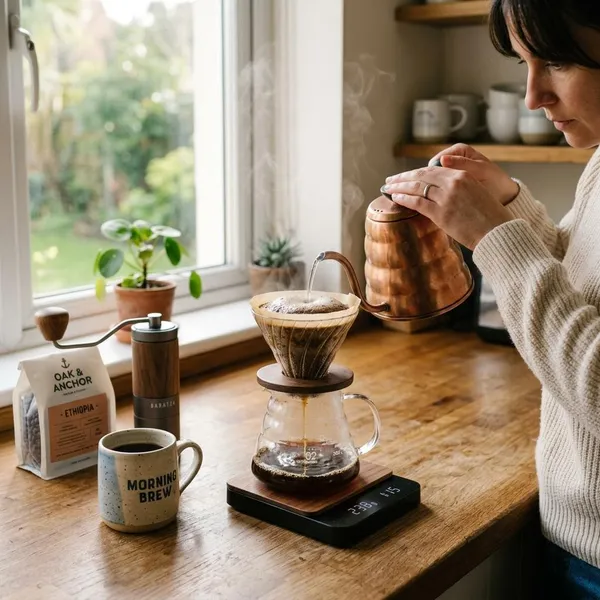
How do you make drip coffee?
Drip coffee is the easiest reliable method for busy mornings because the machine controls the water flow and timing. Your job is to set it up well: use the right filter, medium-ground coffee, measured water, and a clean basket.
This method is a good choice for a household pot, a work-from-home routine, or anyone who wants coffee without standing over a kettle. It is less flexible than pour over, but it is much easier to repeat.
Place the filter in the basket
Put the filter in the basket so it sits flat and fits the shape of the brewer. A paper filter that folds over or collapses can cause grounds to spill into the pot or water to flow unevenly.
If your coffee sometimes tastes papery, rinse the filter with hot water before adding the grounds. It is optional, but it can help with some paper filters.
Add medium-ground coffee
Medium-ground coffee works best for most drip machines because it lets water pass through at a steady pace. Spread the grounds evenly in the filter instead of leaving a mound on one side. For a first batch, use the 1-to-16 ratio or the machine's capacity marks with a consistent scoop.
Fill the reservoir with cold water
Use cold filtered water if possible. Most drip machines are designed to heat cold water through the brew cycle, and filtered water can reduce off flavors.
Pay attention to the markings on the reservoir. A "cup" on the machine may be much smaller than your mug, so measuring once with your actual mug or scale can prevent weak coffee later.
Start the brewing cycle
Start the machine and let the cycle finish without opening the basket or moving the carafe. If your brewer has strength settings, begin with the regular setting first. Learn the normal flavor before using bold or slow-brew options.
Serve once brewing is complete
Serve drip coffee soon after the machine finishes. If the pot will sit for more than a short while, a thermal carafe is better than a hot plate because it keeps the coffee warm without continuing to cook it.
Discard the grounds and rinse the basket
Throw away the used grounds and rinse the basket once it is cool enough to handle. Also rinse the carafe so old coffee does not dry onto the glass or metal. This quick habit prevents stale flavors from showing up in tomorrow's cup.
Conclusion
Good home coffee does not require a complicated setup; it mostly requires a repeatable one. Start with fresh coffee, measure the water and grounds, use the right grind for your brewer, and only change one thing at a time when the flavor is not right. Once your basic cup is steady, small adjustments become useful instead of random.