
Good leather care is mostly about preventing small damage from becoming permanent: dust often, clean gently, blot spills fast, and keep the furniture away from harsh heat and sun. If you are learning how to care for leather furniture, start by identifying the leather type before using any cleaner or conditioner, because the safest method for one sofa can mark or darken another.

How to care for leather furniture
The best routine is simple: remove dry dirt before it rubs into the finish, deal with spills before they soak in, and control the room conditions around the furniture. A heavily used family sofa needs more frequent touch-ups than a leather chair in a quiet office, but the priorities stay the same.
Dust the surface regularly
Wipe leather once a week with a soft, dry microfiber cloth. On seats, arms, and headrests, dust mixes with body oils and slowly dulls the finish, so a quick wipe is more useful than waiting until the furniture looks dirty.
Vacuum seams and crevices
Use a soft brush attachment and light pressure around seams, cushion gaps, piping, and folds. Crumbs, grit, and pet hair collect there first, and that trapped debris can rub against the leather every time someone sits down.
If you have children, pets, or a sofa that gets daily use, check these areas every couple of weeks. A low-use chair may only need a deeper vacuum once a month.
Blot spills as soon as they happen
Use a clean white cloth and blot from the outside of the spill toward the center. Rubbing spreads liquid and can push color, sugar, or oils deeper into the surface.
For coffee, juice, wine, or pet accidents, speed matters more than pressure. Lift as much liquid as possible first, then decide whether a leather-safe cleaner is needed after the surface is no longer wet.
Keep leather away from direct heat and sunlight
Sun and dry heat are common reasons leather fades, stiffens, or cracks early. Try to leave space between leather furniture and radiators, fireplaces, heating vents, or sunny windows.
Know your leather type before cleaning
Leather furniture is not all cared for the same way. The finish matters more than the price or the word "genuine" on a sales tag. Before cleaning, check the care label, original order details, or the brand's website if you can still find the model.
If you cannot confirm the type, treat the piece cautiously: use minimal moisture, avoid harsh household products, and test any cleaner somewhere hidden before touching a visible seat or arm.
Protected leather
Protected leather has a surface coating that makes it more forgiving with daily spills and light cleaning. It is common on family sofas and recliners, but it still should not be soaked, scrubbed, or cleaned with all-purpose sprays.
A barely damp microfiber cloth or furniture-leather cleaner is usually the safest starting point after dust has been removed.
Aniline and unprotected leather
Aniline and unprotected leather look natural and soft, but they absorb moisture more easily. Water, cleaner, or oil can darken the surface, so spot testing is not optional.
For a pale aniline chair, an ink mark or drink ring is a higher-risk problem than the same spill on protected leather. If the furniture is expensive or the stain is obvious, professional cleaning is often the safer choice.
Full grain and top grain leather
Full grain and top grain describe the leather's surface quality, not the cleaning method by themselves. Either one may be protected, lightly finished, or more absorbent, so do not assume premium leather can handle stronger products.
Faux leather
Faux leather is synthetic and does not absorb conditioner like real leather. It often wipes clean more easily, but heat, strong solvents, and abrasive pads can still crack, dull, or weaken the surface coating.

How to clean leather furniture safely
Safe cleaning means using the least moisture and product that will do the job. Start dry, check the care instructions, test first, then clean gently in small areas. Heavy scrubbing usually causes more trouble than the dirt itself.
Remove loose dust and debris
Vacuum seams and cushion gaps first, then wipe the surface with a dry microfiber cloth. This prevents grit from being dragged across the finish when you begin damp cleaning.
Check the manufacturer care instructions
Look for the care label or brand instructions before using soap, cleaner, or conditioner. Some finishes tolerate light water-based cleaning; others need a specific product or professional care.
Test the cleaner on a hidden area
Apply a small amount of cleaner to the back, underside, or another hidden spot. Let it dry fully, then check for darkening, fading, tackiness, dullness, or a rough change in texture.
Wipe the leather gently
Put cleaner on the cloth, not directly on the furniture unless the product instructions say otherwise. Work in small sections with light pressure, and avoid soaking seams or cushion edges.
- Light dust: dry cloth may be enough.
- Body oil buildup: use a leather-safe cleaner sparingly.
- Sticky residue: repeat gently rather than scrubbing harder.
Remove excess moisture
After cleaning each section, wipe it with a clean dry cloth. Leather should feel clean, not damp or coated. Pay attention to seams, where moisture and product can collect.
Let the surface dry naturally
Let the furniture dry at room temperature before sitting on it heavily or applying conditioner. Do not use a hair dryer, heater, or direct sun to speed up drying, because fast drying can make leather feel stiff or uneven.
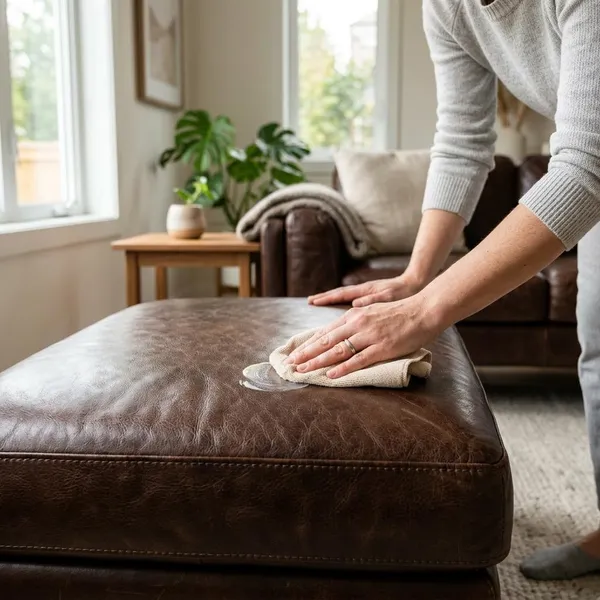
How to condition leather furniture
Conditioning can help real leather stay flexible, but it is not something to do automatically every time you clean. Too much conditioner can leave a sticky film, attract dust, or make protected leather look dull and heavy.
Check whether your leather needs conditioner
After cleaning and drying, compare high-use areas with lower-use areas. If armrests or seat cushions feel rougher, drier, or less supple than the back or sides, light conditioning may help.
If the leather still feels smooth and balanced, wait. Conditioning healthy leather too often creates buildup rather than protection.
Use a leather appropriate conditioner
Choose a conditioner made for furniture leather and suitable for the finish you have. Products for boots, saddles, or car interiors may contain oils or waxes that are not ideal for upholstered leather.
Apply a small amount evenly
Use a soft cloth and apply a thin layer in small sections. Start with less than you think you need; conditioner spreads easily, and a heavy coat is more likely to leave dark patches or a greasy feel.
Remove excess product
Buff the surface with a clean dry cloth after the conditioner has had time to absorb. The leather should feel supple, not oily, and your hand should not pick up residue when you touch it.
Repeat only as often as needed
Many real leather pieces only need conditioning once or twice a year, but room conditions and use matter. Daily seating, strong sun, dry winter air, and heat vents can shorten the interval; occasional use in a stable room may need less.
Conditioner will not repair peeling, deep cracks, or missing finish. At that stage, you are looking at repair rather than routine care.
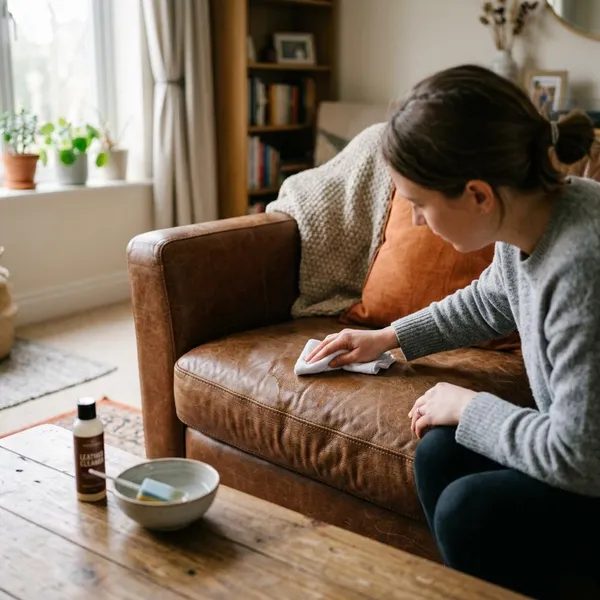
How to handle stains on leather furniture
For stains, the safest first move is usually the gentlest one: blot, avoid rubbing, and do not experiment with vinegar, bleach, alcohol, baby wipes, or abrasive pads. The right response depends on what caused the stain and how absorbent the leather is.
A fresh spill on protected leather is often manageable at home. An old ink mark on pale, unprotected leather is a different situation and may be better left to a leather-care professional.
Water and drink spills
Blot liquid immediately with a dry white cloth. If a ring starts to form, lightly wipe just beyond the spill edge with a barely damp cloth, then dry the area with a clean cloth and let it air-dry.
Sugary or colored drinks may need a leather-safe cleaner after blotting, especially if the surface feels sticky.
Oil and grease stains
Blot fresh grease without rubbing, then apply a small amount of cornstarch or baking soda to help draw oil from the surface. Let it sit for several hours, brush it away gently, and repeat if the mark improves but is still visible.
Avoid adding water at the start, because it can spread oily residue and make the stain harder to control.
Ink and dye transfer
Ink, denim transfer, and dark fabric dye are difficult to fix safely at home. Blot only if the mark is fresh, but do not scrub or reach for rubbing alcohol on a visible area without testing and understanding the risk.
On valuable, pale, or absorbent leather, professional help is usually the smarter call. A small ink line can become a pale, stripped patch if the wrong solvent is used.
Pet stains
Blot up as much liquid as possible right away, then use a cleaner approved for leather upholstery if the care instructions allow it. Keep moisture out of seams and dry the area thoroughly.
Light scratches and scuffs
Buff light scuffs gently with a clean microfiber cloth. On some real leather, a small amount of appropriate conditioner can make shallow marks less noticeable after cleaning and drying.
- Fine surface scuff: try gentle buffing first.
- Color loss: avoid guessing with repair dye.
- Pet scratches: trim nails and protect favorite seating spots.
Conclusion
Leather furniture lasts best when care stays light, regular, and matched to the material. Check the leather type first, keep dirt and heat from doing slow damage, and use stronger action only when the situation really calls for it. If a stain is large, old, or on delicate leather, restraint is usually cheaper than a rushed DIY fix.