
A standard 8-ounce cup of brewed coffee has about 95 mg of caffeine, but the number can change quickly once the "cup" becomes a large mug, a café size, cold brew, or an espresso drink with extra shots. The first thing to check is not the word "cup" but the actual ounces you drank.
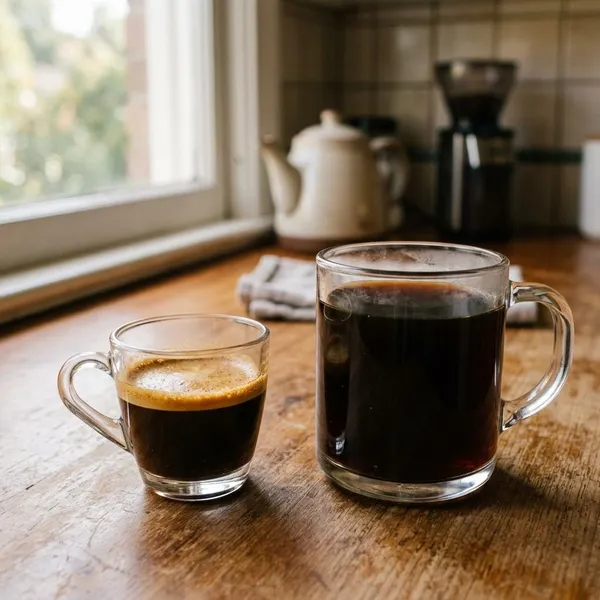
What counts as one cup of coffee?
"One cup" sounds simple, but coffee uses the word in a few different ways. Health references usually mean an 8-ounce serving, while coffee machines, home mugs, and café cups may mean something much smaller or much larger.
A standard serving is 8 fluid ounces
For caffeine estimates, a standard cup of brewed coffee is 8 fluid ounces. That size usually contains about 80 to 100 mg of caffeine, with 95 mg used as a common average.
A coffee-maker cup may be smaller
The markings on many drip coffee makers do not use an 8-ounce cup. A "cup" on the machine is often closer to 5 or 6 ounces, so a 10-cup pot does not mean ten full nutrition-style cups.
This matters at home when you pour into a large mug. You may think you had one coffee, but the machine may have brewed the equivalent of several smaller "machine cups."
A café cup may hold 12 to 20 ounces
A small café coffee is often around 12 ounces, while medium and large drinks commonly run 16 to 20 ounces. That means a normal-looking takeaway coffee can equal one and a half to two and a half standard cups.
- Quick check: look for the ounces before counting cups.
- At home: measure your favorite mug once; many hold 10 to 15 ounces.
- At a café: "small" and "large" vary by shop, so the size label is not enough.
How much caffeine is in different coffee sizes?
Serving size is usually the biggest reason caffeine estimates feel confusing. If the coffee is brewed at average strength, you can use roughly 12 mg of caffeine per ounce as a practical estimate, then adjust if the drink is unusually strong or weak.
An 8-ounce cup has about 95 mg
An 8-ounce brewed coffee has about 95 mg of caffeine on average. It is not an exact lab number for every cup, but it is a useful starting point for everyday tracking.
A 12-ounce cup may have about 140 mg
A 12-ounce coffee may have about 140 mg of caffeine. This is a common takeaway size, so it is easy to underestimate it if you mentally count it as one standard cup.
For someone who is sensitive to caffeine, that extra 45 mg or so can be noticeable. A 12-ounce coffee before a busy morning may feel fine, while the same drink after poor sleep or on an empty stomach may feel too strong.
A 16-ounce cup may have about 190 mg
A 16-ounce brewed coffee may contain about 190 mg of caffeine, which is close to two standard cups. Strong café coffee or cold brew can go higher, so the estimate is safest when the drink is regular brewed coffee.
| Coffee size | Common estimate | What it means in practice |
|---|---|---|
| 8 ounces | About 95 mg | A standard reference cup |
| 12 ounces | About 140 mg | Often sold as a small café coffee |
| 16 ounces | About 190 mg | Closer to two standard cups |
The safest estimate comes from checking three things in order: the size in ounces, whether the drink is brewed coffee or espresso-based, and whether it includes concentrate, extra shots, or refills.
Does espresso have more caffeine than coffee?
Espresso is stronger ounce for ounce, but brewed coffee often has more caffeine in the serving you actually drink. The confusion comes from comparing concentration with total cup size.
Espresso has more caffeine per ounce
A single espresso shot is usually about 1 ounce and often contains around 60 to 75 mg of caffeine. Per ounce, that is much more concentrated than regular brewed coffee.
Brewed coffee often has more per serving
An 8-ounce brewed coffee averages about 95 mg, so it often has more caffeine than a single espresso shot. A 12- or 16-ounce brewed coffee can increase the gap even more.
Flavor is a poor guide here. A bold-tasting espresso may contain less total caffeine than a mild-tasting large drip coffee.
Multiple espresso shots can exceed one coffee
Two or three espresso shots change the math quickly. A double shot may land around 120 to 150 mg, and a large latte with extra shots can rival or exceed a regular brewed coffee.
- Latte drinker: check the shot count, not just the cup size.
- Iced drink: milk, syrup, and ice can hide how strong the caffeine dose is.
- Quick espresso habit: two small drinks can add up faster than one slow-sipped mug.
How much caffeine is safe in a day?
For most healthy adults, up to 400 mg of caffeine per day is commonly treated as a reasonable upper limit. That is a ceiling, not a target, and some people feel better staying well below it.
Up to 400 mg suits most healthy adults
At average strength, 400 mg is roughly four 8-ounce cups of brewed coffee. If your usual drink is a 16-ounce café coffee, you may reach that amount with about two large servings.
Individual sensitivity can lower that amount
Some people process caffeine slowly or simply feel its effects more strongly. Stress, poor sleep, certain medications, and drinking coffee without food can also make the same amount feel stronger.
For a low-risk day at home, one large coffee may be no problem. Before a long drive, an important presentation, or a night when you need good sleep, it may be smarter to choose a smaller serving and avoid late caffeine.
Pregnancy may require a lower limit
Pregnancy often calls for a lower limit, commonly around 200 mg per day, though personal medical guidance should come first. A large café coffee can approach that amount by itself, depending on how it is brewed.
Tea, soda, chocolate, and energy drinks also count. If you are pregnant or trying to become pregnant, it is worth tracking total caffeine rather than only counting coffee.
Children and teens need stricter limits
Children and teens are generally more sensitive to caffeine than adults, and regular high intake can interfere with sleep, mood, and concentration. Coffee is only one source; energy drinks, iced coffee drinks, pre-workout products, and soda can add up quickly.
How can you reduce caffeine without giving up coffee?
You do not have to quit coffee to lower your caffeine intake. The easiest changes are usually smaller servings, fewer espresso shots, half-caff, decaf swaps, and an earlier cutoff time.
Choose a smaller cup
Switching from a 16-ounce mug to an 8- or 12-ounce cup can cut caffeine without changing the coffee itself. This works especially well for people who like the morning ritual but do not need a huge dose.
Order fewer espresso shots
If your usual drink has two or three shots, asking for one fewer shot lowers caffeine immediately while keeping the same basic drink. This is often easier than switching orders completely.
Switch to half-caff
Half-caff is a useful middle option when full decaf feels like too much of a jump. At home, you can mix regular and decaf grounds in roughly equal amounts; at a café, ask whether they can make the drink half-caff.
Replace some cups with decaf
Decaf still has a little caffeine, often far less than regular coffee, but it can keep the taste and routine. A simple pattern is regular coffee first thing, then decaf for any later cups.
This is a good fit for someone who drinks coffee mainly for comfort or habit. If you rely on coffee for alertness all day, start by replacing only the latest cup so the change feels manageable.
Avoid coffee later in the day
Even moderate caffeine can affect sleep if you drink it too late. Some people need to stop after lunch, while others may need a morning-only cutoff.
If you fall asleep later than planned or wake up unrefreshed, move your last coffee earlier for a week and see whether sleep improves. That test is more useful than guessing from caffeine totals alone.
Cut back gradually
A sudden stop can cause headaches, fatigue, and irritability, especially if you drink several cups a day. Reduce one step at a time: smaller cup first, then half-caff or decaf, then an earlier cutoff if needed.
Conclusion
The most useful estimate is simple: count an 8-ounce brewed coffee as about 95 mg of caffeine, then adjust upward for bigger cups, stronger brews, cold brew, or extra espresso shots. If you want better control over energy and sleep, check ounces first, shot count second, and your own reaction last—your comfortable limit may be lower than the general guideline.