
If you remember Family Matters only as "the Steve Urkel show," you are missing half of what made it work. The sitcom began as a Winslow family story, grew into one of the most recognizable TV comedies of the 1990s, and changed a lot across its nine seasons. The best way to understand family matters television is to separate the grounded early years from the bigger, Urkel-driven years that made the show a pop culture fixture.
What Is Family Matters About?
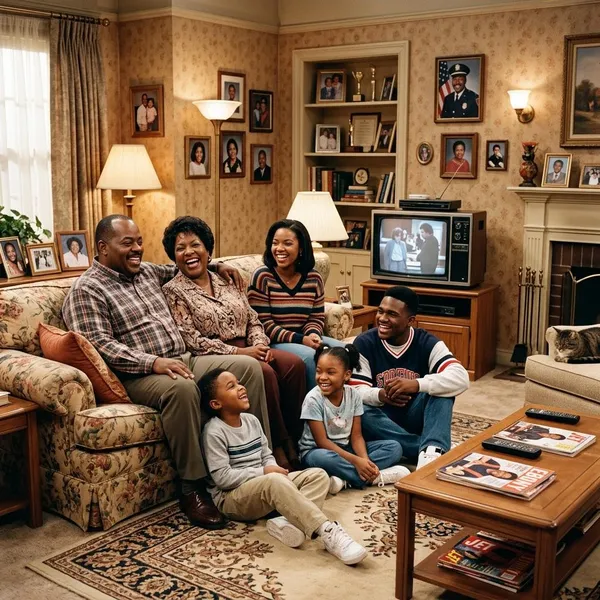
Family Matters follows the Winslows, a middle-class Black family in Chicago, as they deal with parenting, school, work, dating, and everyday household problems. It started as a spin-off connected to Perfect Strangers, where Harriette Winslow first appeared, but it quickly became its own show with its own rhythm.
The simplest way to choose where to start is to decide what you want from the show. If you want a warmer family sitcom, the early seasons are the clearest fit. If you want the version most people quote and remember, the middle seasons give you more Steve Urkel, bigger jokes, and the show's most famous comic identity.
The Winslows navigate everyday family life
The original heart of the show is the Winslow home. Carl and Harriette raise their children, deal with bills and rules, and try to keep the house steady while relatives, neighbors, and teenage problems keep adding pressure.
Carl balances police work and home life
Carl Winslow is both a Chicago police officer and a father trying to keep order at home. That combination lets the show use him for broad comedy, especially when Urkel tests his patience, while still giving him serious parenting moments.
- At work: Carl brings in themes of duty, fairness, and authority.
- At home: he is protective, stubborn, loving, and often overwhelmed.
- With Urkel: his need for peace becomes one of the show's best running jokes.
Eddie and Laura grow up through the series
Eddie and Laura keep the show from feeling frozen in one stage of family life. Eddie's stories often involve popularity, dating, jobs, and learning from bad choices, while Laura grows into a confident young woman with her own standards and ambitions.
Laura also becomes central because of Steve Urkel's long-running crush on her. That storyline can be funny, but it also changes how the show uses her: she is often the emotional counterweight to Urkel's chaos, not just the person he is trying to impress.
Steve Urkel changes the family dynamic
Steve Urkel begins as the odd neighbor and becomes the character who reshapes the entire series. His voice, clothes, physical comedy, catchphrases, and constant accidents made him instantly memorable, and the show gradually gave him more space because audiences responded so strongly.
The important thing to know is that Urkel did not just add jokes; he changed the center of gravity. The Winslows remained the family at the center, but many episodes became about how they reacted to Urkel's inventions, mistakes, crushes, and attempts to belong.
Family stories gradually mix with bigger comedy
As the seasons move on, the show becomes less grounded and more willing to use inventions, alter egos, and almost fantasy-style sitcom plots. That shift is why two viewers can talk about Family Matters and seem to remember different shows.
If you are watching with nostalgia, that bigger comedy may be the part you came back for. If you are watching for the first time and want believable family stories, you may prefer the early stretch before the inventions and transformations take over.
Who Is in the Family Matters Cast?
The cast is the reason the show could survive such a big tonal shift. The Winslows had to feel like a real family first; otherwise, Steve Urkel's later dominance would have turned the series into pure sketch comedy.
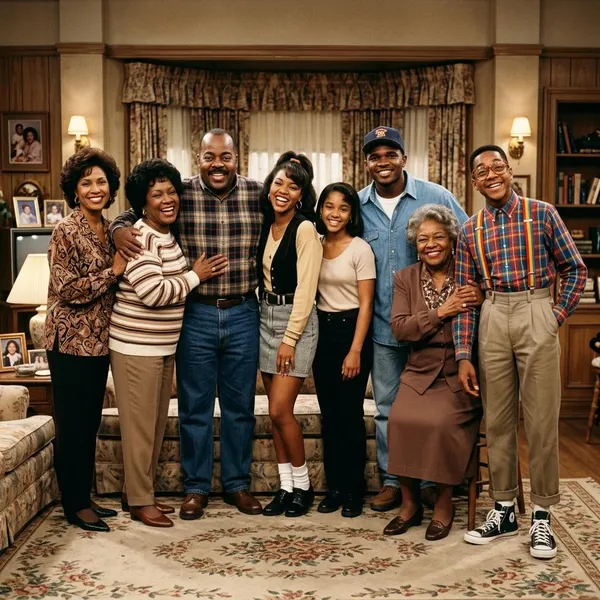
For a quick read on the ensemble, think of it this way: Carl brings authority and frustration, Harriette brings balance, Eddie and Laura bring growing-up stories, Estelle adds generational perspective, Rachel broadens the household, and Urkel disrupts nearly everything.
Reginald VelJohnson as Carl Winslow
Reginald VelJohnson plays Carl Winslow, the father of the family and one of the show's strongest comic anchors. Carl is loud, protective, impatient, and deeply caring, which keeps him from becoming just the angry sitcom dad.
His best scenes often come from contrast. He wants a calm house, but he lives in a sitcom where Steve Urkel can walk in and wreck that calm within seconds.
Jo Marie Payton as Harriette Winslow
Jo Marie Payton plays Harriette Winslow, the practical center of the household. Because Harriette came from Perfect Strangers, she is also the clearest link between the spin-off and the original show.
Harriette matters because she gives the series common sense. When Carl overreacts, the kids push boundaries, or the comedy gets noisy, she often brings the scene back to something human.
Darius McCrary as Eddie Winslow
Darius McCrary plays Eddie Winslow, whose stories often show the messy side of growing up. Eddie wants freedom and status, but he often has to learn responsibility the hard way.
For viewers choosing episodes to sample, Eddie's storylines are usually strongest when the show is still balancing teen problems with family consequences. They help preserve the sitcom's coming-of-age side even as Urkel becomes more dominant.
Kellie Shanygne Williams as Laura Winslow
Kellie Shanygne Williams plays Laura Winslow, one of the show's most important characters. Laura is smart, direct, and not easily pushed around, which is why her dynamic with Steve Urkel became such a long-running part of the series.
Jaleel White as Steve Urkel
Jaleel White plays Steve Urkel, the breakout character who became the face of the show. Urkel first appears in season 1 and quickly grows from a supporting neighbor into the sitcom's most marketable and recognizable figure.
- Why he stood out: the voice, glasses, suspenders, and physical timing were instantly memorable.
- Why he changed the show: writers built more plots around his popularity.
- Why fans still debate him: he made the show famous, but he also pulled attention away from the original family format.
Rosetta LeNoire as Estelle Winslow
Rosetta LeNoire plays Estelle Winslow, often called Mother Winslow. She gives the household a multigenerational feel and brings a sharper, older perspective to family conflicts.
Estelle is useful because she is not only there for warm advice. She can tease Carl, challenge the younger characters, and make the home feel fuller than a standard parents-and-kids sitcom setup.
Telma Hopkins as Rachel Crawford
Telma Hopkins plays Rachel Crawford, Harriette's sister, who is especially important in the early seasons. Rachel lives with the Winslows for a time and raises her son Richie, adding single-parent and extended-family storylines to the mix.
Her role becomes smaller as the show leans harder into Urkel-centered comedy. That is one reason early-season viewers may notice a broader family ensemble than people who mostly remember the later, more exaggerated episodes.
How Did Family Matters Change Over Time?
Family Matters changed more dramatically than many long-running sitcoms. It began as a family-centered comedy and gradually became a broader, more invention-heavy series built around Steve Urkel's popularity.
That does not make one era automatically better than the other. It simply means the right starting point depends on what you want: grounded family stories, classic Urkel moments, or the full strange evolution from domestic sitcom to almost cartoon-level comedy.
Early episodes focused on the Winslows
The earliest episodes spend more time on parenting, school, peer pressure, chores, sibling conflict, and everyday lessons. Steve is present, but the Winslow family still clearly drives the show.
This is the best era if you want to understand the original premise. It also gives more context for why Carl, Harriette, Eddie, Laura, Estelle, and Rachel mattered before the show's focus narrowed around its breakout character.
Steve Urkel became the breakout character
Urkel's rise was not subtle. Once audiences reacted to him, the show gave him more screen time, more catchphrases, and eventually more control over the kinds of stories being told.
| Viewer preference | Best part of the show to try first |
|---|---|
| Warm family sitcom | Start with the early Winslow-focused seasons |
| Classic 1990s catchphrase comedy | Try the middle seasons where Urkel dominates |
| Curiosity about the show's wildest ideas | Watch later episodes with inventions and alter egos |
Later seasons used bigger inventions and comedy
The later seasons lean into Urkel's intelligence, experiments, and inventions. That includes storylines that feel much less like normal family sitcom plots and much closer to fantasy comedy.
This is where expectations matter. If you want realism, the later years may feel too broad. If you enjoy sitcoms that become stranger over time, these episodes are part of what makes Family Matters unusual rather than just another long-running family show.
Season 9 moved from ABC to CBS
Season 9 moved from ABC to CBS, which marks the show's final stretch. A network move can affect how easily viewers follow a series, especially when it has already been on for years and the TV landscape is changing.
The move is also a useful timeline marker. By this point, Family Matters was no longer the same show that began with the Winslows' domestic life; it had already gone through its biggest creative transformation.
Harriette was recast late in the final season
Jo Marie Payton left during the final season, and Judyann Elder played Harriette Winslow in the remaining episodes. Because Harriette had been so central from the beginning, the change is easy to notice.
Late recasts are tough in sitcoms because viewers have built years of familiarity with one performance. Payton's Harriette remains the version most fans associate with the character, especially when they think of the show's original family-centered identity.
Where to Watch Family Matters
If you are outside the U.S., search your local streaming platforms or digital rental stores. Older sitcoms often move between services, and regional availability can be very different from the U.S. catalog.
Hulu streams all nine seasons in the U.S.
Hulu is the most straightforward option for U.S. viewers because the full nine-season run is available in one place. That is useful for this show in particular, because random clips do not show how much the tone changes over time.
- First-time viewer: start from season 1 if you want the Winslow family foundation.
- Nostalgic Urkel fan: sample the middle seasons for the most familiar version of the show.
- Completionist: watch in order so the ABC-to-CBS move and final-season changes make more sense.
Conclusion
Family Matters still works because it is not remembered for only one thing. The Winslows gave it warmth, Steve Urkel gave it a cultural stamp, and the show's strange shift from family sitcom to bigger comic spectacle makes it more interesting to revisit than a simple nostalgia title. If you are deciding where to begin, start with the early seasons for the family story and move forward when you are ready for the louder, weirder version everyone remembers.