
Most door lock repair starts with one question: is the lock actually broken, or is the door no longer lined up with it? Check alignment and loose hardware first, because a door that will not latch, a wobbly knob, or a stiff key is often caused by screws, dirt, moisture, or normal wear rather than a failed lockset.
How to fix a door that will not latch
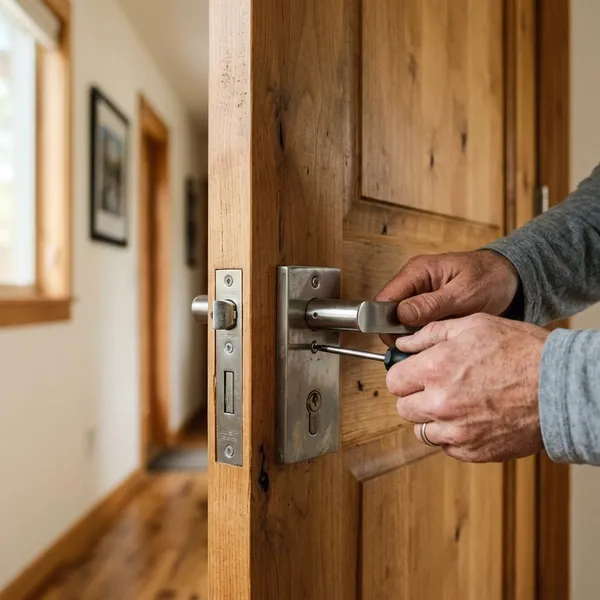
When a door will not latch, start with the door position before blaming the lock. Close the door slowly and watch where the latch bolt meets the strike plate. Scratches, shiny rub marks, or the need to lift the door while closing usually point to an alignment problem.
Tighten loose hinge screws
Loose hinge screws are the first thing to fix because even a small drop on the latch side can stop the bolt from entering the strike plate. Focus on the top hinge, then tighten the remaining hinges on both the door and jamb side with a hand screwdriver so you can feel whether the screws are biting.
If a screw spins without tightening, replace it with a longer screw that reaches solid framing behind the jamb. This is especially useful on heavy entry doors that have slowly sagged from daily use.
Realign the door if it has sagged
Look at the gaps around the door. A wider gap near the top on the latch side, rubbing along the frame, or a door that latches only when lifted usually means the door has sagged.
- Try one longer screw through the top hinge first.
- Use thin hinge shims if the door needs a small angle correction.
- Avoid moving the strike plate until the door sits as squarely as possible.
Adjust the strike plate
If the latch is close but not entering cleanly, loosen the strike plate screws and shift the plate slightly toward the latch mark. Move it in small steps, tighten it, and test the door each time.
The door should close without slamming, lifting, or pulling the knob toward you. If the plate moves again after a few uses, repair the screw holes before continuing; loose screws will not hold an adjustment for long.
Widen the strike opening slightly
Widen the opening only when the latch is barely rubbing the edge of the strike plate. A small metal file works better than a large cut because you can remove a little material, test the door, and stop before the fit becomes sloppy.
Move the strike plate if needed
Move the strike plate when the latch consistently lands too high, too low, or too far to one side after hinge and door alignment checks. Mark the new latch position, remove the plate, reshape the mortise if needed, drill pilot holes, and reinstall the plate flush with the jamb.
This takes longer than filing, but it is the cleaner long-term fix when the door has settled over the years. Test from both sides afterward, especially on an exterior door, because a latch that catches only sometimes is not secure enough.
How to repair a loose doorknob or lever
A loose knob or lever usually means the lockset is no longer clamped tightly to the door. It may still work today, but the extra movement can wear the spindle, latch hub, or return spring if you keep using it that way.
Check what type of hardware you have. Older knobs often use a visible setscrew on the side or underside of the handle. Many newer locksets hide the mounting screws behind the interior trim plate.
Tighten the setscrew
Find the small screw on the neck of the knob or lever, hold the opposite side steady, and tighten it with the correct screwdriver or Allen key. If the handle becomes loose again quickly, the screw threads or spindle surface may be worn, so repeated tightening is unlikely to last.
Tighten the mounting screws
For modern locksets, remove or loosen the interior trim if needed and tighten the long mounting screws evenly. Alternate between screws instead of fully tightening one side first, because uneven pressure can twist the lockset and make the latch bind.
After tightening, test the knob with the door open. If it feels snug but stiff, loosen the screws slightly, center both sides by hand, and retighten with lighter, even pressure.
Realign both sides of the lockset
A lockset can feel tight and still be misaligned. If the knob turns roughly or the latch retracts only partway, remove enough hardware to confirm that the latch sits level in the door edge and the spindle passes through the mechanism without pressure.
- Both trim plates should sit flat against the door.
- The spindle should turn without scraping or binding.
- The latch should retract fully before the screws are tightened hard.
Replace worn internal parts
Worn internal parts become likely when tightening and realignment do not improve the feel. Bent spindles, weak return springs, stripped hubs, cracked trim, and worn latch parts can all make a knob loose or unreliable.
Repair makes more sense on a quality exterior lock or a matched hardware set. For a low-cost bedroom or closet knob, replacing the full lockset is often faster and more dependable than chasing small internal parts.
How to fix a sticky door lock
A sticky door lock usually comes from dirt, old residue, moisture, light corrosion, or wear inside the cylinder. Before replacing anything, test the lock with the door open. If the key turns smoothly when the door is open but binds when the door is closed, the problem is probably door alignment rather than the cylinder.
Clean dirt from the keyway
Inspect the keyway with a flashlight and remove loose dirt carefully. A short burst of compressed air can help clear dust or lint, but avoid pushing pins, picks, or oversized tools into the slot because the small internal parts can be damaged.
Apply a suitable lock lubricant
Use a dry lock lubricant or another product made specifically for lock cylinders. Apply a small amount into the keyway, insert the key, remove it, and turn it gently several times to spread the lubricant.
Avoid relying on heavy oil-based sprays for routine lock care. They may feel helpful at first, but they can collect dust and leave sticky residue over time, especially on exterior doors exposed to wind and road grit.
Work the key gently
Use light, steady pressure instead of twisting harder. Insert the key fully, try a gentle turn, then back it out slightly if it catches. Stop if the resistance feels sharp or solid rather than slightly sticky.
Replace a worn lock cylinder
Replace the cylinder when cleaning and lubrication only help briefly, when the key works unpredictably, or when a good key must be wiggled every time. On many entry locks, replacing the cylinder is cheaper than replacing the entire lockset and keeps the existing trim and latch in place.
How to fix a frozen door lock
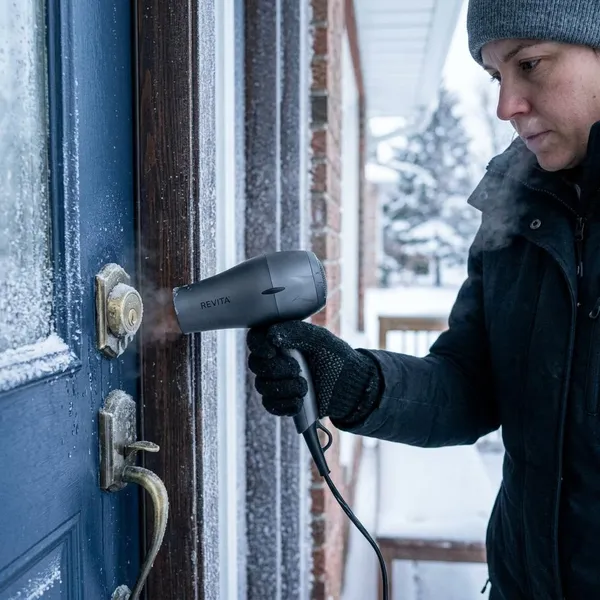
A frozen lock needs thawing, not force. Ice inside the cylinder can stop the key from entering fully or turning, even when the lock itself is not damaged. This is most common on exterior doors, garage entry doors, gates, and storage locks exposed to wind, rain, snow, or condensation.
The safest approach is to melt the ice slowly, keep moisture out afterward, and avoid turning the key hard while the pins are still frozen.
Apply a lock de-icer
Use a lock de-icer first if you have one. Spray it into the keyway, wait a minute or two, then try the key with light pressure. If the lock is still stuck, repeat the process rather than twisting harder.
In cold climates, keeping de-icer in a car, shed, or secondary entrance is more useful than storing it behind the frozen door you are trying to open.
Warm the key before inserting it
For light freezing, warm the key in your hand, pocket, or with mild warm air before inserting it. The key can carry enough heat into the cylinder to loosen a small amount of ice.
Avoid overheating the key or using an open flame carelessly near the door finish, weatherstripping, or your hands. If mild warming does not work after a few tries, switch to de-icer or professional help.
Keep moisture out of the keyway
Prevention matters because frozen locks often repeat. Wipe wet keys before using them, add a simple lock cover if the hardware is exposed, and check whether water runs down the door face directly into the cylinder.
- For a rarely used side gate, a cover may solve most winter problems.
- For a daily entry door, moisture control plus proper lock lubricant is more reliable.
- If freezing returns after every storm, the lock location may need better weather protection.
Avoid forcing the frozen cylinder
Never force a frozen cylinder. A broken key inside the lock is harder to fix than ice in the keyway, and force can damage pins or an already worn cylinder.
If the key stops abruptly, assume ice or internal damage is blocking it. Thaw first, test gently, and stop if the lock still refuses to move.
When to call a locksmith
Call a locksmith when the problem affects security, when the key will not turn after gentle basic fixes, or when the lock still jams after you have checked alignment, screws, and lubrication. DIY repair is sensible for loose hardware and minor adjustment; it is less sensible when the door cannot be secured.
The key will not turn
If the key will not turn after cleaning, suitable lubrication, and gentle testing with the door open, stop. A jammed cylinder, worn pins, freeze damage, or a bad key can all get worse if you keep forcing it.
On a main entry door, this is not just an inconvenience. You need a lock that works predictably from both sides, so professional diagnosis is usually worth it.
The lock stays jammed after basic repairs
A lock that stays jammed after hinge tightening, strike adjustment, and lubrication probably has internal wear or more than one issue at the same time. Repeating the same fixes is unlikely to change the result.
At that point, a locksmith can identify whether the latch body, cylinder, spindle, frame, or strike area is the real failure point.
The cylinder or internal mechanism is damaged
Visible damage, a key that spins without unlocking, a knob that turns without retracting the latch, or hardware that feels rough after adjustment are all signs to stop DIY work. The lock may still work occasionally, but occasional success is not reliable enough for a security door.
The door cannot be secured properly
If the door will not latch, deadbolt, or stay closed consistently, call a locksmith promptly. Temporary workarounds might be acceptable for a closet door, but not for an exterior door, garage entry, rental property, or any door protecting people, pets, or belongings.
A professional can also check whether the lock problem is really a hinge, frame, or strike plate problem that needs a stronger repair than simple adjustment.
Conclusion
A good repair starts with the simplest likely cause: tighten loose screws, check door alignment, clean the keyway, and use the right lubricant before replacing hardware. If the lock still feels unreliable or the door cannot be secured every time, stop treating it as a small annoyance and get the lock repaired or replaced properly.