
If you want cold brew that tastes right without guessing, choose the ratio based on how you'll serve it: 1:4 to 1:6 for concentrate, 1:8 to 1:10 for a stronger brew over ice, and 1:11 to 1:12 for ready-to-drink coffee. The fastest way to improve your batch is to decide first whether you want a strong base to dilute or a pitcher you can pour straight from the fridge.
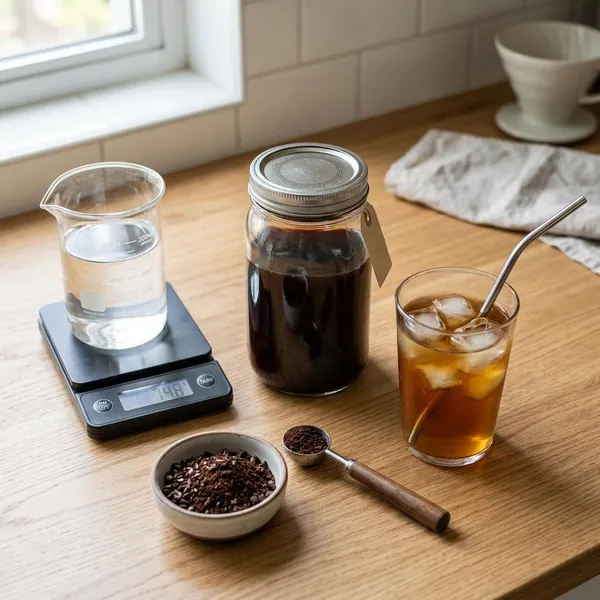
What is the best cold brew coffee ratio?
The best ratio depends less on a perfect rule and more on the finished drink you want. Concentrate needs more coffee because it will be mixed later. Ready-to-drink cold brew needs more water because it should taste balanced as soon as it is strained.
Use 1 to 4 or 1 to 6 for concentrate
A 1:4 to 1:6 ratio makes cold brew concentrate, meaning 1 part coffee to 4 to 6 parts water by weight. It is usually too strong to drink straight, but it works well as a base for water, milk, cream, or a glass packed with ice.
For example, 100 grams of coffee with 500 grams of water gives you a 1:5 concentrate. A practical serving starting point is equal parts concentrate and water, then less water if you are adding milk or want a stronger café-style drink.
Use 1 to 8 or 1 to 10 for stronger cold brew
1:8 to 1:10 is the useful middle range when you want bold cold brew without making a true concentrate. It can often be served as brewed, but it still has enough strength for ice or a splash of milk.
This is a good summer ratio if your coffee tastes great from the fridge but weak after five minutes over ice. Start near 1:10 for smoother black coffee and move closer to 1:8 if the drink keeps tasting thin.
Use 1 to 11 or 1 to 12 for balanced ready-to-drink cold brew
For the lowest-effort pitcher, use 1:11 to 1:12. This range is usually balanced enough to pour straight from the fridge, especially if you drink cold brew black or only add a small amount of milk.
Cold brew coffee ratio chart by batch size
Use water amount as your starting point, then choose the coffee dose that matches your style. Weighing is more reliable than scoops because coarse coffee can vary a lot in volume.
| Batch water | Concentrate 1:4 to 1:6 | Strong 1:8 to 1:10 | Ready to drink 1:11 to 1:12 |
|---|---|---|---|
| 500 ml | 83 to 125 g coffee | 50 to 63 g coffee | 42 to 45 g coffee |
| 1 liter | 167 to 250 g coffee | 100 to 125 g coffee | 83 to 91 g coffee |
| 32 oz / 946 ml | 158 to 237 g coffee | 95 to 118 g coffee | 79 to 86 g coffee |
| 64 oz / 1.9 liters | 316 to 474 g coffee | 189 to 237 g coffee | 158 to 172 g coffee |
Finished cold brew will be less than the water you started with because the grounds hold onto liquid. If you need a full pitcher for guests or several mornings, brew a little more than the final amount you want.
How to adjust your cold brew ratio
If your cold brew tastes wrong, change the ratio before blaming the beans. Keep the grind, steep time, and filter method the same for the next batch so you can tell whether the ratio change actually helped.
Use more coffee for a stronger brew
To make cold brew stronger, keep the water the same and increase the coffee dose. If your 1-liter ready-to-drink batch uses 85 grams and tastes too light, try 95 grams next time before jumping all the way to a concentrate ratio.
This small adjustment is especially useful for lighter roasts, milk drinks, or iced servings where the flavor needs more body.
Use more water for a lighter brew
If your cold brew tastes too intense, move to a lighter ratio. For example, a batch brewed at 1:10 may taste smoother at 1:11 or 1:12, especially with darker roasts.
Do not fix every strong batch by adding milk. If you actually want black cold brew, changing the brew ratio will give you a cleaner result than covering the heaviness after the fact.
Brew stronger when serving over ice
Ice is part of the recipe if you always serve cold brew in a full glass of cubes. A ready-to-drink 1:12 batch may taste balanced from the fridge but dull once the ice starts melting, so 1:8 to 1:10 is often the better choice for iced servings.
Brew concentrate when adding water or milk later
Choose 1:4 to 1:6 when you want one batch to serve several styles. It is practical for a household where one person drinks it black with water and another wants a milk-heavy drink.
The mistake to avoid is treating concentrate like finished coffee. Taste it after dilution, not straight from the jar, or it will seem harsher than it really is.
How to make cold brew coffee
The method is simple: coarse coffee, cold or room-temperature water, a long steep, and thorough straining. The details matter because cold brew is forgiving, but it is not magic; dry grounds, fine sediment, or a random steep time can make a good ratio taste worse than it should.
- Pick the ratio first. Decide on concentrate, strong cold brew, or ready-to-drink coffee.
- Weigh the coffee and water. This makes your recipe repeatable.
- Wet all the grounds. Dry pockets create weak, uneven extraction.
- Steep long enough. Most home batches work well between 12 and 24 hours.
- Strain carefully. Better filtration makes the cup cleaner.
Grind the coffee coarse
Use a coarse grind, roughly like raw sugar or coarse sea salt. Too fine, and the coffee can become cloudy and harder to strain; too coarse, and the brew may taste flat even when the ratio is correct.
Measure the coffee and water
Measure by weight if you can. Water is easy because 1 ml is close to 1 gram, so 1 liter of water is about 1,000 grams. Once you know the water weight, divide by your ratio number to find the coffee amount.
For example, 1,000 grams of water at 1:12 needs about 83 grams of coffee. The same water at 1:8 needs 125 grams.
Combine and fully wet the grounds
Add the coffee and water, then stir gently until there are no dry clumps floating on top. This matters most in large pitchers, where dry pockets can hide under the surface and make the finished brew taste weaker than expected.
Steep for 12 to 24 hours
Steep for 12 to 24 hours, with 14 to 18 hours being a good middle range for many home batches. Shorter steeps can taste underdeveloped, while very long steeps may turn heavy or woody, especially with dark roasts.
If you brew cold brew every week, pick one steep time and keep it consistent. It is much easier to adjust ratio when steep time is not changing too.
Strain the coffee thoroughly
Strain once to remove the grounds, then use a finer filter if the coffee still looks gritty. A paper filter gives a cleaner cup, while metal or cloth filters leave more body.
If the flavor tastes muddy, do not automatically change the ratio. Poor filtration can make a balanced batch seem dull or rough.
Dilute concentrate before serving
Concentrate should usually be diluted before drinking. Start with 1 part concentrate to 1 part water, then adjust depending on the ratio you brewed and whether you are adding milk or ice.
Ready-to-drink cold brew brewed around 1:11 to 1:12 usually does not need dilution. If it tastes too strong anyway, add a small splash of water to the glass and make the next batch slightly lighter.

Conclusion
Pick the ratio for the way you actually drink cold brew, not for the strongest number on a recipe card. Concentrate is best when you want flexibility, 1:8 to 1:10 is better for ice and milk, and 1:11 to 1:12 is the easiest everyday choice if you just want to pour and drink. Once one batch tastes close, make small changes and keep the rest of the process steady.