
If you are wondering whether the charmed television show is still worth starting, the short answer is yes, especially if you like supernatural stories that put family before mythology. It is not the sleekest fantasy series by modern standards, but its mix of sisterhood, weekly threats, romance, grief, and late-1990s atmosphere gives it a personality that still works for the right viewer.
What is the Charmed television show about?
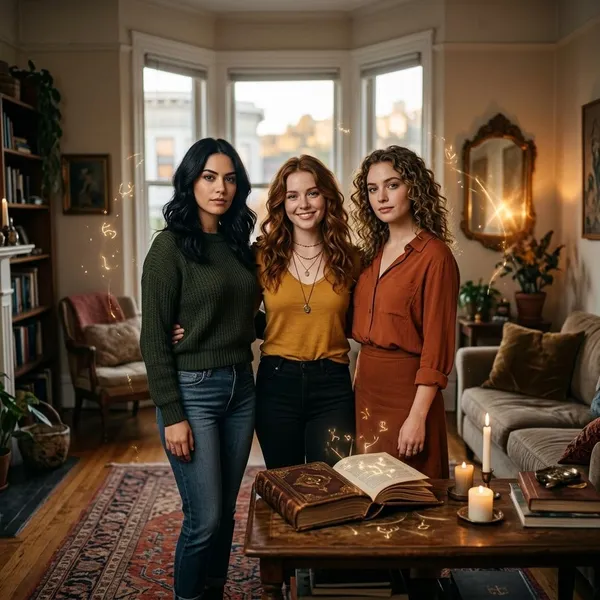
Charmed follows the Halliwell sisters after they discover they are witches from a powerful family line. The show works best when you treat the magic as the hook and the sisterhood as the reason to keep watching.
Three sisters discover that they are witches
Prue, Piper, and Phoebe Halliwell begin as ordinary sisters with unresolved family tension, not polished magical heroes. Their powers awaken in the family home, and the discovery immediately changes what they owe to each other and to the people they are meant to protect.
The Power of Three drives their shared magic
The Power of Three is the show's central idea: the sisters are stronger together than they are alone. It is both a magical rule and the emotional engine of the series.
When the sisters are united, the fantasy stakes feel satisfying. When they are grieving, angry, distracted, or keeping secrets, the magical problems usually hit harder because the family bond is under pressure too.
Family drama shapes each supernatural conflict
The show rarely treats demons and spells as separate from the sisters' private lives. A magical threat often forces one of them to face something personal: control, fear of loss, romantic choices, guilt, or the wish for a normal life.
Weekly threats build into longer story arcs
Many episodes resolve their main threat within the hour, which makes the series friendly for casual viewing. You can drop into a memorable episode and still understand the basic rhythm: danger appears, the sisters disagree or struggle, and the family bond becomes part of the solution.
The longer arcs matter most when the show deals with major villains, romantic consequences, and family changes. A casual viewer can sample it, but a first-time viewer who wants the full emotional payoff should avoid jumping around too much after the first season.
Who are the main characters in Charmed?
The main characters are the Halliwell sisters, and the show depends heavily on how different they feel from one another. Their powers are memorable, but their personalities do more of the work.
The original trio is Prue, Piper, and Phoebe. Paige Matthews joins later, and that change is not a small cast adjustment; it reshapes the emotional balance of the series.
Shannen Doherty plays Prue Halliwell
Shannen Doherty plays Prue Halliwell, the eldest sister in the first three seasons. Prue gives early Charmed much of its discipline and darker edge because she treats magic as a burden before she treats it as an adventure.
Holly Marie Combs plays Piper Halliwell
Holly Marie Combs plays Piper Halliwell, who gradually becomes the emotional anchor of the series. Piper often wants the most ordinary things—love, peace, stability—and that makes the magical chaos around her feel more personal.
Her growth is one of the better reasons to watch in order. She does not simply become "stronger" because the plot needs it; her changes come from repeated loss, responsibility, and the need to hold the family together when the old balance is gone.
Alyssa Milano plays Phoebe Halliwell
Alyssa Milano plays Phoebe Halliwell, the youngest of the original sisters. Phoebe brings curiosity, romance, risk, and emotional openness, which keeps the show from becoming too stern.
- Early Phoebe gives the show movement and impulsive energy.
- Later Phoebe carries more romantic and identity-driven storylines.
- Her best function is contrast: she reacts differently from Prue and Piper, so the sisters rarely feel interchangeable.
Rose McGowan plays Paige Matthews
Rose McGowan plays Paige Matthews, who enters in Season 4. Paige is not just a replacement sister dropped into the same pattern; she has to build a place in a family that already has history, grief, and habits without her.
That makes her useful for viewers who reach the later seasons and feel the show has changed. Paige gives the series a reason to rediscover its own world, because she is learning the family's magic and emotional rules at the same time.
Why does Charmed still appeal to viewers?
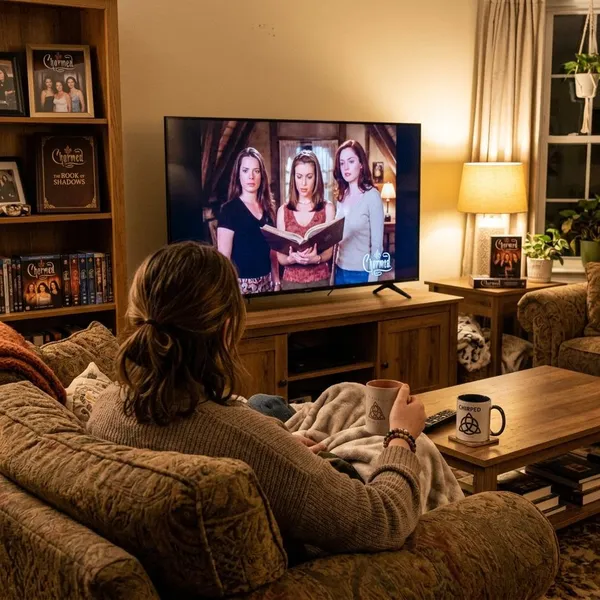
Charmed still appeals because it is easy to understand, emotionally direct, and flexible to watch. It can be a comfort rewatch, a first supernatural series for someone who does not want heavy lore, or a nostalgic return to network fantasy from the late 1990s and early 2000s.
The sisterhood gives the story emotional weight
The sisterhood is the reason the series has lasted better than many similar fantasy dramas. The magical battles matter because they threaten a family relationship the audience understands quickly.
Magic and family drama create an easy mix
The fantasy side of Charmed is usually simple enough to follow without homework. Spells, demons, premonitions, whitelighters, and the Book of Shadows give the show identity, but they rarely bury the characters under rules.
That balance is useful for viewers who enjoy supernatural ideas but do not want every episode to feel like a mythology exam. The best episodes let the magical problem sharpen a family issue instead of distracting from it.
Standalone episodes make casual viewing simple
For casual viewing, Charmed is forgiving. Many episodes have a clear beginning, middle, and end, so you can watch one without tracking every detail from the previous week.
Longer arcs reward full-season watching
Full-season watching is where the bigger emotional shifts pay off. Recurring villains, romantic choices, and changes in the sisters' roles become more satisfying when you see how they build rather than only where they end.
Its late-1990s style adds nostalgic charm
The fashion, music cues, effects, club scenes, and episode structure clearly belong to their era. For some viewers, that will be a barrier; for others, it is exactly why the show feels comforting.
The nostalgia works best if you do not judge every detail against newer streaming fantasy. Charmed is more enjoyable when approached as a glossy, emotional, sometimes messy network drama with a supernatural frame.
How do the early and later Charmed seasons differ?
The biggest difference is tone. Seasons 1 to 3 are generally darker, more intimate, and more focused on the original sisters learning the cost of their powers. Seasons 4 to 8 become broader, lighter in places, and more willing to expand the magical world.
Seasons one to three have a darker tone
The first three seasons feel more grounded because the magical world is still dangerous and unfamiliar. The sisters are learning as they go, and the show often treats that responsibility with real weight.
Prue is a major part of that tone. Her seriousness gives the early seasons a stronger sense of consequence, especially when the story deals with grief, duty, and protecting the family home.
Seasons four to eight lean further into humor
The later seasons keep the emotional stakes, but they are more open to playful spells, bigger magical concepts, and lighter episode ideas. That shift can be refreshing if you enjoy variety.
It can also be uneven. Some viewers miss the tighter mood of the original trio, while others prefer the later seasons because they are less severe and more comfortable as fantasy entertainment.
Paige brings a new family dynamic
Paige changes the show because her bond with Piper and Phoebe has to be built, not assumed. She enters with her own background and does not share the same childhood history, so the family has to make room for her in a way that feels awkward before it feels natural.
That makes Season 4 a useful checkpoint. If you are unsure whether to continue after the major transition, give Paige enough episodes to settle in before deciding; her role becomes clearer once the show stops treating the change as only a shock.
Later stories expand the magical world
The later seasons move beyond the more house-centered feel of the early years. The show introduces more magical beings, broader rules, and bigger fantasy situations.
This expansion is good if you want the series to keep changing. It is less ideal if your favorite part is the intimate mood of the Manor, the sisters, and threats that feel close to home.
The final seasons focus more on legacy
By the final seasons, the story is less about discovering what the sisters are and more about what their sacrifices mean. The focus turns toward family continuity, future generations, and whether a normal life is still possible after years of danger.
That legacy angle helps the ending feel more emotionally complete, even when individual late-season plots vary in quality.
Conclusion
Charmed is easiest to enjoy when you know what kind of show it is: a supernatural family drama with memorable characters, uneven but charming fantasy ideas, and a clear emotional center. Start from the beginning if you want the full weight of the sisterhood, and be prepared for the later seasons to feel like a changed version of the same family story rather than a perfect continuation of the original tone.