
The best outdoor furniture is usually the set that matches your weather, your upkeep tolerance, and the way you actually use the space. For many homes, powder-coated aluminum is the safest all-around starting point, while HDPE is better if you want almost no maintenance, teak if you want natural wood that ages well, and resin wicker if deep cushioned comfort matters most.
What is the best outdoor furniture for most homes?
Most people should start by choosing the material before choosing the style. A pretty patio set can become annoying fast if it rusts, traps rainwater, blows around in wind, or needs more care than you realistically want to give it.
| Best fit | Material to consider first | Why it works |
|---|---|---|
| Simple everyday patio use | Powder-coated aluminum | Rust-resistant, light enough to move, and easy to clean |
| Year-round exposure with little upkeep | HDPE lumber | Handles moisture, insects, snow, and sun with minimal care |
| Long-term natural look | Teak | Durable hardwood with a warm appearance and graceful aging |
| Soft lounge seating | Resin wicker | Works well with cushions and relaxed conversation layouts |
| Changing layouts or frequent hosting | Modular seating | Lets you rearrange pieces as your needs change |
What is the best outdoor furniture by use?
The best furniture type depends on what you do outside most often. A balcony for morning coffee does not need the same setup as a backyard used for family dinners, and a pool deck needs different materials than a covered porch.
A conversation set for everyday lounging
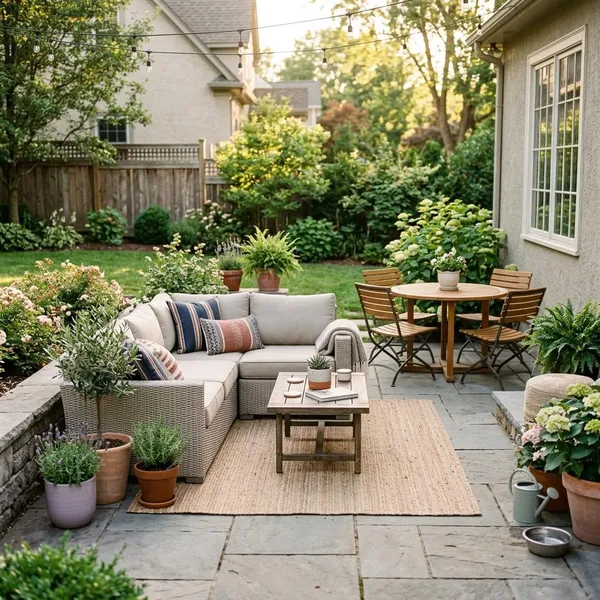
A conversation set is the most versatile choice if your patio is mainly for relaxing, reading, or talking with friends. A loveseat or sofa, two chairs, and a low table can make even a modest patio feel like an outdoor living room.
Prioritize supportive cushions, washable covers, and enough table space for drinks or books. If the area is uncovered, quick-drying cushions matter more than extra-thick ones that stay damp after every storm.
A dining set for outdoor meals
A dining set is the right choice when meals are the main event. It is also useful for outdoor work, kids' snacks, board games, and casual hosting, so it often earns its space in family homes.
- Small patio: choose a round or square table to improve movement.
- Frequent dinners: choose chairs that stay comfortable beyond a quick meal.
- Mixed group sizes: consider an extension table instead of buying an oversized table that crowds the space every day.
A sectional for larger gatherings
A sectional works best on a larger patio where seating capacity matters more than open floor space. It can define a social area and keep everyone facing each other, which is helpful for families and frequent hosts.
Scale is the common problem. Tape out the footprint before buying and include walking paths, side tables, grill clearance, and door swing. If the sectional leaves no room to move, it will feel impressive for photos and frustrating in daily use.
A bistro set for small patios
A bistro set is the simplest answer for balconies, narrow porches, and small patios. Two chairs and a compact table are enough for coffee, lunch, or a laptop without taking over the whole area.
Foldable or stackable pieces are worth considering if the space has to stay flexible. Aluminum is often the easiest material here because it is light and rust-resistant, while steel can work in covered spots if the finish is well protected.
A chaise lounge for poolside use
A chaise lounge is for lying back, not just sitting down, so it fits pool decks, sunny terraces, and quiet reading spots. For poolside use, choose drainage and cleanability over a plush showroom feel.
Sling fabric, mesh, or fast-draining cushions are usually easier to live with around wet swimsuits and splashing water. Wheels can also be useful if you move the lounge to follow shade or sun during the day.
An Adirondack set for casual seating
An Adirondack set suits fire pits, cabins, lake houses, and relaxed backyard corners. The wide arms are handy for drinks, and the low angled seat encourages lingering rather than formal sitting.
HDPE Adirondack chairs are especially practical for year-round use because they keep the classic shape without the repainting and splintering issues of cheaper wood versions. The only real drawback is posture: they are not ideal for dining or for anyone who has trouble getting out of low chairs.
Which outdoor furniture material lasts longest?
HDPE lumber, high-quality teak, and powder-coated aluminum are usually the safest long-term choices. The longest-lasting option for you depends less on the label and more on climate, construction, and how much care the furniture will actually receive.
For a wet or snowy climate, moisture resistance should come first. For a sunny uncovered patio, UV resistance and cushion quality matter more. Near the coast, rust-resistant hardware is not a small detail; it can decide whether a set ages well or starts failing early.
HDPE resists moisture, rot, and insects
HDPE is one of the most dependable materials for furniture that stays outside all year. It does not absorb water, so rot, swelling, splintering, and insect damage are much less of a concern than with many natural woods.
Teak can last for decades with proper care
Good teak can last for decades, but "teak" alone is not enough. Look for sturdy joinery, smooth finishing, and hardware that will not corrode before the wood gives out.
If you want a long-term garden or patio set with a natural look, teak is hard to beat. If you want the lowest-maintenance option possible, HDPE or aluminum may be easier to live with.
Aluminum resists rust and stays lightweight
Aluminum is a practical long-lasting material because it resists rust and is easy to move. That makes it useful for dining chairs, small tables, balcony furniture, and any setup that needs occasional rearranging.
Focus on coating quality and frame thickness. Thin, wobbly aluminum can feel cheap even if the material itself is weather-resistant, while a well-built powder-coated frame can serve reliably for years.
Resin wicker handles weather better than natural wicker
Resin wicker is the outdoor-friendly version of the woven look. It handles moisture and sun far better than natural wicker, which can weaken quickly outdoors.
Quality varies widely, so inspect the weave where it bends around corners and edges. Brittle strands, loose ends, or a weak frame underneath are signs to walk away, especially if the set will sit in direct sun.
Steel stays strong but needs rust protection
Steel feels solid and can be useful on windy patios, but it needs a good protective finish. Once chips or scratches expose the metal underneath, rust can start, especially in wet or coastal conditions.
It can be a sensible budget choice for covered areas or dry climates. For uncovered year-round exposure, aluminum, HDPE, or teak usually require less worry.
How can you judge outdoor furniture quality?
The quickest way to judge outdoor furniture quality is to check the parts that product photos hide: joints, finish, hardware, fabric, cushion drainage, and replacement support. A good material can still disappoint if the build is weak.
Check frame joints and stability
Sit down, shift your weight, and lightly rock the chair or sofa if you can test it in person. It should feel steady, not twisty or hollow. On metal frames, smooth welds and secure bolts are better signs than decorative styling.
For online shopping, zoom in on underside photos and look for support bars, reinforced corners, and clear assembly details. If a listing hides the frame construction completely, be cautious.
Check finishes and exposed edges
Finishes protect the material underneath, so uneven coating, rough edges, bubbles, or bare spots are not just cosmetic issues. They are early warning signs for peeling, corrosion, splinters, or faster weather damage.
Check hardware for rust resistance
Screws, bolts, brackets, and connectors should be corrosion-resistant, especially if you live somewhere humid, rainy, or coastal. Stainless steel hardware is often a good sign, but the main point is simple: weak hardware can ruin an otherwise decent frame.
This matters most for dining chairs, sectionals, and modular systems because those pieces take repeated movement and pressure. If hardware rusts or seizes, tightening or replacing parts becomes much harder.
Check fabric for UV and mildew resistance
Outdoor cushion fabric should be made for sun and moisture, not just labeled "outdoor" in vague terms. Solution-dyed acrylic is often a strong premium choice for fade resistance, while better outdoor polyesters can work for lighter use or lower budgets.
- Full sun: prioritize fade resistance.
- Damp shade: prioritize mildew resistance and airflow.
- Kids or pets: prioritize removable, washable covers.
Check cushions for drainage
Cushions should dry quickly enough for your climate. Thick foam may feel comfortable at first, but if it holds water after every rain, you may end up storing cushions constantly or sitting on damp seats.
Look for removable covers, breathable construction, and cushion inserts designed to drain. If the set will stay uncovered, this check matters as much as the frame material.
Check warranties and replacement parts
Replacement cushions, covers, glides, slats, and modular pieces are strong signs that a brand expects the furniture to last. A cheap set with no parts support can become wasteful when one cushion tears or one chair foot breaks.
Read warranty details carefully. A long frame warranty is useful, but fabrics, finishes, cushions, and hardware often affect daily comfort first.
Conclusion
The smartest choice is not always the most expensive set or the one that looks best online. Start with your climate and main use, then choose the material that will be easiest to live with over time: aluminum for balance, HDPE for low upkeep, teak for natural longevity, resin wicker for cushioned lounging, and modular seating when flexibility really matters.