
The best furniture for small spaces is usually compact, useful in more than one way, and easy to move around—not just smaller for the sake of being small. Start with the pieces that solve the biggest daily problems first: seating, sleeping, storage, eating, and working. If a piece blocks a walkway, needs too much clearance, or only looks nice without helping the room function, it probably does not deserve the space.
Best furniture for small spaces
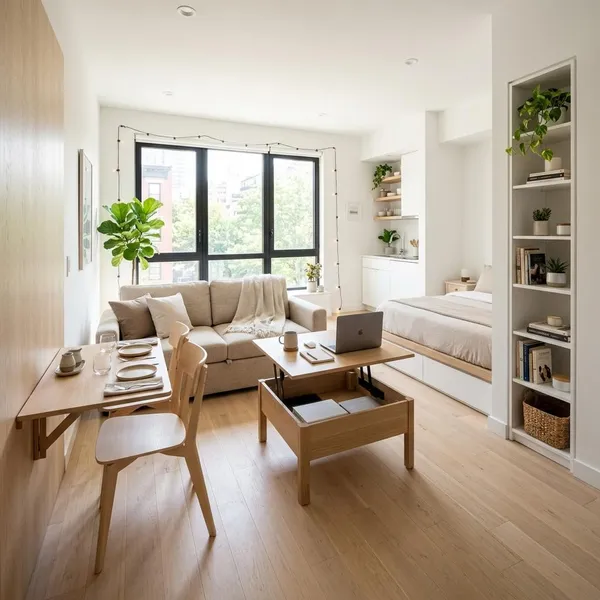
Small rooms work better when furniture has a clear job. The most useful pieces either add hidden storage, fold away when not in use, or make one area serve more than one purpose. That is why a storage bed, drop-leaf table, or lift-top coffee table often helps more than several decorative pieces that only fill corners.
Lift-top coffee tables
A lift-top coffee table is useful when your living room also needs to work as a laptop spot, snack table, or casual dining area. The raised surface is much easier to use from a sofa than a low table, and many designs hide chargers, remotes, notebooks, or coasters inside.
Check the table in both positions before buying. It should leave enough space between the sofa and the opposite furniture when closed, and it should not feel wobbly when the top is raised. For daily laptop use, a stable lift mechanism matters more than a trendy finish.
Storage ottomans
Storage ottomans are one of the easiest wins in a small living room because they can act as a footrest, spare seat, soft coffee table, and hidden storage box. They are especially helpful if blankets, toys, games, or extra cushions tend to end up on the sofa.
Drop-leaf dining tables
A drop-leaf dining table is usually the safest choice when you need a real table but cannot give up floor space every day. One leaf can stay up for one or two people, both leaves can open for a meal or project, and the table can sit close to a wall when not in full use.
Nesting tables
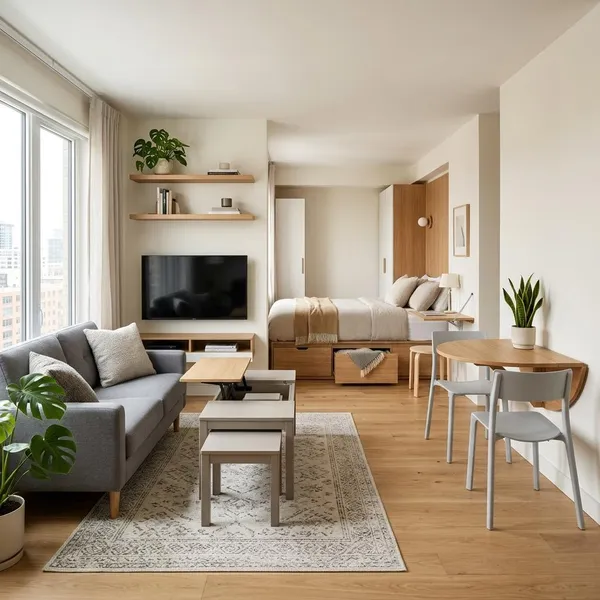
Nesting tables give you extra surfaces only when you need them. Most days they sit together as one compact piece; when guests come over, or when you need a spot for a drink and a laptop at the same time, they can be pulled apart quickly.
Avoid sets that are only decorative. The smallest table should still be large enough to hold something useful, such as a mug, book, lamp, or small plate.
Storage beds
A storage bed can make a small bedroom feel much more manageable because it turns the largest item in the room into useful storage. It is best for clothing, spare bedding, shoes, or seasonal items that would otherwise need bins, a second dresser, or a bulky chest.
- Choose drawers if you have clear space on the sides of the bed.
- Choose lift-up storage if the bed sits close to a wall or dresser.
- Avoid very shallow storage if you need to store bulky bedding or winter clothes.
Sleeper sofas
A sleeper sofa makes sense when a room needs to handle guests without becoming a permanent guest room. It works well in studios, small living rooms, and offices that occasionally double as sleeping spaces.
The main mistake is measuring only the sofa when it is closed. Measure the full open length and leave room to walk around it, even if that means choosing a smaller model. If someone will sleep on it often, test or closely compare the mattress type rather than treating it as an afterthought.
Wall-mounted desks
A wall-mounted desk is a smart option when you need a work surface but do not want a desk controlling the whole room. Fold-down styles are especially useful in bedrooms, hallways, or living rooms where work needs to disappear at the end of the day.
Tall narrow shelving
Tall narrow shelving uses wall height instead of floor width, which is exactly what many small rooms need. It can hold books, baskets, pantry overflow, office supplies, or folded items without spreading storage across the room.
Open shelves look lighter, but they also show clutter quickly. If the shelf will hold everyday mess, mix open areas with baskets or closed boxes. Tall units should also be stable and, where appropriate, anchored securely to the wall, especially in homes with children or pets.
Best small-space furniture by room
Choosing by room is easier than shopping from a general list. A small living room needs comfort and flexible surfaces. A bedroom usually needs storage first. A dining area needs furniture that changes size, and a home office needs to stay useful without taking over the rest of the home.
Compact sofas and storage ottomans for living rooms
For a small living room, start with the sofa footprint. Slim arms, exposed legs, and moderate depth often matter more than the overall label "apartment size." A sofa that is a little narrower but still comfortable usually beats a deep, bulky piece that forces everyone to squeeze around the coffee table.
A storage ottoman is a good partner because it adds comfort without locking you into one use. If you have guests often, a sleeper sofa may be worth the extra cost and weight. If guests are rare, a compact sofa with nesting tables and an ottoman usually keeps the room more flexible.
Storage beds and narrow dressers for bedrooms
In a small bedroom, the first question is usually storage, not decoration. A storage bed can reduce pressure on closets and may even replace a second dresser. Pairing it with a tall, narrow dresser often works better than using one wide piece that eats up wall space.
Be careful with bedside furniture. A nightstand with drawers is more useful than a tiny accent table if you need a place for cables, glasses, books, or medicine. Wall sconces can also free the top of the nightstand if the room is tight.
Drop-leaf tables and stackable chairs for dining areas
A small dining area should not be sized for the biggest dinner you might host once a year. A drop-leaf table with stackable or folding chairs lets the space work for normal days first, then expand when needed.
| Dining situation | Better choice | Why it works |
|---|---|---|
| One or two people most days | Drop-leaf table against a wall | Keeps the floor open until more surface is needed |
| Tight corner or awkward walkway | Small round table | No sharp corners to bump into |
| Occasional guests | Stackable or folding chairs | Extra seating does not stay in the way |
Wall desks and vertical shelves for home offices
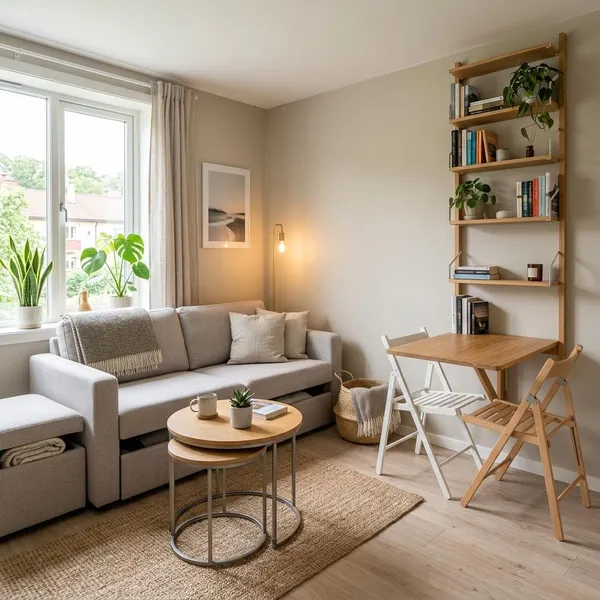
A home office in a small home needs boundaries. A wall desk or fold-down desk gives you a defined work spot without making the room feel like an office all the time. Vertical shelves nearby can hold files, chargers, baskets, and supplies so the desktop does not become permanent clutter.
How to choose furniture for a small room
The best small-room choices usually come from a simple order: measure first, protect walking space, decide what each piece must do, then compare multifunctional options. Style still matters, but it should come after fit and function. A good-looking piece that blocks a drawer, door, or walkway will feel like a mistake very quickly.
Measure the available floor space
Measure the room before you shop, not after you find something you like. Record wall lengths, door swings, window locations, radiators, outlets, and any built-ins that limit placement. Then mark the furniture footprint on the floor with painter's tape or paper so you can see how much space it really takes.
Leave enough walking room
Walking room is often what makes a small room feel comfortable. If you have to turn sideways to pass the bed, pull a chair out awkwardly, or step around a coffee table every time you cross the room, the furniture is too demanding for the space.
When choosing between a slightly larger piece and easier movement, choose movement in most cases. Daily comfort usually matters more than squeezing in one extra seat or a wider tabletop.
Give each piece a clear purpose
Every piece should earn its place. Before buying, give the item one main job: seating, storage, sleeping, dining, working, or display. If the answer is only "it fills the corner," the room may be better without it.
Check height depth and clearance
Width is only one measurement. Depth decides how far the furniture pushes into the room, height affects how heavy it feels visually, and clearance decides whether you can actually use drawers, doors, lift tops, and fold-out parts.
- Storage beds: check drawer pull-out space or lift-up access.
- Sleeper sofas: measure the sofa fully opened.
- Drop-leaf tables: test the footprint with one leaf and both leaves raised.
- Wall desks: check chair space and knee room, not only desktop width.
Choose multifunctional pieces first
Multifunctional furniture should come early in the plan because it can reduce the total number of items you need. A storage bed handles sleep and storage. A lift-top coffee table handles lounging, eating, and laptop use. A sleeper sofa gives you guest space without a permanent bed.
The limit is daily convenience. A multifunctional piece is only worth it if the extra function is easy enough to use. If you need to rearrange half the room every time you open it, it may be better for occasional use than everyday use.
Avoid unnecessary furniture
Small rooms rarely improve when every empty wall gets filled. Leave some open space so the furniture you do choose can function properly. Removing one low-value item often makes a room feel bigger than adding another clever storage piece.
Conclusion
The best small-space furniture is the furniture that solves a real problem without creating a new one. Start with your tightest pain point, measure the active footprint, and choose pieces that make daily life easier rather than simply filling the room. A compact home feels much better when every item has a reason to be there and enough space around it to work properly.