
The best door locks are not the same for every front door. If you want the safest everyday choice, start with a strong deadbolt or a well-built smart lock from a reputable brand, then check whether it fits your door, your routine, and your backup access needs.
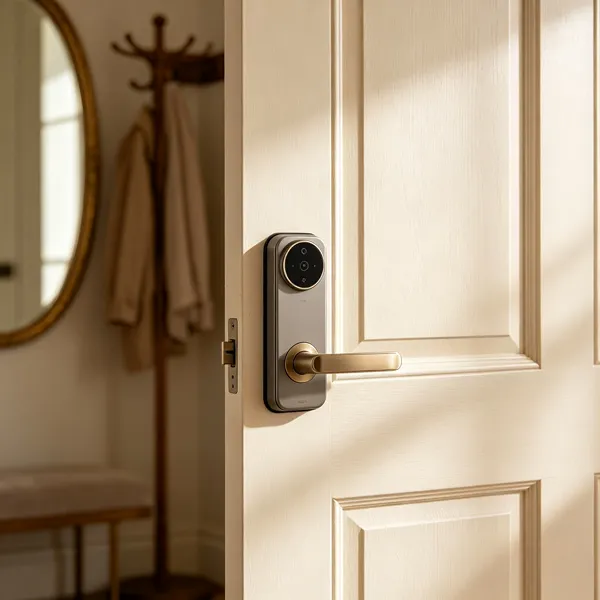
What are the best door locks?
For most homes, the right lock falls into one of a few practical groups: smart locks, fingerprint locks, keypad locks, traditional deadbolts, retrofit locks, and budget-friendly upgrades. The best choice depends less on the longest feature list and more on how the door is used every day.
| Lock type | Best fit | Main thing to watch |
|---|---|---|
| Smart lock | Homes that want app control, alerts, or guest access | Compatibility and battery backup |
| Fingerprint lock | Fast entry without keys or codes | Sensor reliability in real conditions |
| Keypad lock | Families, guests, and shared access | Button durability and code management |
| Deadbolt | Simple physical security | Build quality and strike plate strength |
| Retrofit lock | Renters or anyone keeping existing exterior hardware | Fit with the current deadbolt |
| Budget lock | Basic upgrades from old or loose hardware | Avoiding weak low-end models |
Brands such as Schlage, Yale, Kwikset, August, ULTRALOQ, and Medeco are often considered because they cover different needs: strong mechanical hardware, smart access, retrofit installation, fingerprint entry, or higher-security cylinders. A good shortlist should include only the models that match your door and the way people actually enter your home.
How to choose the best door lock
Start with three questions: does the lock fit your door, does it match how people enter the home, and can you still get in if the main access method fails? Those checks matter more than the finish, app screenshots, or number of advertised features.
Check the lock grade and build quality
Lock grade and build quality give you a better security clue than marketing words like "premium" or "heavy duty." Look for a recognized residential rating where available, solid metal construction, a sturdy bolt, and consistent long-term reviews.
For an exterior door, avoid choosing only by color or style. A lock can look good in photos and still feel loose, light, or poorly built once installed.
Match the lock to your door
The right lock for a standard wood front door may be wrong for a narrow metal door, an older door with unusual spacing, or a door that swells in humid weather. Measure first, then compare the product requirements against your actual door.
- Door sticks or rubs: fix alignment before adding a smart lock.
- Existing deadbolt works smoothly: a retrofit lock may be enough.
- Old hardware is loose or worn: a full replacement is usually cleaner.
- Door faces rain or direct sun: pay closer attention to weather resistance.
Choose the access method you prefer
The best access method is the one your household will use without workarounds. A traditional key is simple. A keypad is great for families and guests. Fingerprint access is fast. App control is useful when you manage the door from away from home.
Try to be honest about daily habits. If nobody wants another app, a keypad may beat a smart lock. If people often forget keys, a code or fingerprint reader may prevent the same problem from happening every week.
Check backup entry options
Backup access is not a small detail. Batteries die, phones get lost, apps fail, and fingerprint sensors can struggle with wet or dirty fingers.
For smart and fingerprint locks, look for at least one practical fallback: a physical key, keypad, emergency power contact, or another entry method that someone in the household can actually use under pressure. A backup method that is confusing at midnight in the rain is not a good backup.
Check smart home compatibility
If you want a connected lock, confirm the ecosystem before buying. Some models work better with Apple Home, Alexa, Google Home, or specific hubs, and not every version of the same lock supports the same setup.
Built-in Wi-Fi can be convenient because it may avoid an extra hub, but it can use more battery than lower-power connection types. If you only want a code at the door, smart home compatibility may not matter much. If you want lights, cameras, or alerts tied to the lock, it matters a lot.
Consider installation and daily use
Installation is where many disappointing lock purchases start. If the bolt does not slide freely before the new lock goes on, the finished setup may drain batteries faster, jam, or feel unreliable.
- Before installing: make sure the existing deadbolt moves smoothly with the door closed.
- During setup: keep screws snug, but do not force parts out of alignment.
- After setup: test locking from inside, outside, and through every backup method.
Daily use is just as important. A lock used by children, older adults, or guests should be obvious to operate. A lock on a rarely used side door can be simpler, but a front door used ten times a day needs to feel effortless.
Security features that matter most
The most important security features are not the flashy ones. Strong construction, a credible rating, pick and drill resistance, a reinforced strike plate, and secure backup access do more for real protection than an app feature attached to weak hardware.
Think of the door as a system. A strong lock on a weak frame is still a weak setup, and a smart lock with poor backup access can become frustrating even if the app is polished.
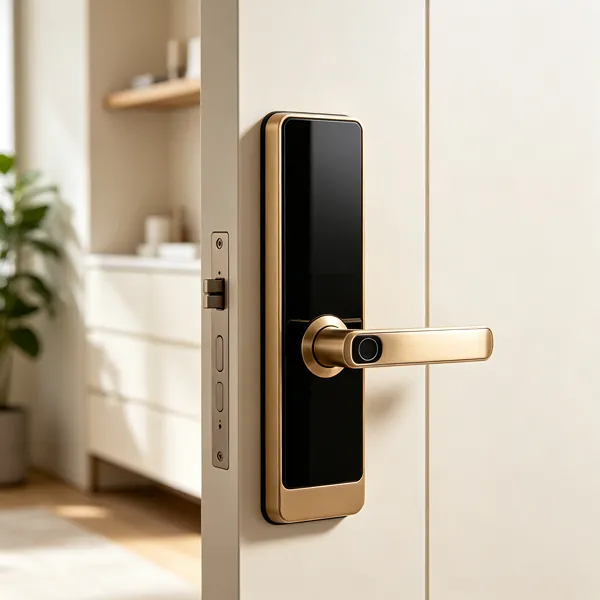
Strong lock construction
Strong construction means the lock body, bolt, cylinder, and internal parts are built for repeated exterior use. Heavier-duty hardware usually holds alignment better and resists wear more effectively than light decorative hardware.
On the main entry door, prioritize the physical lock first. A sleek touchscreen is nice, but it should sit on hardware that feels solid when the bolt extends and retracts.
A high security rating
A security rating is a helpful filter when comparing locks, even though it should not be the only factor. A properly rated lock from a reputable brand gives you a better baseline than an unknown model with impressive product photos.
Use the rating to narrow the list, then check real owner feedback for installation, weather exposure, battery life, and long-term smoothness. Security on paper still has to work on your door.
Pick and drill resistance
Pick and drill resistance matters most on exposed exterior doors, higher-risk locations, or homes where key control is a priority. Features such as hardened components and more secure cylinder designs can make tampering harder.
For a typical home, do not treat this as a substitute for frame strength. A strong cylinder is useful, but a weak strike plate or short screws can still leave the door vulnerable to force.
A reinforced strike plate
A reinforced strike plate is one of the most practical security upgrades because many forced entries attack the door frame, not the lock cylinder. Long screws that reach into the framing can make a meaningful difference compared with the short screws often found in basic installations.
If your budget is limited, a decent deadbolt installed with a reinforced strike plate may be a smarter upgrade than a more expensive lock installed into a weak jamb. The lock and frame need to work together.
Secure backup access
Backup access should help authorized users without creating an easy weakness. A smart lock with a physical key, keypad, or emergency power option can be secure, but only if those backup methods are well designed and protected.
- For app locks: make sure someone can enter without a phone.
- For fingerprint locks: require a code, key, or other fallback.
- For keyed locks: manage spare keys carefully instead of hiding one outside.
Smart locks can be safe for exterior doors, but they are safest when the physical hardware is strong and the backup plan is simple enough to use when something goes wrong.
Conclusion
The right lock is the one that improves security without making daily entry annoying. Choose a strong deadbolt if you want simple protection, a keypad or smart lock if shared access matters, and a retrofit model if you need a renter-friendly setup. Once the lock fits the door, has a reliable backup method, and feels easy to use, you are much closer to a purchase that will still make sense after the first week.