
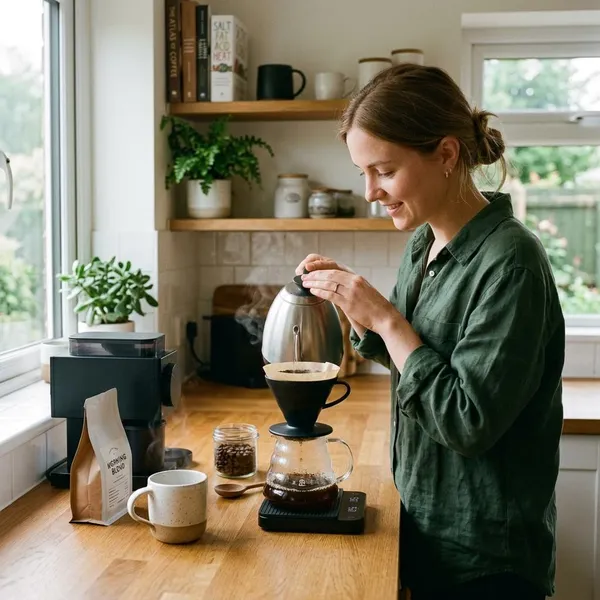
If you want the easiest answer, start with a fresh medium-roast whole-bean coffee and brew it with the method you already use most. That is usually the safest balance of flavor, price, and convenience for home coffee. From there, adjust by taste: lighter for brighter black coffee, darker or espresso-style for milk drinks, and pre-ground only when convenience matters more than maximum aroma.
What is the best coffee to make at home?
The best home coffee is not one specific brand or one expensive bag. It is the coffee that fits three things at once: how you drink it, how you brew it, and how much effort you are willing to put in every morning.
Medium-roast whole beans for most people
A medium-roast whole-bean coffee is the best first bag for many homes because it sits between sharp and bitter. It usually has enough sweetness and body for drip coffee, French press, pour over, and AeroPress, while still tasting pleasant black or with a splash of milk.
Light-roast beans for brighter flavors
Choose a light roast if you want coffee that tastes lively, crisp, or more "origin-driven." These beans often show citrus, berry, floral, or tea-like notes, especially when brewed as pour over or AeroPress.
The catch is that light roasts are less forgiving. If the grind is too coarse or the brew is too short, the cup can taste sour or thin. They are best for people who drink coffee black and do not mind adjusting the recipe a little.
Dark-roast beans for a bolder cup
Dark roasts make sense when you want a heavier, more familiar coffee flavor. Look for words such as dark chocolate, toasted nuts, molasses, or caramel rather than bags that only promise "extra strong." Strength comes from the recipe too, not just the roast.
Espresso blends for milk drinks
An espresso blend is usually the better pick for lattes, cappuccinos, flat whites, and strong coffee with milk. These blends are built to keep their flavor after milk softens the cup, so chocolate, brown sugar, and nutty notes tend to work better than delicate fruit flavors.
Quality pre-ground coffee for convenience
Pre-ground coffee is a practical choice when grinding beans would make you skip the routine altogether. Buy smaller bags, choose the grind style that matches your brewer, and keep the bag tightly sealed. Fresh pre-ground coffee used quickly is often better than stale whole beans or beans ground unevenly in a cheap blade grinder.
Which coffee beans suit your taste?
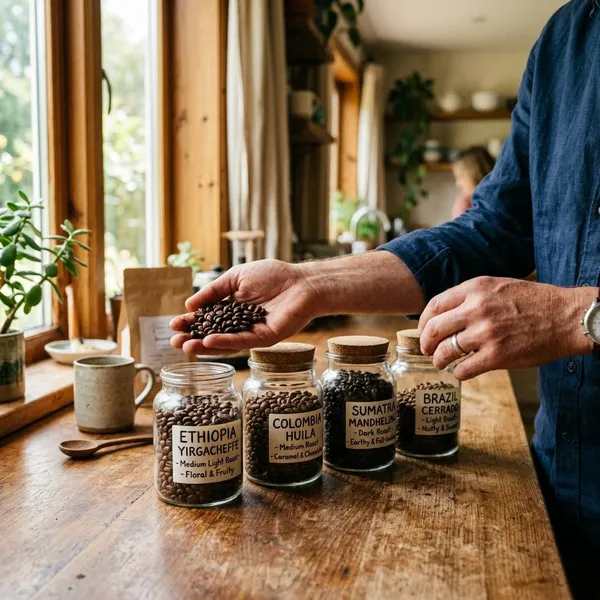
Origin is not everything, but it gives you a useful shortcut when a shelf is full of bags that all sound good. Roast level and processing still matter, yet certain regions often lean toward recognizable flavor patterns.
Central American beans for balanced flavor
Central American coffees, such as beans from Guatemala, Costa Rica, Honduras, or El Salvador, are a good match if you want balance without boredom. They often bring mild fruit, cocoa, gentle sweetness, and a clean finish.
This is a strong everyday choice for drip coffee and pour over because it gives enough character without becoming too acidic or too heavy.
South American beans for chocolate and nut notes
South American coffees are often the easiest recommendation for people who want a comforting daily cup. Brazilian coffees commonly bring body and cocoa-like notes, while Colombian coffees often add sweetness and mild fruit.
African beans for fruit and floral notes
African coffees are worth trying when you want coffee to taste noticeably different from the usual chocolate-and-nut profile. Ethiopian and Kenyan coffees, in particular, can taste bright, fruity, floral, or tea-like.
Indonesian beans for deep earthy flavor
Indonesian coffees, especially Sumatran-style coffees, tend to feel heavier and deeper. Expect earthy, spicy, woody, or dark chocolate notes rather than crisp acidity.
They can be very satisfying in French press or moka pot. If bright coffee always tastes sharp to you, a medium-dark Indonesian coffee may be a better direction than simply buying the darkest roast available.
Blended beans for a consistent daily cup
Blends are made for repeatability. A good blend may not show one dramatic origin note, but it can give you the same balanced cup every morning with less tweaking.
Which home brewing method makes the best coffee?
The best brewing method depends on what you want the cup to do. Some methods make coffee cleaner, some make it heavier, and some simply make mornings easier.
| Best fit | Choose this method | Watch out for |
|---|---|---|
| Several cups with low effort | Drip coffee maker | Stale coffee and dirty machines |
| Clear flavor from better beans | Pour over | Needs more attention |
| Rich body and simple gear | French press | Sediment and heavier texture |
| Flexible single cups | AeroPress | Recipes can vary a lot |
| Strong coffee on a budget | Moka pot | Too much heat can taste harsh |
| Café-style milk drinks | Espresso | Higher cost and learning curve |
How do you choose coffee for your home setup?
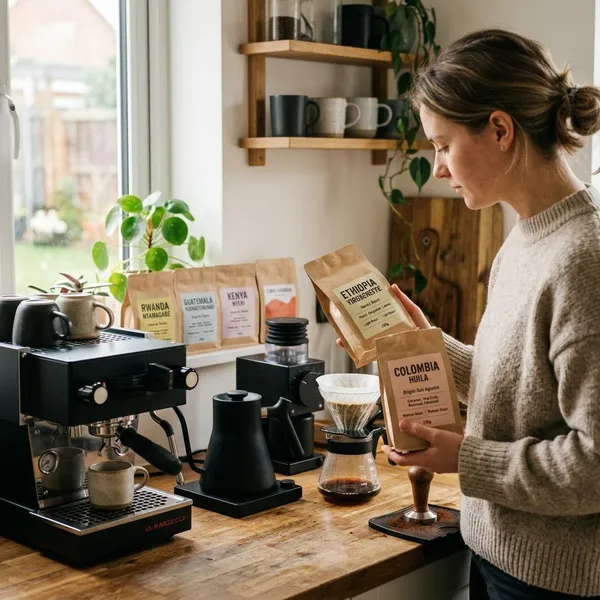
Start with your actual setup, not the most impressive-sounding coffee. A delicate light roast may be excellent, but it can still disappoint if you brew it in a way that hides its strengths or if you mostly drink coffee with milk.
Match the coffee to your brewer
Your brewer changes what "best" means. Pour over favors clean, aromatic coffees. French press favors body. Drip machines usually do best with balanced beans that extract evenly in a larger batch.
Match the roast to your taste
Roast level should follow your preference, not coffee trends. Light roast is not automatically better, and dark roast is not automatically low quality. If you enjoy smooth daily coffee, medium roast is a smart baseline; if you want more bite and aroma, move lighter; if you want richness or milk-friendly flavor, move darker.
Match the bag size to your usage
Bag size matters because open coffee loses aroma over time. A large value bag may be a poor deal for one person who drinks one cup a day, while a smaller bag may be too expensive or inconvenient for a household that finishes coffee quickly.
If you are trying a new style, buy small first. It is better to pay slightly more per ounce than to force yourself through a big bag you do not enjoy.
Match the grind to your equipment
Grind size has a direct effect on flavor. Too fine can taste bitter or harsh; too coarse can taste weak, sour, or hollow.
- French press: coarse grind.
- Drip machine: medium grind.
- Pour over: medium to medium-fine, adjusted by taste.
- Moka pot: fine, but not as fine as espresso.
- Espresso: very fine and consistent.
If you buy pre-ground coffee, choose the version meant for your brewer rather than one generic bag for every method.
Match the price to your daily budget
Coffee is a daily habit, so the best choice has to be repeatable. A fresh, dependable coffee you can afford every week is usually more useful than a premium bag you buy once and hesitate to replace.
How can you make better coffee at home?
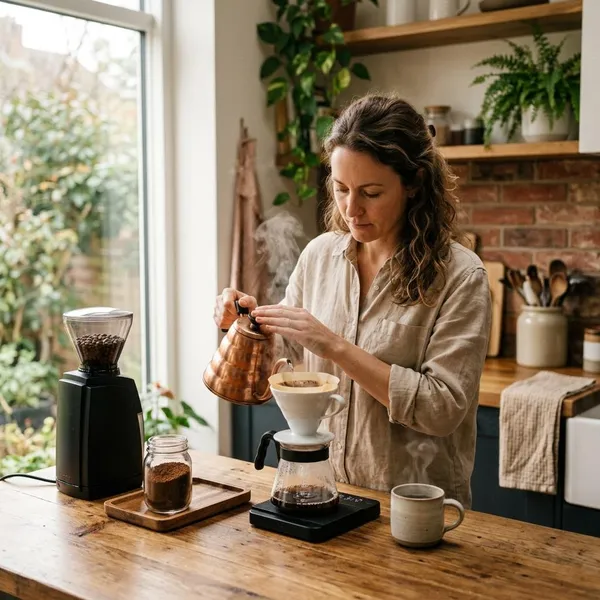
Before buying a new brewer, fix the basics that affect almost every cup: freshness, grind, water, measurement, and cleaning. These are the areas where small changes usually make the biggest difference.
- Flat or dull: check coffee freshness first.
- Sour or thin: try a slightly finer grind or longer brew.
- Bitter or harsh: try a slightly coarser grind, cleaner gear, or lower heat for moka pot.
- Inconsistent: measure coffee and water instead of guessing.
- Odd aftertaste: taste your water plain and clean the brewer.
Buy recently roasted coffee
Look for a roast date when you can. Coffee does not become useless after a few days, but a bag with a clear roast date gives you a better chance of lively aroma and sweetness than one with only a distant expiration date.
For everyday buying, avoid bags that may sit open for weeks. Freshness after opening matters just as much as the date printed on the package.
Grind just before brewing
Grinding right before brewing keeps more aroma in the cup because whole beans protect flavor better than ground coffee. A decent burr grinder is usually a bigger upgrade than buying more expensive beans and grinding them poorly.
Use filtered water
Coffee is mostly water, so water that tastes bad on its own will not make great coffee. If your tap water tastes strongly of chlorine, metal, or minerals, a simple filter can make the cup cleaner.
Measure coffee and water
Measuring turns coffee from guesswork into something repeatable. A kitchen scale helps, but even using the same scoop and water level every time is better than changing amounts randomly.
As a starting point, many methods work well around 1 gram of coffee to 15 or 16 grams of water. Adjust from there: stronger if it tastes thin, lighter if it feels heavy or muddy.
Match the grind to the method
When the grind and method do not match, good beans can still taste wrong. If your cup is sour, weak, or watery, the grind may be too coarse. If it is bitter, dry, or harsh, the grind may be too fine.
Change one thing at a time. If you adjust grind, do not also change the coffee amount, water amount, and brew time in the same attempt, or you will not know what helped.
Clean the brewer regularly
Old coffee oils and trapped grounds can make fresh coffee taste stale. Rinse removable parts after use, wash filters and baskets properly, and descale machines when buildup becomes noticeable or the manufacturer recommends it.
If your coffee has slowly started tasting worse even though you buy the same beans, cleaning is one of the first things to check.
Conclusion
The best choice is the coffee you can brew well on an ordinary day, not the bag that sounds most impressive. Start with a fresh medium roast if you want the safest option, then move lighter, darker, stronger, or more convenient based on how you actually drink it. Once the coffee fits your brewer and routine, small habits like grinding well, measuring, and cleaning will do more for your cup than chasing the next piece of gear.